
- Cat. No.
- A18606
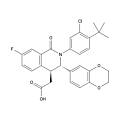
STING ligand-1
STING ligand-1 is a lead STING ligand with an IC50 of 68 nM for HAQ STING.
In stock
View Details
Search by product name, CAS, target or catalog number. Press Down Arrow to reach product suggestions, Tab to move between links, and Escape to close suggestions.
STING agonists and inhibitors act on an adaptor protein of the cytosolic DNA sensing pathway. Stimulator of interferon genes (STING) was described in 2008 as an endoplasmic reticulum adaptor needed for innate immune signaling and type I interferon induction. STING binds cyclic dinucleotides directly, both bacterial molecules such as cyclic di-GMP and the mammalian second messenger made by cyclic GMP-AMP synthase (cGAS) once it detects cytosolic DNA. Agonists listed here include 2',3'-cGAMP, Cyclic-di-GMP, ADU-S100 disodium salt (MIW815 disodium salt) and numbered compounds such as STING agonist-1. Inhibitors include H-151 and the mouse-directed C-176 and C-178, which belong to a class of covalent compounds that modify a cysteine of the transmembrane region.
STING ligand-1 is a lead STING ligand with an IC50 of 68 nM for HAQ STING.
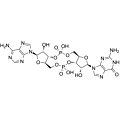
Synonyms: Cyclic GMP-AMP; 3',3'-cGAMP
cGAMP (Cyclic GMP-AMP; 3',3'-cGAMP) is an endogenous second messenger in metazoans and triggers interferon production in response to cytosolic DNA; STING ligand.
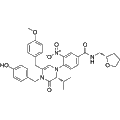
SB24011 is a selective STING modulator that inhibits the TRIM29-STING protein-protein interaction. By binding to STING, it effectively prevents TRIM29-induced K48-linked ubiquitination, leading to an increase in intracellular STING protein levels. This compound promotes the expression of inflammatory cytokines and enhances STING-mediated immune responses, demonstrating abscopal antitumor activity that stimulates tumor regression and T cell infiltration. SB24011 is particularly relevant for research on colon cancer and melanoma, showing potential synergy when used in conjunction with STING agonists or anti-PD1 antibodies.
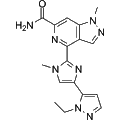
STING modulator-4 (compound AIH05) is a competitive modulator of the Stimulator of Interferon Genes (STING), exhibiting a Ki of 0.0933 μM for the R232H variant of STING. This compound demonstrates biological activity with an EC50 value exceeding 10 μM for phosphorylated IRF3 in THP-1 cells. STING modulator-4 is significant for research in immunology and enhances understanding of STING-mediated signaling pathways.
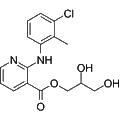
Synonyms: NSC 335504
Clonixeril (NSC 335504) is a non-nucleotide modulator of human STING (hSTING), exhibiting a unique dual mechanism of action. It acts as a weak agonist at micromolar concentrations while demonstrating antagonistic properties of the hSTINGWT pathway at low femtomolar and attomolar levels. Clonixeril effectively reduces hSTING oligomerization, proving useful in elucidating the complexities of STING signaling and its role in immune responses. This compound serves as a valuable tool for research in immunology and drug discovery targeting STING-related pathways.
Out of stock
All 3 sizes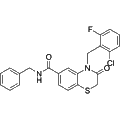
STING modulator-7 is a potent modulator of the stimulator of interferon genes (STING), enhancing the signaling pathway associated with innate immune responses. This compound exhibits significant biological activity in activating STING-dependent pathways, promoting type I interferon production and immune cell activation. It is primarily utilized in research applications focused on cancer immunotherapy, infectious disease models, and studies of immune system regulation.