Sterols

Sterols are steroid alcohols such as cholesterol, here listed with oxysterols and bile acids. They share a four-ring steroid nucleus with a hydroxyl group at carbon 3 and help to order the lipids of cell membranes. Oxysterols are oxidized cholesterol derivatives formed by enzymes or by autoxidation. 7α-Hydroxycholesterol, the product of cholesterol 7α-hydroxylase, is the first intermediate of the classic bile acid pathway. Coprostanone is an intermediate in the bacterial reduction of cholesterol to coprostanol in the gut. 24-Methylenecholesterol is a precursor in plant sterol biosynthesis and occurs in pollen. Bile acids, the end products of hepatic cholesterol breakdown, include 3β-Ursodeoxycholic acid and 7-keto-Deoxycholic acid. 16-Dehydropregnenolone acetate is a pregnane steroid used as an intermediate in steroid synthesis.

Items 26-50 of 63

  • Chenodeoxycholic acid 7-sulfate sodium
    Cat. No.
    A72934

    Chenodeoxycholic acid 7-sulfate sodium

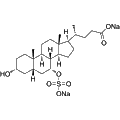
    Chenodeoxycholic acid 7-sulfate sodium is a bile acid derivative that plays a crucial role in lipid digestion and absorption. This compound exhibits important biological activities, including modulation of cholesterol metabolism and regulation of intestinal secretion. It is primarily utilized in research applications focused on gastrointestinal diseases, cholesterol metabolism disorders, and studies investigating the physiological roles of bile acids in human health.

    Out of stock

    All 3 sizes
  • Thiocholesterol
    Cat. No.
    A73509

    Thiocholesterol

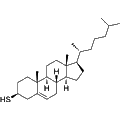
    Thiocholesterol functions as a cationic lipid and acts as a stabilizer for silver nanoparticles (SNPs). Its unique properties make it a valuable tool for research into plasma membrane dynamics and exploring drug delivery systems. Thiocholesterol’s involvement in cholesteric liquid crystals further supports its versatility in biological applications.

    25 mg
    $150.00
    50 mg
    $280.00
    All 4 sizes
  • Glyco-ω-muricholanoic acid
    Cat. No.
    A73875

    Glyco-ω-muricholanoic acid

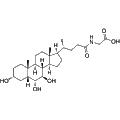
    Glyco-ω-muricholanoic acid is a glycine-conjugated bile acid that serves as an endogenous metabolite derived from ω-muricholanoic acid. It plays a crucial role in lipid digestion and absorption, as well as in regulating bile acid metabolism. This compound is significant for research applications involving metabolic disorders, gut health, and the study of bile acid signaling pathways.

    Out of stock

    All 3 sizes
  • 3α,6α,7α,12α-Tetrahydroxy bile acid
    Cat. No.
    A74036

    3α,6α,7α,12α-Tetrahydroxy bile acid

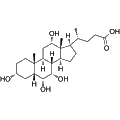
    3α,6α,7α,12α-Tetrahydroxy bile acid is a hydrophilic derivative of bile acids, characterized by the presence of four hydroxyl groups. This compound plays a crucial role in lipid metabolism, affecting the solubility and absorption of dietary fats. Research applications include studying bile acid signaling pathways and their implications in metabolic disorders and liver function.

    Out of stock

    All 3 sizes
  • PCSK9-IN-29
    Cat. No.
    A75856

    PCSK9-IN-29

    PCSK9-IN-29 is a lipid-lowering agent that targets the proprotein convertase subtilisin/kexin type 9 (PCSK9) to regulate cholesterol metabolism. This compound has been demonstrated to enhance low-density lipoprotein receptor (LDLR) protein expression while reducing PCSK9 levels in HepG2 cells. In vivo studies in crab-eating macaques on a high-fat diet revealed that PCSK9-IN-29 significantly decreased serum low-density lipoprotein cholesterol (LDL-C) and total cholesterol (TC) levels, reduced body weight and fat, and increased bone mineral content. This reagent is suitable for investigations into non-alcoholic fatty liver disease and obesity research.

    5 mg
    $130.00
    10 mg
    $215.00
    All 5 sizes
  • Lipid-lowering agent-1
    Cat. No.
    A75859

    Lipid-lowering agent-1

    Lipid-lowering agent-1 is a potent inhibitor of low-density lipoprotein cholesterol (LDLC) and enhances the production of high-density lipoprotein cholesterol (HDLC). This reagent exhibits significant hypolipidemic effects, as demonstrated in preclinical studies with high-fat diet rats. It is primarily used in research focused on lipid metabolism and cardiovascular disease, offering valuable insights into potential therapeutic approaches for dyslipidemia.

    25 mg
    $1,275.00
    50 mg
    $1,625.00
    All 3 sizes
  • Cholesteryl heptadecanoate
    Cat. No.
    A88003

    Cholesteryl heptadecanoate

    Cholesteryl heptadecanoate serves as a cholesteryl ester internal standard, facilitating the precise quantification of free cholesterol in cellular samples without the interference of triglyceride hydrolysis. This reagent is particularly useful for the quantitative analysis of cholesteryl esters utilizing gas chromatography (GC) or liquid chromatography mass spectrometry (LC-MS) techniques. Its stability and specificity make it an essential tool for lipidomics research and metabolic studies.

    50 mg
    $20.00
    100 mg
    $40.00
    All 4 sizes
  • Tauro-3α,6α,7α,12α-tetrahydroxy bile acid sodium
    Cat. No.
    A89576

    Tauro-3α,6α,7α,12α-tetrahydroxy bile acid sodium

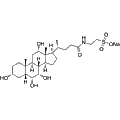
    Tauro-3α,6α,7α,12α-tetrahydroxy bile acid sodium targets bile acid metabolism and serves as a vital component in lipid digestion and absorption within the small intestine. This bile acid derivative is synthesized by the liver from cholesterol and is used in various biological research applications, including studies on lipid metabolism, gut health, and hepatobiliary disorders. Its role in emulsifying fats makes it a valuable reagent for investigating the biochemical pathways related to lipid absorption and metabolism.

    Out of stock

    All 3 sizes
  • Tauro-12-oxolithocholanoic acid sodium
    Cat. No.
    A89756

    Tauro-12-oxolithocholanoic acid sodium

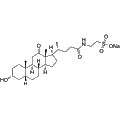
    Tauro-12-oxolithocholanoic acid sodium is a bile acid that serves as a valuable tool for studying the behavior and interactions of bile acids and their analogs. Its application extends to the investigation of liver, gallbladder, and bile duct diseases, providing insights into the role of bile acids in these conditions. This compound aids in advancing research into bile acid metabolism and associated pathological states.

    Out of stock

    All 3 sizes
  • 15(S)-HETE Cholesteryl ester
    Cat. No.
    A89801

    15(S)-HETE Cholesteryl ester

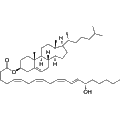
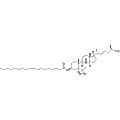
    15(S)-HETE Cholesteryl ester is an eicosanoid that plays a crucial role in lipid metabolism and signaling. It is formed from the esterification of 15(S)-hydroxyeicosatetraenoic acid (15(S)-HETE) and cholesterol, influencing various biological processes including inflammation and cellular signaling. This compound is valuable for research applications involving lipid biochemistry, eicosanoid pathways, and the study of inflammatory responses.

    Out of stock

    All 3 sizes
  • 16:0 Stigmasteryl glucose
    Cat. No.
    A89951

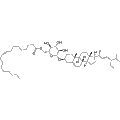
    16:0 Stigmasteryl glucose

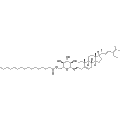
    16:0 Stigmasteryl glucose is a sterol, specifically a glycosylated derivative of stigmasterol. It exhibits biological activity as a potential regulator of membrane fluidity and cell signaling processes. This compound is frequently utilized in studies exploring lipid metabolism, cellular communication, and the roles of sterols in plant physiology and human health.

    Out of stock

    All 3 sizes
  • Galactosyl cholesterol
    Cat. No.
    A89972

    Galactosyl cholesterol

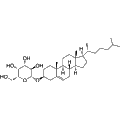
    Galactosyl cholesterol is a sterol that functions as a key component in cellular membrane dynamics. It plays a significant role in lipid raft formation and is involved in various cellular signaling processes. This compound is applicable in research related to membrane biology, cholesterol metabolism, and the study of cellular interactions in both health and disease states.

    Out of stock

    All 3 sizes
  • Tauroallolithocholanoic acid (sodium)
    Cat. No.
    A90589

    Tauroallolithocholanoic acid (sodium)

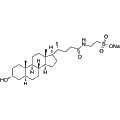
    Tauroallolithocholanoic acid (sodium) is a bile acid derivative that plays a crucial role in lipid digestion and absorption. It exhibits biological activities related to bile acid signaling and metabolism. This reagent is useful in studies investigating the effects of bile acids on gut microbiota, cholesterol metabolism, and liver function. Additionally, it can be applied in research focused on gastrointestinal disorders and metabolic syndromes.

    Out of stock

    All 3 sizes
  • Tauro-3β,5α,6β-trihydroxycholanoic acid sodium
    Cat. No.
    A90829

    Tauro-3β,5α,6β-trihydroxycholanoic acid sodium

    Tauro-3β,5α,6β-trihydroxycholanoic acid sodium is a bile acid that serves as a valuable tool for investigating the roles and behaviors of bile acids and their derivatives in relation to liver, gallbladder, and bile duct diseases. Its unique chemical structure allows for exploration of their pathophysiological correlations, aiding in research on biliary disorders and metabolic pathways. This compound can be integral in studying bile acid signaling and transport mechanisms, contributing to a deeper understanding of gastrointestinal health.

    Out of stock

    All 3 sizes
  • 18:1 Photoclick cholesterol II
    Cat. No.
    A91026

    18:1 Photoclick cholesterol II

    18:1 Photoclick cholesterol II is a clickable sterol that serves as a lipid probe for studying membrane dynamics and interactions. This compound incorporates a photoreactive azide group, allowing for light-mediated cross-linking and labeling of cholesterol-associated biomolecules. It is particularly useful in lipid research, cell biology, and membrane studies, enabling precise manipulation and investigation of cholesterol's role in cellular processes.

    Out of stock

    All 3 sizes
  • Taurocholyl-Lys-Biotin ammonium
    Cat. No.
    A91041

    Taurocholyl-Lys-Biotin ammonium

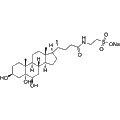
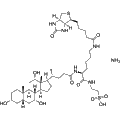
    Taurocholyl-Lys-Biotin ammonium is a biotinylated bile acid that interacts with bile acid receptors. This compound exhibits the potential to modulate various physiological processes mediated by bile acids and is useful in studies investigating bile acid signaling pathways. It serves as a valuable tool for researchers exploring lipid metabolism, digestive health, and related biochemical mechanisms.

    Out of stock

    All 3 sizes
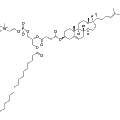
  • PChemsPC
    Cat. No.
    A91099

    PChemsPC

    Synonyms: 1-Palmitoyl-2-cholesterylhemisuccinoyl-sn-glycero-3-phosphocholine

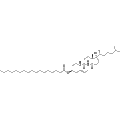
    PChemsPC (1-Palmitoyl-2-cholesterylhemisuccinoyl-sn-glycero-3-phosphocholine) is a sterol lipid that exhibits a strong ability to demix into micron-scale liquid phases. This property makes it valuable for studies on membrane dynamics and phase behavior in lipid bilayers. PChemsPC can be utilized in various research applications, including the investigation of lipid interactions, membrane organization, and the development of drug delivery systems.

    5 mg
    $265.00
    10 mg
    $400.00
    All 3 sizes
  • OChemsPC
    Cat. No.
    A91112

    OChemsPC

    Synonyms: 1-Oleoyl-2-cholesterylhemisuccinoyl-sn-glycero-3-phosphocholine

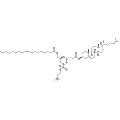
    OChemsPC (1-Oleoyl-2-cholesterylhemisuccinoyl-sn-glycero-3-phosphocholine) is a sterol lipid that features an unsaturated hydrocarbon chain in place of the saturated chain typically found in sterol-lipid A. This modification enhances its biological activity, offering potential applications in membrane biophysics and lipidomics research. OChemsPC is particularly valuable for studies aimed at understanding lipid interactions and the role of sterols in cellular processes.

    Out of stock

    All 3 sizes
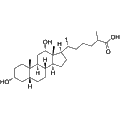
  • 3α,12α-Dihydroxy-5β-cholestanoic acid
    Cat. No.
    A91127

    3α,12α-Dihydroxy-5β-cholestanoic acid

    3α,12α-Dihydroxy-5β-cholestanoic acid is a bioactive cholestenoic acid that serves as a lipid mediator. It plays a significant role in various biological processes, including lipid metabolism and signaling pathways. This compound is used in research applications focused on cholesterol-related studies and the investigation of lipid-related diseases.

    Out of stock

    All 3 sizes
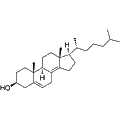
  • 8(14)-Dehydrocholesterol
    Cat. No.
    A91350

    8(14)-Dehydrocholesterol

    8(14)-Dehydrocholesterol is a sterol with significant implications in lipid metabolism. This compound serves as a critical intermediate in the biosynthesis of cholesterol and other steroid compounds. Its study is essential for understanding various metabolic disorders and holds potential for applications in pharmacological research focused on cholesterol-related diseases.

    Out of stock

    All 3 sizes
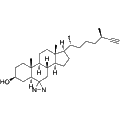
  • Photoclick cholesterol II
    Cat. No.
    A91580

    Photoclick cholesterol II

    Photoclick Cholesterol II is a clickable sterol lipid analog of cholesterol featuring a terminal alkyne moiety and a photoactivatable diaziridine group. This compound enables the study of cholesterol's membrane dynamics and interactions in biological systems. Its unique properties facilitate the investigation of cholesterol incorporation and its effects on cellular processes, making it a valuable tool for researchers in lipid biochemistry and cell biology.

    Out of stock

    All 3 sizes
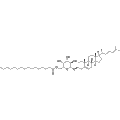
  • BbGL-1
    Cat. No.
    A91603

    BbGL-1

    BbGL-1 is a glycosylated sterol lipid that possesses saturated acyl chains. This compound serves as a critical component in lipid research, enabling studies on membrane composition and lipid signaling pathways. Its unique structure may facilitate investigations into the role of glycosylated lipids in cellular processes and disease mechanisms.

    Out of stock

    All 3 sizes
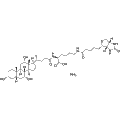
  • Cholyl-Lys-Biotin (amminlum)
    Cat. No.
    A92373

    Cholyl-Lys-Biotin (amminlum)

    Cholyl-Lys-Biotin (amminlum) is a functionalized bile acid that targets bile acid receptors, facilitating the study of bile acid signaling pathways. This compound exhibits biological activity relevant to lipid metabolism and can be used in research applications involving protein labeling and cellular trafficking. Its incorporation of biotin enables robust detection methods, making it a valuable tool for investigating bile acid-related physiological processes.

    Out of stock

    All 3 sizes
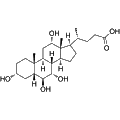
  • 3α,6β,7α,12α-Tetrahydroxy bile acid
    Cat. No.
    A92486

    3α,6β,7α,12α-Tetrahydroxy bile acid

    3α,6β,7α,12α-Tetrahydroxy bile acid is a tetrahydroxy derivative of bile acids that primarily targets bile acid metabolism. This compound exhibits significant biological activity related to cholesterol homeostasis and lipid digestion. It is utilized in research applications focusing on metabolic disorders, liver function, and the role of bile acids in signaling pathways.

    Out of stock

    All 3 sizes
  • 18:1 Stigmasteryl glucose
    Cat. No.
    A92799

    18:1 Stigmasteryl glucose

    18:1 Stigmasteryl glucose is a glycosylated sterol that interacts with cellular membrane components. It exhibits significant biological activity related to cell signaling and membrane fluidity modulation. This compound is valuable for research applications focused on sterol metabolism, membrane dynamics, and the influence of glycosylation on sterol function in various biological systems.

    Out of stock

    All 3 sizes
Items 26-50 of 63

Added to your cart

View Cart Checkout

    Loading...