
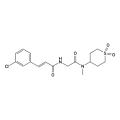
- Cat. No.
- A15866
ML264
ML264 is a selectively inhibitor of kruppel-like factor 5 (KLF5) that potently Inhibits Growth of Colorectal Cancer.
In stock
View Details
Search by product name, CAS, target or catalog number. Press Down Arrow to reach product suggestions, Tab to move between links, and Escape to close suggestions.
Krüppel-like factor (KLF) modulators address a family of zinc finger transcription factors. KLF proteins bind regulatory sequences and participate in the control of cellular differentiation, proliferation and tissue homeostasis. ML264, SR18662 and SR15006 are listed as KLF5 inhibitors in this category. Moldapyranone A is associated with KLF2 activation, extending the selection beyond one family member or functional class. The collection is relevant to studies that distinguish individual KLF proteins within broader transcriptional networks.
ML264 is a selectively inhibitor of kruppel-like factor 5 (KLF5) that potently Inhibits Growth of Colorectal Cancer.
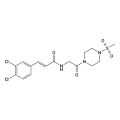
SR18662 is a potent inhibitor of Krüppel-like factor five (KLF5) with an IC50 of 4.4 nM and an analogue of ML264 with improved inhibitory potency against colorectal cancer cells. SR18662 can be used for the study of colorectal cancer.
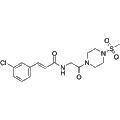
SR15006 is an inhibitor of Krüppel-like factor 5 (KLF5) with an IC50 value of 41.6 nM in DLD-1/pGL4.18hKLF5p cells. This compound effectively modulates KLF5 activity, which is implicated in various cellular processes, including proliferation and differentiation. SR15006 is valuable for research applications targeting KLF5-related pathways in cancer biology and other diseases.
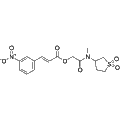
CID 5951923 is a selective inhibitor of Krüppel-like factor 5 (KLF5), demonstrating an IC50 of 603 nM. This compound effectively reduces the proliferation of cancer cells in vitro, making it a valuable tool for studying KLF5's role in cancer biology. Applications include investigating the molecular mechanisms underlying tumorigenesis and evaluating potential therapeutic strategies targeting KLF5 in various malignancies.
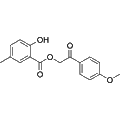
KLF10-IN-1 is a potent inhibitor of KLF10, exhibiting an IC50 value of 40 μM on KLF10 reporter gene activity. This compound effectively disrupts KLF10-DNA binding and transcriptional function, thereby preventing the differentiation of CD4+CD25 T cells into CD4+CD25+ T regulatory cells. Additionally, KLF10-IN-1 inhibits the expression of genes regulated by KLF10, making it a valuable tool for investigating KLF10-mediated biological processes and T regulatory cell functions.