
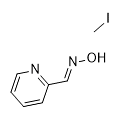
- Cat. No.
- A17526
Pralidoxime Iodide
Synonyms: NSC-7760
Pralidoxime iodide is a Cholinesterase Reactivator.
In stock
View Details
Search by product name, CAS, target or catalog number. Press Down Arrow to reach product suggestions, Tab to move between links, and Escape to close suggestions.
Acetylcholinesterase (AChE) inhibitors block the enzyme that breaks down acetylcholine at cholinergic synapses. By ending acetylcholine signaling within milliseconds, AChE controls transmission in the brain and at the neuromuscular junction. The 1991 crystal structure of AChE from Torpedo californica showed the active site at the base of a deep, narrow gorge. AChE also has non-catalytic roles, which broaden its interest beyond synaptic transmission. Inhibitors here include donepezil hydrochloride and galanthamine hydrobromide, which are reversible inhibitors. The carbamates rivastigmine tartrate and neostigmine bromide, used in studies of cholinergic signaling and neurodegeneration, are also listed.
Synonyms: NSC-7760
Pralidoxime iodide is a Cholinesterase Reactivator.
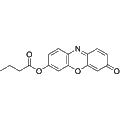
Resorufin butyrate is a fluorogenic substrate primarily utilized for the detection of triglyceride lipases and cholinesterase. With excitation at 570 nm and emission at 580 nm, this compound facilitates sensitive fluorescence-based assays. It is particularly valuable in biochemical studies focusing on lipid metabolism and enzyme activity.
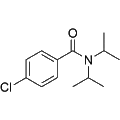
4-Chloro-N,N-diisopropylbenzamide is an amide with significant relevance as a substrate for cytochrome P450 enzymes in vivo and for acetylcholinesterase in vitro. This compound plays a crucial role in metabolic studies, enabling the investigation of enzyme kinetics and substrate specificity. Its application extends to research focused on drug metabolism and neuropharmacology.
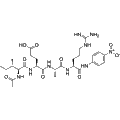
Ac-IEAR-pNA is a chromogenic substrate specifically designed for the quantification of endotoxin levels. It serves as a selective substrate for human butyrylcholinesterase (HuBChE), resulting in the cleavage that releases p-nitroaniline, a measurable product. This compound is widely used in research applications focused on endotoxin detection and related studies in immunology and toxicology.
Synonyms: EC 3.1.1.8; BCHE; Horse serum
Cholinesterase, Horse serum is a catalytic enzyme comprising acetylcholinesterase (AChE) and butyryl cholinesterase (BChE). These enzymes facilitate the hydrolysis of various substrates, including the hydrolysis of 6-monoacetylmorphine (6-MAM) to morphine. This reagent is valuable in biochemical research, particularly in studies involving neurotransmitter metabolism and the pharmacokinetics of opioid compounds.
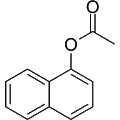
1-Naphthyl acetate serves as a chromogenic substrate specifically for the detection of acetylcholinesterase (AChE) activity in erythrocytes. This compound is particularly valuable in research related to organophosphorus pesticide poisoning, enabling the assessment of enzymatic activity and its inhibition. Its colorimetric properties facilitate quantitative analysis in various biochemical studies.
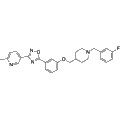
AChE/Nrf2 Modulator 1 is an orally active compound that targets both acetylcholinesterase (AChE) and the nuclear factor erythroid 2-related factor 2 (Nrf2). It exhibits significant Nrf2 inductive activity along with potent AChE inhibitory effects, presenting IC50 values of 0.07 μM for eel AChE and 0.38 μM for human AChE. This compound is primarily utilized in research focused on Alzheimer's disease, providing insights into neuroprotective mechanisms and cholinergic system modulation.
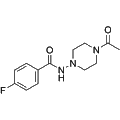
FK960 is a cholinesterase activator with potential applications in anti-dementia therapy. It enhances cholinergic neurotransmission, effectively reversing the reduction in cerebral blood flow (rCBF) induced by sensory stimulation. In macaque studies, FK960 has demonstrated the ability to restore rCBF responses that were eliminated by treatment with physostigmine, lasting for up to one hour. Notably, FK960 does not restore rCBF responses affected by NMDA modulators, suggesting a targeted mechanism independent of non-glutamatergic pathways.
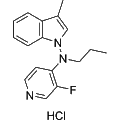
HP 184 is an acetylcholine release stimulator, functioning as a cholinesterase (ChE) activator. This compound enhances synaptic transmission by promoting the release of acetylcholine, making it valuable for studies in neurobiology and neuromuscular disorders. Additionally, the compound's ADME properties can be modified by substituting hydrogen with deuterium, allowing for further exploration of its pharmacokinetics and pharmacodynamics in research applications.
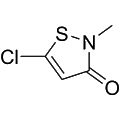
Methylchloroisothiazolinone is a potent NF-κB activator known for its pro-inflammatory properties. It induces the expression of pro-inflammatory cytokines, including IL-1β, TNF-α, and IL-6, through the activation of the NF-κB signaling pathway and upregulation of TLR4. This compound is utilized in research focusing on allergic contact dermatitis and immunotoxicity mechanisms. Additionally, Methylchloroisothiazolinone demonstrates neurotoxic effects and has been shown to impair cholinesterase activity, leading to increased oxidative stress and detrimental impacts on aquatic organisms, specifically Mediterranean mussels.
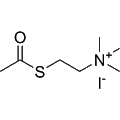
Synonyms: S-Acetylthiocholine iodide; ATCh iodide
Acetylthiocholine iodide serves as a substrate for enzymes such as cholinesterase, enabling the quantification of enzyme activity levels. This compound is utilized in various biochemical assays and has applications in medical research, particularly in neuroscience and organ physiology studies. Its role in enzyme activity determination makes it a valuable reagent for investigating cholinergic signaling pathways.
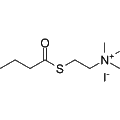
S-n-Butyrylthiocholine iodide functions as a substrate for butyrylcholinesterase (BChE). This chemical reagent is primarily utilized in biochemical assays to study enzyme activity and kinetics, providing valuable insights into the role of BChE in various physiological processes. Its application is essential for in vitro enzymatic experiments, contributing to the understanding of cholinergic signaling and related biochemical pathways.
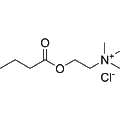
Butyrylcholine chloride is a biochemical assay reagent that serves as a substrate for butyrylcholinesterase. This compound is essential for investigating cholinergic signaling pathways and the enzymatic activity associated with neurotransmitter regulation. It is widely utilized in research applications focusing on neurobiology, pharmacology, and toxicology, facilitating studies on enzyme kinetics and cholinergic receptor interactions.
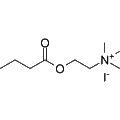
Butyrylcholine iodide is a biochemical assay reagent that functions as a substrate for cholinesterases, facilitating the study of enzyme activity. Its hydrolysis produces butyric acid and choline, making it valuable for exploring cholinergic signaling pathways and neurochemical research. This compound is widely used in assays to evaluate the effects of inhibitors or activators on cholinesterase activity, contributing to advancements in pharmacology and neurobiology.
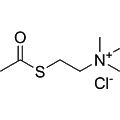
Acetylthiocholine chloride acts as a biochemical assay reagent primarily utilized for the detection of acetylcholinesterase activity. This compound is commonly employed in various research applications, including studies on neurophysiology and the assessment of cholinergic signaling. Its ability to serve as a substrate for enzymatic reactions makes it valuable in the exploration of neurotransmitter dynamics and related pharmacological investigations.
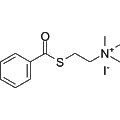
Benzoylthiocholine iodide is a biochemical assay reagent that serves as a substrate for cholinesterase enzymes. It is predominantly used in enzyme activity assays to study physiological and pathological processes involving cholinergic signaling. The compound's ability to generate measurable products upon enzymatic hydrolysis makes it valuable for probing enzyme kinetics and screening potential enzyme inhibitors in research applications.
Out of stock
All 3 sizes