AChE

Acetylcholinesterase (AChE) inhibitors block the enzyme that breaks down acetylcholine at cholinergic synapses. By ending acetylcholine signaling within milliseconds, AChE controls transmission in the brain and at the neuromuscular junction. The 1991 crystal structure of AChE from Torpedo californica showed the active site at the base of a deep, narrow gorge. AChE also has non-catalytic roles, which broaden its interest beyond synaptic transmission. Inhibitors here include donepezil hydrochloride and galanthamine hydrobromide, which are reversible inhibitors. The carbamates rivastigmine tartrate and neostigmine bromide, used in studies of cholinergic signaling and neurodegeneration, are also listed.

22 Items

  • T 82
    Cat. No.
    A29362

    T 82

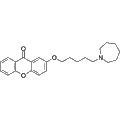
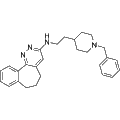
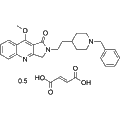
    T 82 is a potent 5-HT3 receptor antagonist that also functions as an acetylcholinesterase (AChE) inhibitor. This compound exhibits significant biological activity relevant for modulating neurotransmitter signaling in the central nervous system. T 82 is primarily utilized in research related to neurodegenerative diseases, including Alzheimer's Disease, making it a valuable tool in understanding the pathophysiology and treatment approaches for related conditions.

    25 mg
    $1,275.00
    50 mg
    $1,625.00
    All 3 sizes
  • Difeterol
    Cat. No.
    A34037

    Difeterol

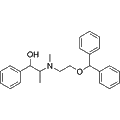
    Difeterol is an antihistamine agent that functions primarily as a histamine-1 receptor antagonist. It also inhibits butyrylcholinesterase (BChE), making it a valuable tool for studying cholinergic pathways. This compound is particularly relevant for research related to Alzheimer's disease, where modulation of histamine and cholinergic systems may provide insights into therapeutic strategies.

    25 mg
    $2,235.00
    All 1 sizes
  • AChE/BChE-IN-21
    Cat. No.
    A34117

    AChE/BChE-IN-21

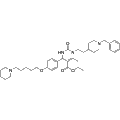
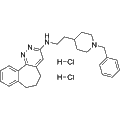
    AChE/BChE-IN-21 is a histamine H3 receptor antagonist that also functions as a calcium channel blocker and acetylcholinesterase inhibitor. This compound demonstrates neuroprotective properties against oxidative stress induced by H2O2 and amyloid-beta peptide Aβ1-40. Additionally, AChE/BChE-IN-21 has been shown to improve cognitive function in mouse models of Alzheimer's disease, making it a valuable tool for research into neurodegenerative disorders.

    25 mg
    $1,275.00
    50 mg
    $1,625.00
    All 3 sizes
  • H3R antagonist 2
    Cat. No.
    A34122

    H3R antagonist 2

    H3R Antagonist 2 is a selective antagonist of the histamine H3 receptor (H3R) with a Ki value of 170 nM for human H3R. This compound demonstrates inhibitory activity against acetylcholinesterase, butyrylcholinesterase, and human monoamine oxidase B (hMAO B), with IC50 values of 180 nM, 880 nM, and 775 nM, respectively. Additionally, H3R Antagonist 2 exhibits promising anti-neuropathic pain and memory-enhancing effects, effectively crossing the blood-brain barrier (BBB). This makes it a valuable tool for research in neuropharmacology and cognitive enhancement studies.

    Out of stock

    All 3 sizes
  • Resorufin butyrate
    Cat. No.
    A44489

    Resorufin butyrate

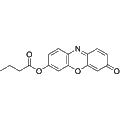
    Resorufin butyrate is a fluorogenic substrate primarily utilized for the detection of triglyceride lipases and cholinesterase. With excitation at 570 nm and emission at 580 nm, this compound facilitates sensitive fluorescence-based assays. It is particularly valuable in biochemical studies focusing on lipid metabolism and enzyme activity.

    5 mg
    $55.00
    10 mg
    $90.00
    All 5 sizes
  • Itopride
    Cat. No.
    A49540

    Itopride

    Synonyms: HSR803 free base

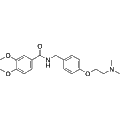
    Itopride is a potent dopamine D2 receptor antagonist and an acetylcholinesterase (AChE) inhibitor. Itopride enhances gastric motility through its dual mechanisms of action, promoting both antidopaminergic and anti-acetylcholinesterase effects. This compound is primarily utilized in research related to gastrointestinal disorders, particularly gastroesophageal reflux disease (GERD), offering insights into prokinetic therapies.

    25 mg
    $1,275.00
    50 mg
    $1,625.00
    All 3 sizes
  • PCS1055 dihydrochloride
    Cat. No.
    A61298

    PCS1055 dihydrochloride

    PCS1055 dihydrochloride is a selective and competitive antagonist of the muscarinic M4 receptor, with an IC50 value of 18.1 nM and a Kd of 5.72 nM. This compound effectively inhibits the binding of the radioligand [3H]-NMS to the M4 receptor, displaying a Ki of 6.5 nM. PCS1055 dihydrochloride demonstrates over 100-fold selectivity against M1, M3, and M5 receptors, and 30-fold selectivity at the M2 receptor. Additionally, it serves as a potent acetylcholinesterase inhibitor, with IC50 values of 22 nM and 120 nM for electric eel and human AChE, respectively, highlighting its potential for various neurological research applications.

    5 mg
    $190.00
    10 mg
    $300.00
    All 5 sizes
  • PCS1055
    Cat. No.
    A61315

    PCS1055

    PCS1055 is a selective competitive antagonist of the muscarinic M4 receptor, exhibiting an IC50 of 18.1 nM and a Kd of 5.72 nM. It effectively inhibits radioligand [3H]-NMS binding to the M4 receptor with a Ki of 6.5 nM. Additionally, PCS1055 demonstrates inhibitory activity against acetylcholinesterase (AChE), with IC50 values of 22 nM for electric eel AChE and 120 nM for human AChE. This compound is valuable for research focused on muscarinic receptor signaling and cholinergic modulation.

    5 mg
    $190.00
    10 mg
    $300.00
    All 5 sizes
  • Gallamine
    Cat. No.
    A61461

    Gallamine

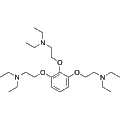
    Gallamine is a selective allosteric antagonist of the muscarinic M2 acetylcholine receptor, exhibiting an EC50 value of 130 nM in promoting the dissociation of [3H]NMS from porcine muscarinic M2 receptors. Additionally, it serves as an acetylcholinesterase inhibitor with varying IC50 values against different isoforms: 1070 μM for EeAChE, 1480 μM for hAChE, and 235 μM for hBChE. Gallamine is known to elevate levels of free norepinephrine and is utilized in research exploring muscle relaxation and pharmacological modulation of cholinergic signaling.

    25 mg
    $1,275.00
    50 mg
    $1,625.00
    All 3 sizes
  • Phenchlobenpyrrone
    Cat. No.
    A66199

    Phenchlobenpyrrone

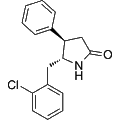
    Phenchlobenpyrrone is a selective neuronal calcium antagonist that effectively crosses the blood-brain barrier. This compound demonstrates the capability to mildly inhibit acetylcholinesterase (AChE) activity, along with inhibiting amyloid-beta (Aβ) aggregation and promoting the clearance of Aβ oligomers. Additionally, Phenchlobenpyrrone reduces abnormal phosphorylation of Tau protein. This agent is valuable for research applications focused on Alzheimer's disease and related neurodegenerative conditions.

    Out of stock

    All 3 sizes
  • 4-Chloro-N,N-diisopropylbenzamide
    Cat. No.
    A74063

    4-Chloro-N,N-diisopropylbenzamide

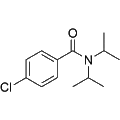
    4-Chloro-N,N-diisopropylbenzamide is an amide with significant relevance as a substrate for cytochrome P450 enzymes in vivo and for acetylcholinesterase in vitro. This compound plays a crucial role in metabolic studies, enabling the investigation of enzyme kinetics and substrate specificity. Its application extends to research focused on drug metabolism and neuropharmacology.

    50 mg
    $20.00
    1 g
    $25.00
    All 2 sizes
  • Ac-IEAR-pNA
    Cat. No.
    A78529

    Ac-IEAR-pNA

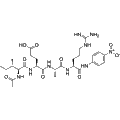
    Ac-IEAR-pNA is a chromogenic substrate specifically designed for the quantification of endotoxin levels. It serves as a selective substrate for human butyrylcholinesterase (HuBChE), resulting in the cleavage that releases p-nitroaniline, a measurable product. This compound is widely used in research applications focused on endotoxin detection and related studies in immunology and toxicology.

    5 mg
    $90.00
    10 mg
    $145.00
    All 3 sizes
  • Chlorpyrifos
    Cat. No.
    A78532

    Chlorpyrifos

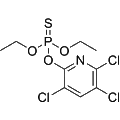
    Chlorpyrifos is a muscarinic antagonist and neurotoxic insecticide classified as a thionite ester. This compound acts primarily as an acetylcholinesterase (AChE) inhibitor, disrupting neurological function in various organisms, including insects and mammals. Research applications of Chlorpyrifos include investigations into neurodevelopmental effects, synaptic transmission alterations, and associated toxicological studies.

    25 mg
    $35.00
    50 mg
    $45.00
    All 3 sizes
  • Cholinesterase, Horse serum
    Cat. No.
    A78548

    Cholinesterase, Horse serum

    Synonyms: EC 3.1.1.8; BCHE; Horse serum

    Cholinesterase, Horse serum is a catalytic enzyme comprising acetylcholinesterase (AChE) and butyryl cholinesterase (BChE). These enzymes facilitate the hydrolysis of various substrates, including the hydrolysis of 6-monoacetylmorphine (6-MAM) to morphine. This reagent is valuable in biochemical research, particularly in studies involving neurotransmitter metabolism and the pharmacokinetics of opioid compounds.

    1 mg
    $20.00
    100 mg
    $200.00
    All 3 sizes
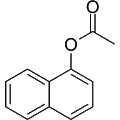
  • 1-Naphthyl acetate
    Cat. No.
    A78564

    1-Naphthyl acetate

    1-Naphthyl acetate serves as a chromogenic substrate specifically for the detection of acetylcholinesterase (AChE) activity in erythrocytes. This compound is particularly valuable in research related to organophosphorus pesticide poisoning, enabling the assessment of enzymatic activity and its inhibition. Its colorimetric properties facilitate quantitative analysis in various biochemical studies.

    1 g
    $20.00
    5 g
    $25.00
    All 6 sizes
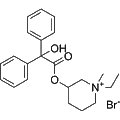
  • Pipenzolate bromide
    Cat. No.
    A78859

    Pipenzolate bromide

    Pipenzolate bromide is a muscarinic receptor antagonist that functions by inhibiting cholinesterase (ChE) activity, thereby preventing the binding of acetylcholine to its receptors. This compound exhibits significant anticholinergic properties, making it valuable in pharmacological research related to disorders such as motion sickness, asthma, and gastrointestinal motility. Pipenzolate bromide serves as a useful reagent in studies aimed at understanding the modulation of cholinergic signaling pathways.

    Out of stock

    All 3 sizes
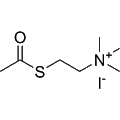
  • Acetylthiocholine iodide
    Cat. No.
    A86583

    Acetylthiocholine iodide

    Synonyms: S-Acetylthiocholine iodide; ATCh iodide

    Acetylthiocholine iodide serves as a substrate for enzymes such as cholinesterase, enabling the quantification of enzyme activity levels. This compound is utilized in various biochemical assays and has applications in medical research, particularly in neuroscience and organ physiology studies. Its role in enzyme activity determination makes it a valuable reagent for investigating cholinergic signaling pathways.

    1 g
    $25.00
    5 g
    $40.00
    All 3 sizes
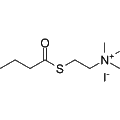
  • S-n-Butyrylthiocholine iodide
    Cat. No.
    A86809

    S-n-Butyrylthiocholine iodide

    S-n-Butyrylthiocholine iodide functions as a substrate for butyrylcholinesterase (BChE). This chemical reagent is primarily utilized in biochemical assays to study enzyme activity and kinetics, providing valuable insights into the role of BChE in various physiological processes. Its application is essential for in vitro enzymatic experiments, contributing to the understanding of cholinergic signaling and related biochemical pathways.

    10 g
    $25.00
    25 g
    $45.00
    All 2 sizes
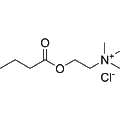
  • Butyrylcholine chloride
    Cat. No.
    A87572

    Butyrylcholine chloride

    Butyrylcholine chloride is a biochemical assay reagent that serves as a substrate for butyrylcholinesterase. This compound is essential for investigating cholinergic signaling pathways and the enzymatic activity associated with neurotransmitter regulation. It is widely utilized in research applications focusing on neurobiology, pharmacology, and toxicology, facilitating studies on enzyme kinetics and cholinergic receptor interactions.

    50 mg
    $20.00
    100 mg
    $30.00
    All 3 sizes
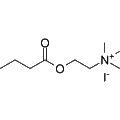
  • Butyrylcholine iodide
    Cat. No.
    A88055

    Butyrylcholine iodide

    Butyrylcholine iodide is a biochemical assay reagent that functions as a substrate for cholinesterases, facilitating the study of enzyme activity. Its hydrolysis produces butyric acid and choline, making it valuable for exploring cholinergic signaling pathways and neurochemical research. This compound is widely used in assays to evaluate the effects of inhibitors or activators on cholinesterase activity, contributing to advancements in pharmacology and neurobiology.

    100 mg
    $20.00
    250 mg
    $40.00
    All 3 sizes
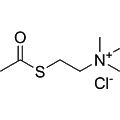
  • Acetylthiocholine chloride
    Cat. No.
    A88249

    Acetylthiocholine chloride

    Acetylthiocholine chloride acts as a biochemical assay reagent primarily utilized for the detection of acetylcholinesterase activity. This compound is commonly employed in various research applications, including studies on neurophysiology and the assessment of cholinergic signaling. Its ability to serve as a substrate for enzymatic reactions makes it valuable in the exploration of neurotransmitter dynamics and related pharmacological investigations.

    250 mg
    $20.00
    1 g
    $35.00
    All 4 sizes
  • Benzoylthiocholine iodide
    Cat. No.
    A92448

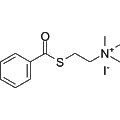
    Benzoylthiocholine iodide

    Benzoylthiocholine iodide is a biochemical assay reagent that serves as a substrate for cholinesterase enzymes. It is predominantly used in enzyme activity assays to study physiological and pathological processes involving cholinergic signaling. The compound's ability to generate measurable products upon enzymatic hydrolysis makes it valuable for probing enzyme kinetics and screening potential enzyme inhibitors in research applications.

    Out of stock

    All 3 sizes

22 Items

Added to your cart

View Cart Checkout

    Loading...