Calmodulin

Calmodulin antagonists and inhibitors bind calmodulin, the main calcium sensor inside eukaryotic cells. Calmodulin is a small protein with four helix-loop-helix calcium-binding motifs that binds calcium ions and then regulates kinases, phosphatases, ion channels and phosphodiesterases. Its 1985 crystal structure showed two globular lobes joined by a long central helix. Naphthalenesulfonamides were among the first synthetic antagonists, and a 1981 study reported that W-7 inhibits cell proliferation. W-5 hydrochloride, an analog without the chlorine atom, binds calmodulin more weakly and often serves as a control. Fluphenazine-N-2-chloroethane hydrochloride is a phenothiazine-derived antagonist, and DY-9760e is a further calmodulin inhibitor. Calcium/calmodulin-dependent protein kinases are listed in the neighboring CaMK category.

1 Item

  • CALP1
    Cat. No.
    A31177

    CALP1

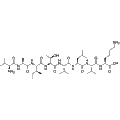
    CALP1 is a potent calmodulin (CaM) agonist that targets the EF-hand/Ca2+-binding site, exhibiting a Kd of 88 µM. This compound effectively inhibits calcium influx and apoptosis with an IC50 of 44.78 µM by blocking the opening of calcium channels. Additionally, CALP1 obstructs glutamate receptor channels and a store-operated nonselective cation channel. Its unique properties enable the activation of CaM-dependent phosphodiesterase activity, making CALP1 valuable for studies on calcium signaling and related neurobiological processes.

    1 mg
    $135.00
    5 mg
    $310.00
    All 3 sizes

1 Item

Added to your cart

View Cart Checkout

    Loading...