
- Cat. No.
- A14111
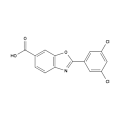
Tafamidis (Fx1006A)
Synonyms: Fx-1006A
Tafamidis is a potent and selective transthyretin kinetic stabilizer that inhibits the amyloid cascade.
In stock
View Details
Search by product name, CAS, target or catalog number. Press Down Arrow to reach product suggestions, Tab to move between links, and Escape to close suggestions.
Transthyretin (TTR) stabilizers and related ligands act on a plasma carrier of thyroxine and retinol. TTR circulates as a tetramer that binds thyroxine and, through retinol-binding protein 4 (RBP4), carries vitamin A. Dissociation of the tetramer into monomers is the rate-limiting step for misfolding into amyloid fibrils. In 2003 stabilization of the tetramer was shown to prevent this process in transthyretin amyloid disease. Tafamidis and tafamidis meglumine bind the thyroxine sites and act as kinetic stabilizers. Patisiran sodium is a small interfering RNA (siRNA) that lowers TTR synthesis. A 1120, an RBP4 ligand, was reported in 2009 to lower serum RBP4 levels in mice. Tinlarebant and STG-001 are listed as further antagonists of the same retinol carrier.
Synonyms: Fx-1006A
Tafamidis is a potent and selective transthyretin kinetic stabilizer that inhibits the amyloid cascade.
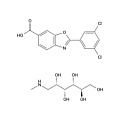
Synonyms: Fx-1006A
Tafamidis meglumine (Fx-1006A) is a potent and selective transthyretin (TTR) stabilizer, shows comparable potency and efficacy to the mutumant homotetramers V30M-TTR, V122I-TTR and wild type WT-TTR, with EC50s of 2.7-3.2 μM.
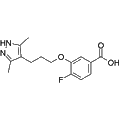
Synonyms: AG10
Acoramidis, also known as AG10, is a selective kinetic stabilizer that targets wild-type and V122I transthyretin (TTR). It is utilized in research focused on transthyretin amyloidosis, facilitating the understanding of its molecular mechanisms and potential therapeutic strategies. Through its stabilization of TTR, Acoramidis contributes valuable insights into the treatment of amyloid-related diseases.
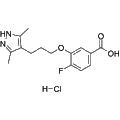
Synonyms: AG10 hydrochloride
Acoramidis hydrochloride is a selective kinetic stabilizer of wild-type and V122I transthyretin (TTR). This compound is actively researched for its potential to inhibit the formation of amyloid fibrils associated with transthyretin amyloidosis. Its application in preclinical and clinical studies aims to further understand TTR's role in disease pathways and to develop effective therapeutic strategies.
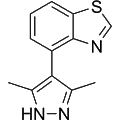
TTR Stabilizer 1 is a potent stabilizer of Transthyretin (TTR) with an EC50 value of 0.031 μM. This compound enhances TTR stability, making it an important tool for research into amyloid diseases associated with TTR misfolding. Its ability to modulate TTR functional integrity offers significant potential for studies focused on therapeutic interventions in related pathologies.
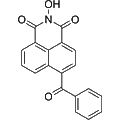
TTR Stabilizer L6 is a specific compound that binds to the T4 binding pocket of transthyretin (TTR), effectively preventing its dissociation into monomers. This stabilization is crucial for maintaining TTR's functional integrity, making L6 a valuable tool in the study of familial amyloid polyneuropathy. Its ability to modulate TTR behavior positions it as a promising candidate for research focused on amyloid-related diseases.