Insecticides & Acaricides

Insecticides and acaricides are compounds used to control insect and mite pests of crops and stored produce. In research they serve as reference substances for mode-of-action work, resistance monitoring and residue analysis in soil, water and food. Nerve-directed classes are represented by the pyrethroid deltamethrin, which holds voltage-gated sodium channels open, and the carbamate fenobucarb, an acetylcholinesterase inhibitor. Cartap is a nereistoxin analog that acts at nicotinic acetylcholine receptors, while pymetrozine alters feeding behavior in sap-sucking insects. Growth and development are addressed by the ecdysone receptor agonist tebufenozide and the chitin synthesis inhibitor buprofezin. Spiromesifen, a tetronic acid acaricide, inhibits acetyl-coenzyme A carboxylase in lipid synthesis.

Items 51-75 of 173

  • FM-8007
    Cat. No.
    A52908

    FM-8007

    FM-8007 is a potent acaricide primarily targeting mite species. Demonstrating broad-spectrum efficacy, FM-8007 exhibits LC50 values of 1.1 mg/L for adult Tetranychus cinnabarinus, 0.25 mg/L for larvae, and 0.85 mg/L for eggs. Additionally, it offers sustained field control against Panonychus citri, making FM-8007 a valuable tool for integrated pest management (IPM) strategies.

    Out of stock

    All 3 sizes
  • Isazofos
    Cat. No.
    A52916

    Isazofos

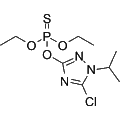
    Isazofos is a broad-spectrum organophosphate insecticide-nematicide that targets various agricultural pests. It effectively controls nematodes, such as Radopholus similis, and is also active against rice gall midge populations. This compound is widely utilized in agricultural research for pest management strategies and studies on crop protection.

    Out of stock

    All 3 sizes
  • BTG 502
    Cat. No.
    A52930

    BTG 502

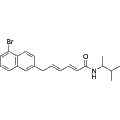
    BTG 502 is an alkylamide insecticide designed to inhibit sodium currents in target organisms. It effectively antagonizes the action of bat toxin (BTX) on cockroach sodium channels, thereby disrupting normal physiological functions. This compound is primarily utilized in entomological research for studying insect physiology and developing pest control strategies.

    1 mg
    $300.00
    5 mg
    $730.00
    All 6 sizes
  • Costic acid
    Cat. No.
    A52949

    Costic acid

    Synonyms: β-Costic acid

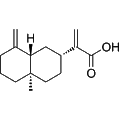
    Costic acid, a natural product derived from Dittrichia viscosa, acts as a potent acaricidal agent targeting parasitic infestations. It demonstrates significant in vivo efficacy against mites while exhibiting low toxicity to human umbilical vein endothelial cells (HUVEC) at concentrations up to 230 μM. This compound is valuable for research into varroosis in honey bee colonies, contributing to the understanding of acaricide applications in apiculture.

    1 mg
    $135.00
    All 1 sizes
  • Cyetpyrafen
    Cat. No.
    A52972

    Cyetpyrafen

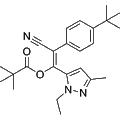
    Cyetpyrafen is a pyrazole insecticide and acaricide that exhibits broad-spectrum insecticidal activity. It specifically targets and binds to DhelOBP4 (Ki = 4.95 μM) and DhelOBP21 (Ki = 5.51 μM), playing a critical role in olfactory recognition in the beetle *Cryptolaemus montrouzieri*. Cyetpyrafen induces dose-dependent electroantennogram responses and demonstrates repellent effects on this species. Additionally, it is rapidly absorbed by the roots of crops such as lettuce and rice, preferentially accumulating in roots while exhibiting limited movement through xylem and phloem.

    10 mg
    $390.00
    All 1 sizes
  • 4,5-Dihydropiperlonguminine
    Cat. No.
    A52992

    4,5-Dihydropiperlonguminine

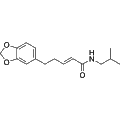
    4,5-Dihydropiperlonguminine is a natural compound derived from the seeds of Piper tuberculatum Jacq. (Piperaceae) that functions as an insecticide. It exhibits significant activity against velvetbean caterpillars, making it a valuable tool for pest management in agricultural research. This compound can be utilized in studies focusing on natural insecticides and their mechanisms of action.

    1 mg
    $365.00
    2 mg
    $550.00
    All 6 sizes
  • OfChi-h-IN-2
    Cat. No.
    A52995

    OfChi-h-IN-2

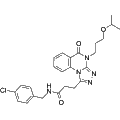
    OfChi-h-IN-2 is a potent inhibitor of the enzyme OfChi-h, exhibiting a Ki value of 0.33 μM. This compound effectively impedes the growth and development of Ostrinia nubilalis larvae, making it a valuable tool for research focused on agricultural insecticides. Its targeted action positions OfChi-h-IN-2 as a promising candidate for studies aimed at controlling pest populations in agricultural settings.

    Out of stock

    All 3 sizes
  • Bioresmethrin
    Cat. No.
    A53008

    Bioresmethrin

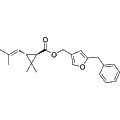
    Bioresmethrin is an insecticide targeting a variety of pests, particularly effective against both malathion-resistant and susceptible strains of Rhyzopertha dominica. It exhibits broad-spectrum activity in the protection of stored grains, making it a valuable tool in agricultural and stored product pest management. Its efficacy contributes to effective pest control strategies in agricultural research and pest resistance studies.

    25 mg
    $1,275.00
    All 1 sizes
  • Proclonol
    Cat. No.
    A53030

    Proclonol

    Synonyms: Kilacar; R 8284

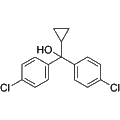
    Proclonol is an insecticide-acaricide that operates by targeting the nervous system of pests. This compound exhibits effective biological activity against a range of insects and mites, making it a valuable tool for agricultural research. Additionally, Proclonol has been identified as a weak mutagen in the TA97 strain of Salmonella typhimurium, which may aid in studies related to mutagenicity and environmental impact assessments.

    25 mg
    $1,275.00
    50 mg
    $1,625.00
    All 3 sizes
  • Dienochlor
    Cat. No.
    A53036

    Dienochlor

    Synonyms: Decachlor

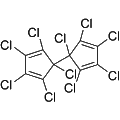
    Dienochlor is an acaricide that targets various pests, specifically inhibiting the egg-laying behavior of the Mexican bean beetle, Epilachna varivestis. This compound demonstrates effective miticidal properties, making it valuable for agricultural applications in pest management, particularly for protecting pinto beans from infestation. Its mechanism disrupts the reproductive cycle of targeted pests, thereby enhancing crop yield and quality.

    Out of stock

    All 3 sizes
  • Insecticidal agent 7
    Cat. No.
    A53082

    Insecticidal agent 7

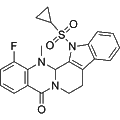
    Insecticidal agent 7 (Compound 21m) is an insecticide that specifically targets insect ryanodine receptors (RyRs), exhibiting an LC50 of 0.0937 mg/L for Plutella xylostella. This compound demonstrates strong insecticidal activity while maintaining significant selectivity and low toxicity towards non-target organisms, making it suitable for various agricultural applications in pest management and research focused on insect physiology.

    Out of stock

    All 3 sizes
  • Milbemycin A3 Oxime
    Cat. No.
    A53093

    Milbemycin A3 Oxime

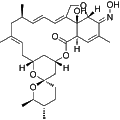
    Milbemycin A3 Oxime is a macrocyclic lactone that act as a potent insecticide, primarily targeting nematodes and arthropods. It demonstrates significant inhibitory activity against Dirofilaria immitis, making it a valuable reagent in parasitology research. This compound is utilized in studies focusing on antiparasitic mechanisms and the development of veterinary anthelmintics.

    1 mg
    $450.00
    5 mg
    $1,740.00
    All 2 sizes
  • Melianol
    Cat. No.
    A53095

    Melianol

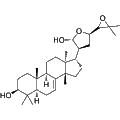
    Melianol is an acaricidal compound derived from the fruits of Melia azedarach. It exhibits strong activity against various mite species, making it a valuable tool in agricultural research for pest management. Its mechanism of action involves disrupting the nervous system of arachnids, which can lead to effective control of harmful mite populations in crops.

    Out of stock

    All 3 sizes
  • (-)-Lufenuron (Lufenuron isomer)
    Cat. No.
    A53104

    (-)-Lufenuron (Lufenuron isomer)

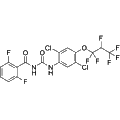
    Lufenuron, (-)- is a lipophilic benzoyl urea insecticide that functions primarily as a chitin synthesis inhibitor. It is effective in controlling flea and fish lice populations by disrupting the molting process in arthropods. This compound is valuable in research applications focused on pest management and the study of insect physiology.

    Out of stock

    All 3 sizes
  • Butoxycarboxim
    Cat. No.
    A53111

    Butoxycarboxim

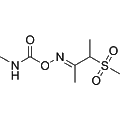
    Butoxycarboxim is an organophosphate insecticide and acaricide targeting a broad spectrum of agricultural pests. It demonstrates potent biological activity, effectively disrupting pest populations to enhance crop protection. Its application is crucial in integrated pest management strategies, offering a means to manage both insects and mites in various agricultural settings.

    Out of stock

    All 3 sizes
  • γ-Cyhalothrin
    Cat. No.
    A53130

    γ-Cyhalothrin

    γ-Cyhalothrin is a synthetic Type II pyrethroid insecticide that targets voltage-gated sodium channels. It is the insecticidally active enantiomer of λ-Cyhalothrin and demonstrates significant biological activity, including the induction of salivation and reduction of spontaneous movement in non-target organisms like rats. This compound has been shown to exert toxic effects on aquatic invertebrates and fish, influencing community dynamics in aquatic ecosystems, and is effective in inhibiting host-seeking nymphs of Ixodes scapularis in residential environments. γ-Cyhalothrin is a valuable reagent for research focused on insecticidal applications and ecological impacts.

    Out of stock

    All 3 sizes
  • β-Cyfluthrin
    Cat. No.
    A65508

    β-Cyfluthrin

    Synonyms: beta-Cyfluthrin

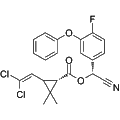
    β-Cyfluthrin is a type II synthetic pyrethroid known for its role as an insecticide. It exerts neurotoxic effects by disrupting calcium homeostasis in nervous tissue, primarily through inhibition of Ca2+ ATPase responsible for calcium transport. This mechanism of action makes β-Cyfluthrin effective in controlling a wide range of agricultural pests, contributing significantly to pest management strategies in agriculture. Its utility in entomological studies and insecticide resistance research further highlights its importance in the field of agricultural sciences.

    5 mg
    $20.00
    50 mg
    $25.00
    All 4 sizes
  • Chloropropylate
    Cat. No.
    A67559

    Chloropropylate

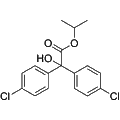
    Chloropropylate is an acaricide agent that primarily targets Mg2+ and Na+K+-ATPase enzymes. Its inhibition of these ATPases disrupts crucial ion transport processes in arthropods, leading to effective control of pest populations. This compound is widely utilized in research focused on agricultural pest management and studies of enzyme inhibition mechanisms.

    10 mg
    $40.00
    All 1 sizes
  • Thiamethoxam
    Cat. No.
    A67596

    Thiamethoxam

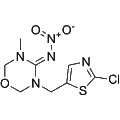
    Thiamethoxam is a neonicotinoid insecticide that targets nicotinic acetylcholine receptors in insects, leading to paralysis and death. It exhibits broad-spectrum activity against a variety of agricultural pests, effectively controlling insects through both contact and systemic action. Thiamethoxam is widely utilized in entomological research and agricultural studies to assess insect resistance and efficacy of pest management strategies.

    100 mg
    $25.00
    500 mg
    $60.00
    All 3 sizes
  • Jasmolin II
    Cat. No.
    A68573

    Jasmolin II

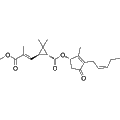
    Jasmolin II is an insecticide that selectively targets voltage-gated sodium channels in insects. By interfering with neuronal signaling, it induces hyperexcitation, leading to paralysis of the insect. This compound shows potential for research applications focused on the management and control of agricultural pests.

    Out of stock

    All 3 sizes
  • Tefluthrin
    Cat. No.
    A68589

    Tefluthrin

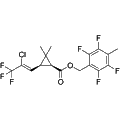
    Tefluthrin is a pyrethroid insecticide that targets Nav1.6 sodium channels. It prolongs the opening time of these channels, resulting in membrane depolarization and conductance blockade within the insect nervous system. This disruption of neural function effectively impairs insect behavior and physiology, making Tefluthrin a valuable agent for research in pest control and insect physiology studies.

    Out of stock

    All 3 sizes
  • RH 3421
    Cat. No.
    A68606

    RH 3421

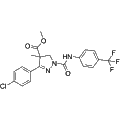
    RH 3421 is a dihydropyrazole insecticide that functions as an inhibitor of sodium channel-specific sodium uptake. It effectively blocks sodium uptake stimulated by agents such as Veratridine and Vatrachotoxin, highlighting its utility in pest control research. This compound serves as a potent tool for investigating insect sodium channels and their role in neurophysiological processes.

    25 mg
    $1,275.00
    50 mg
    $1,625.00
    All 3 sizes
  • Spirotetramat-enol
    Cat. No.
    A69163

    Spirotetramat-enol

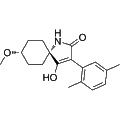
    Spirotetramat-enol is an insecticide that functions primarily through the inhibition of acetyl-CoA carboxylase. This compound demonstrates significant insecticidal activity, particularly against the pest Aphis craccivora Koch. Its mechanism of action and biological efficacy make it a valuable reagent for research applications in entomology and agricultural sciences.

    Out of stock

    All 3 sizes
  • Beauveriolide I
    Cat. No.
    A73886

    Beauveriolide I

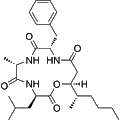
    Beauveriolide I is a metabolite derived from the entomopathogenic fungus Beauveria sp., primarily functioning as an insecticide. It demonstrates moderate insecticidal activity against key agricultural pests such as Spodoptera litura and Callosobruchus chinensis. This compound is suitable for research on biological pest control and can be used in studies related to eco-friendly agricultural practices.

    0.25 mg
    $490.00
    1 mg
    $2,150.00
    All 2 sizes
  • Silafluofen
    Cat. No.
    A75692

    Silafluofen

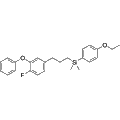
    Silafluofen is a hormone-sensitive lipase (HSL) inhibitor that functions as an effective insecticide. By selectively targeting HSL, it interferes with lipid metabolism in insects, leading to detrimental effects on their growth and reproduction. This compound is widely utilized in research applications focused on pest control and insect physiology.

    Out of stock

    All 3 sizes
Items 51-75 of 173

Added to your cart

View Cart Checkout

    Loading...