- Cat. No.
- A12963
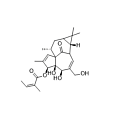
Ingenol Mebutate (PEP005)
Synonyms: PEP005; ingenol-3-angelate; I3A
Ingenol mebutate is a substance found in the sap of the plant Euphorbia peplus and an inducer of cell death.
Search by product name, CAS, target or catalog number. Press Down Arrow to reach product suggestions, Tab to move between links, and Escape to close suggestions.
Protein kinase C (PKC) inhibitors and activators act on a family of lipid-regulated serine/threonine kinases. Conventional PKC isoforms require calcium and diacylglycerol, novel isoforms need only diacylglycerol, and atypical isoforms respond to neither. Tumor-promoting phorbol esters mimic diacylglycerol and were shown in 1982 to activate PKC directly. 12-O-tetradecanoyl phorbol-13-acetate (TPA) is the standard activator of this kind, and ingenol mebutate also activates several isoforms. Staurosporine was first described as a PKC inhibitor but blocks a wide range of protein kinases. Enzastaurin is selective for PKCβ, while GO6983 and Ro 31-8220 mesylate inhibit multiple conventional and novel isoforms.
Synonyms: PEP005; ingenol-3-angelate; I3A
Ingenol mebutate is a substance found in the sap of the plant Euphorbia peplus and an inducer of cell death.
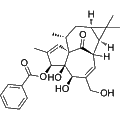
Synonyms: Ingenol 3-benzoate
Ingenol 3-monobenzoate is an aversion inducer that selectively activates protein kinase C (PKC) with a Ki of 0.14 nM. This compound inhibits the expression of phosphoenolpyruvate carboxykinase, leading to reduced gluconeogenesis and elevated cortisol levels, which collectively contribute to induced food aversion. Ingenol 3-monobenzoate is valuable for research into behavioral responses to aversive stimuli and the underlying metabolic mechanisms.
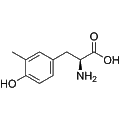
3-Methyl-L-tyrosine is a derivative of L-Tyrosine that features a methyl group at the third position of the aromatic ring. This compound acts as a substrate for the protein tyrosine kinase Csk, demonstrating a catalytic efficiency (kcat/Km) of 38% relative to L-Tyrosine, indicating its role in modulating the enzymatic processing of Gsk. Research applications of 3-Methyl-L-tyrosine include studying the molecular recognition mechanisms of Gsk's substrates, which is essential for the design of specific inhibitors targeting Gsk in various therapeutic areas.
Out of stock
All 3 sizes