- Cat. No.
- A21915
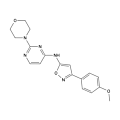
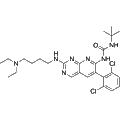
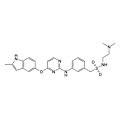
Sulfatinib
Synonyms: HMPL-012
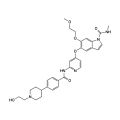
Sulfatinib (HMPL-012) is a potent and highly selective tyrosine kinase inhibitor against VEGFR1/2/3, FGFR1 and CSF1R with IC50s of in a range of 1 to 24 nM.
Search by product name, CAS, target or catalog number. Press Down Arrow to reach product suggestions, Tab to move between links, and Escape to close suggestions.
Fibroblast growth factor receptor (FGFR) inhibitors act on FGFR1 to FGFR4, four receptor tyrosine kinases. FGFR signaling controls cell proliferation, migration and differentiation in development and angiogenesis. Amplifications, activating mutations and gene fusions of FGFR genes have been found in many tumor types. PD173074 was crystallized with the FGFR1 kinase domain in 1998, which showed how it occupies the adenosine triphosphate (ATP) pocket. Infigratinib and fexagratinib are FGFR-focused inhibitors used to study cells that depend on FGFR signaling. Nintedanib and pazopanib HCl inhibit FGFR together with vascular endothelial growth factor receptors (VEGFRs) and platelet-derived growth factor receptors (PDGFRs). Kinases outside the FGFR family are covered by sibling categories such as VEGFR and PDGFR.
Synonyms: HMPL-012
Sulfatinib (HMPL-012) is a potent and highly selective tyrosine kinase inhibitor against VEGFR1/2/3, FGFR1 and CSF1R with IC50s of in a range of 1 to 24 nM.
Synonyms: CP547632
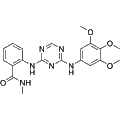
CP-547632 hydrochloride is a well-tolerated, orally-bioavailable inhibitor of the VEGFR-2 and basic fibroblast growth factor (FGF) kinases with IC50s of 11 nM and 9 nM, respectively.
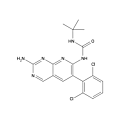
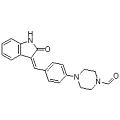
PD089828 is an ATP competitive inhibitor of FGFR-1, PDGFR-β and EGFR with IC50 of 0.15 µM, 1.76 µM, and 5.47 µM, respectively.
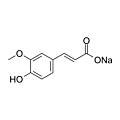
Synonyms: Coniferic acid sodium
Ferulic acid sodium is a novel fibroblast growth factor receptor 1 (FGFR1) inhibitor with IC50s of 3.78 and 12.5 μM for FGFR1 and FGFR2, respectively.
BO-264 is a highly potent and orally active transforming acidic coiled-coil 3 (TACC3) inhibitor with an IC50 of 188 nM and a Kd of 1.5 nM.
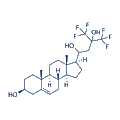
NSC12 (NSC 172285) is an orally available pan-FGF trap able to inhibit FGF2/FGFR interaction and endowed with promising antitumor activity.
2,5-Dihydroxybenzoic acid is a derivative of benzoic and a powerful inhibitor of fibroblast growth factors.
Synonyms: SU 4984.
SU4984 is a cell-permeable, reversible, and ATP-competitive inhibitor of the tyrosine kinase activity of fibroblast growth factor receptor 1 (FGFR1; IC50 = 10-20 μM).
Synonyms: Tasurgratinib; Tasurgratinibum
E-7090 is a fibroblast growth factor receptor inhibitor potentially for the treatment of solid tumors.
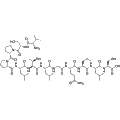
VSPPLTLGQLLS is a small peptide FGFR3 inhibitor, peptide P3, inhibits FGFR3 phosphorylation. VSPPLTLGQLLS inhibits 9-cisRA-induced tracheal lymphangiogenesis and blocks lymphatic endothelial cell (LEC) proliferation, migration, and tubule formation.
Synonyms: RLY-4008
Lirafugratinib (RLY-4008) is an orally active, irreversible, and highly selective inhibitor of fibroblast growth factor receptor 2 (FGFR2), with an IC₅₀ of 3 nM. It covalently binds to cysteine 491 (Cys491) in the FGFR2 kinase domain, enabling durable inhibition of FGFR2 signaling. Lirafugratinib is specifically designed to target FGFR2-driven cancers, including those with primary activating alterations and acquired resistance mutations, while sparing other FGFR family members to minimize off-target effects. It has demonstrated potent antitumor activity, including tumor regression, making it a promising therapeutic candidate for FGFR2-altered malignancies such as intrahepatic cholangiocarcinoma and other solid tumors.
Synonyms: KIN-3248
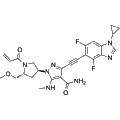
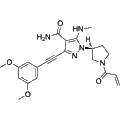
Resigratinib (KIN-3248) is an irreversible, orally active covalent inhibitor targeting fibroblast growth factor receptors FGFR1–4. It binds covalently to the conserved cysteine residue Cys492 within the kinase domain, effectively blocking FGFR signaling. Resigratinib demonstrates potent activity against both wild-type FGFRs and clinically relevant drug-resistant mutations, including FGFR2 V565F and FGFR3 V555M.
Synonyms: ABSK011
Irpagratinib (ABSK011) is an orally active and highly potent FGFR4 (fibroblast growth factor receptor 4) inhibitor with an IC₅₀ of less than 10 nM. It effectively inhibits FGFR4 autophosphorylation, thereby blocking downstream signaling pathways critical for tumor cell survival and proliferation. Pharmacokinetic studies in mice, rats, and dogs have demonstrated high systemic exposure of Irpagratinib, supporting its potential for oral dosing in clinical applications. In preclinical models, Irpagratinib has shown significant antitumor activity, particularly in subcutaneous xenograft tumor models, making it a promising candidate for the treatment of FGFR4-driven cancers such as hepatocellular carcinoma.
Synonyms: ICP-192
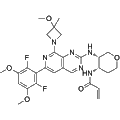
Gunagratinib (ICP-192) is a low-toxicity, orally active, irreversible pan-FGFR inhibitor that covalently binds to fibroblast growth factor receptors (FGFR1–4), potently and selectively blocking FGFR-mediated signaling. It is designed for the treatment and study of FGFR-driven cancers, including those with FGFR alterations implicated in tumor growth and survival.
Synonyms: TT 00420
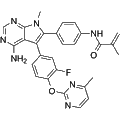
Tinengotinib (TT00420) is an orally bioavailable, spectrally selective small-molecule kinase inhibitor targeting Aurora A/B (IC50=1.2–3.3 nM), FGFR1/2/3 (IC50=1.5–3.5 nM), VEGFRs, JAK1/2, and CSF1R. It disrupts Aurora kinase-mediated cell cycle progression, inducing G2/M arrest, inhibits the FGFR/JNK-JUN signaling pathway, and activates the MEK/ERK-dependent apoptotic pathway. Tinengotinib exhibits potent anti-tumor proliferation, pro-apoptotic, anti-angiogenic, and tumor microenvironment-modulating activities. It is a promising candidate for research in triple-negative breast cancer (TNBC), gallbladder cancer, and tumor immune microenvironment studies.
PD-161570 is a potent ATP-competitive inhibitor of the human fibroblast growth factor receptor 1 (FGFR1) with an IC50 of 39.9 nM and a Ki of 42 nM. It also demonstrates inhibitory effects on platelet-derived growth factor receptor (PDGFR), epidermal growth factor receptor (EGFR), and c-Src tyrosine kinases, with IC50 values of 310 nM, 240 nM, and 44 nM, respectively. Additionally, PD-161570 effectively inhibits PDGF-stimulated autophosphorylation and FGFR phosphorylation, with IC50s of 450 nM and 622 nM, respectively. This compound is relevant in studies of bone morphogenetic proteins (BMPs) and TGF-β signaling pathways.
PHM16 is an ATP-competitive inhibitor targeting Focal Adhesion Kinase (FAK) and Fibroblast Growth Factor Receptor 2 (FGFR2), with IC50 values of 0.4 μM and 0.37 μM, respectively. This compound exhibits strong anti-angiogenic properties, making it a valuable tool for studies focused on inhibiting tumor angiogenesis and understanding related signaling pathways. Its dual inhibition profile positions PHM16 as an important reagent for cancer research and therapeutic development targeting angiogenesis-related mechanisms.
FGFR-IN-8 is a potent pan-FGFR inhibitor that targets both wild-type and mutant forms of fibroblast growth factor receptors (FGFRs). With impressive inhibitory potency, it demonstrates IC50 values of less than 0.5 nM against FGFR1, V564F-FGFR2, and FGFR3, alongside 22.6 nM for V555M-FGFR3, and 7.30 nM for FGFR4. This compound induces apoptosis in cancer cells and exhibits notable anticancer properties, making it a valuable reagent for cancer research and therapeutic studies involving FGFR signaling pathways.
Picrasidine Q is a FGFR2 kinase inhibitor derived from the alkaloid components of Angelica keiskei. It exhibits significant anti-cancer properties by inducing apoptosis and causing G1 phase cell cycle arrest in human esophageal cancer cell lines. This compound is valuable for research focused on cancer biology and the molecular mechanisms underlying cell transformation and proliferation.
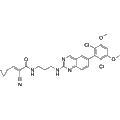
FGFR4-IN-7 is a covalent reversible inhibitor of Fibroblast Growth Factor Receptor 4 (FGFR4), exhibiting an IC50 of 0.42 μM. This compound disrupts the FGFR4 signaling pathway, leading to the induction of apoptosis. FGFR4-IN-7 is primarily utilized in research focused on hepatocellular carcinoma (HCC) and offers potential insights into therapeutic strategies targeting this malignancy.
Out of stock
All 3 sizes
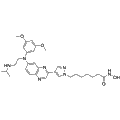
HDAC-IN-50 is a potent dual inhibitor targeting FGFR and HDAC with IC50 values of 0.18 nM for FGFR1, 1.2 nM for FGFR2, 0.46 nM for FGFR3, 1.4 nM for FGFR4, and varying inhibitory effects on HDAC isoforms such as HDAC1 (1.3 nM), HDAC2 (1.6 nM), HDAC6 (2.6 nM), and HDAC8 (13 nM). This compound effectively induces apoptosis and causes cell cycle arrest at the G0/G1 phase. Additionally, HDAC-IN-50 decreases the expression of phosphorylated forms of FGFR1, ERK, and STAT3, indicating its potential applications in cancer research and therapy.
Synonyms: TYRA-300
Dabogratinib is a selective inhibitor of FGFR3, displaying an IC50 of 11 nM. It demonstrates significant antitumor activity against urothelial carcinoma and various solid tumors by downregulating FGFR3 and ERK1/2 signaling pathways, leading to tumor growth inhibition and regression in FGFR3-altered xenograft models. Additionally, Dabogratinib enhances chondrocyte proliferation and differentiation, promotes endochondral bone formation, and improves craniofacial and spinal morphology. This compound is valuable for research into metastatic urothelial carcinoma, achondroplasia, and hypochondroplasia.
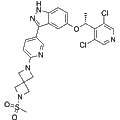
FGFR2-IN-2 is a selective inhibitor of fibroblast growth factor receptor 2 (FGFR2), demonstrating inhibitory potency with an IC50 value of 29 nM against FGFR2, and 389 nM and 758 nM for FGFR1 and FGFR3, respectively. This compound exhibits potential in the study of FGFR-related signaling pathways and can be utilized in research focused on cancer therapeutics, particularly in tumors with aberrant FGFR2 activity.
Synonyms: FGFR irreversible inhibitor-1
FIIN-1 is a selective, irreversible inhibitor of fibroblast growth factor receptors (FGFR1, FGFR2, FGFR3, and FGFR4). It exhibits potent binding affinity, with Kd values of 2.8 nM for FGFR1, 6.9 nM for FGFR2, 5.4 nM for FGFR3, and 120 nM for FGFR4, alongside Kd values of 32 nM and 120 nM for Flt1 and Flt4, respectively. With biochemical IC50 values of 9.2 nM for FGFR1, 6.2 nM for FGFR2, 11.9 nM for FGFR3, and 189 nM for FGFR4, FIIN-1 is valuable for research applications focused on FGFR-related pathways in cancer and developmental biology.
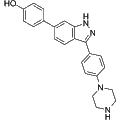
FGFR1 inhibitor-10 is a potent FGFR1 inhibitor with an IC50 value of 28 nM. It effectively inhibits the phosphorylation of FGFR1, leading to significant anti-angiogenic, anti-invasive, and anti-tumor activities. This compound is valuable for research applications focused on understanding FGFR1 signaling pathways and developing therapies for cancers characterized by aberrant FGFR1 activity.