- Cat. No.
- A11206
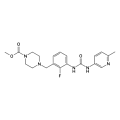
Omecamtiv mecarbil (CK-1827452)
Synonyms: CK1827452
CK-1827452 is a selective cardiac specific myosin activator.
Search by product name, CAS, target or catalog number. Press Down Arrow to reach product suggestions, Tab to move between links, and Escape to close suggestions.
ATPase inhibitors and activators target enzymes that use adenosine triphosphate (ATP) to pump ions or drive motors. The category spans several unrelated enzyme families, so compounds are listed by the ATPase they act on. Sodium-potassium ATPase (Na+/K+-ATPase), described by Skou in 1957, maintains ion gradients across the plasma membrane and is inhibited by ouabain. Vacuolar-type proton ATPases acidify lysosomes and endosomes and are blocked by bafilomycin A1. Omeprazole and esomeprazole magnesium inhibit the H+/K+-ATPase that secretes acid from gastric parietal cells. Oligomycin A inhibits mitochondrial ATP synthase, and omecamtiv mecarbil activates cardiac myosin ATPase.
Synonyms: CK1827452
CK-1827452 is a selective cardiac specific myosin activator.
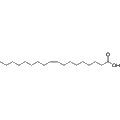
Synonyms: 9-cis-Octadecenoic acid; 9Z-Octadecenoic acid
Oleic acid (9-cis-Octadecenoic acid) is an abundant monounsaturated fatty acid. Oleic acid is a Na+/K+ ATPase activator.
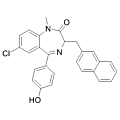
Synonyms: BZ48
Bz-423 is an F1F0-ATPase modulator. It acts by selectively killing autoimmune lymphocytes.
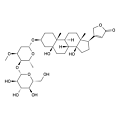
Periplocin is a cardiotonic steroid isolated from Periploca forrestii. Periplocin promotes tumor cell apoptosis and inhibits tumor growth. Periplocin has the potential to facilitate wound healing through the activation of Src/ERK and PI3K/Akt pathways mediated by Na/K-ATPase.
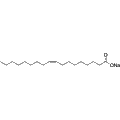
Synonyms: Sodium oleate; 9-cis-Octadecenoic acid sodium; 9Z-Octadecenoic acid sodium
Oleic acid sodium, also known as sodium oleate, is a sodium salt of the monounsaturated fatty acid oleic acid. It functions as an activator of Na+/K+ ATPase, which is essential for maintaining ion gradients across cell membranes. This compound has significant implications in various biological research applications, particularly in studies involving membrane function and cellular signaling pathways.
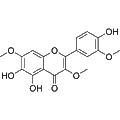
Chrysosplenol C is a flavonoid compound that functions as a selective activator of cardiac myosin ATPase, with an EC50 value of 45 µM. It enhances intracellular calcium ion release by activating protein kinase C (PKC), resulting in increased contractility of rat ventricular muscle cells. Chrysosplenol C is applicable in research related to heart failure, providing insights into mechanisms that may improve cardiac function.
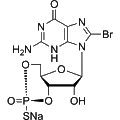
Synonyms: Rp-8-bromo-Cyclic GMPS sodium
Rp-8-Br-cGMPS sodium is a potent activator of Ca2+-ATPase, facilitating the reduction of cytosolic Ca2+ levels. This compound acts as an agonist of the rod cyclic nucleotide-gated (CNG) channel while also inhibiting protein kinase G (PKG). Its key biological activities make it valuable for research applications involving calcium signaling and cellular calcium homeostasis.
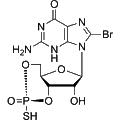
Synonyms: Rp-8-bromo-Cyclic GMPS
Rp-8-Br-cGMPS (Rp-8-bromo-Cyclic GMP sodium salt) is an effective activator of Ca2+-ATPase, promoting the reduction of cytosolic Ca2+ levels by enhancing the efflux of Ca2+ from cells. Additionally, it acts as an agonist of the rod cyclic nucleotide-gated (CNG) channel and functions as an inhibitor of protein kinase G (PKG). This compound is valuable for studies involving calcium signaling, cellular response mechanisms, and cardiovascular research.