
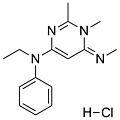
- Cat. No.
- A20686
ZD7288
Synonyms: ICI D7288
ZD7288 is a selective hyperpolarization-activated cyclic nucleotide-gated (HCN) channel blocker.
In stock
View Details
Search by product name, CAS, target or catalog number. Press Down Arrow to reach product suggestions, Tab to move between links, and Escape to close suggestions.
HCN channel blockers act on pacemaker ion channels that open when the cell membrane hyperpolarizes. Hyperpolarization-activated cyclic nucleotide-gated (HCN) channels carry the funny current in the sinoatrial node and the related Ih current in neurons. In 1991 cyclic adenosine monophosphate (cAMP) was shown to activate cardiac pacemaker channels directly from the inside of the membrane. The genes were cloned in 1998, and mammals have four isoforms, HCN1 to HCN4. Blockers are used to study heart rate, neuronal excitability, dendritic integration and pain. Ivabradine HCl, zatebradine and cilobradine hydrochloride belong to the bradine group of pore blockers. ZD7288 is widely used in brain slices, and RO-275 and HCN2-IN-3 are aimed at HCN1 and HCN2.
Synonyms: ICI D7288
ZD7288 is a selective hyperpolarization-activated cyclic nucleotide-gated (HCN) channel blocker.
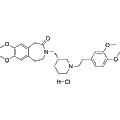
Synonyms: DK-AH 269
Cilobradine hydrochloride is a selective blocker of hyperpolarization-activated cyclic nucleotide-gated (HCN) channels. It has been shown to modulate cardiac pacemaker currents, resulting in significant alterations in heart rhythm. Additionally, cilobradine exhibits antidepressant properties, making it relevant for research in cardiovascular physiology and mood disorder therapies.
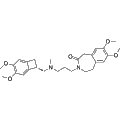
Ivabradine is a potent HCN (hyperpolarization-activated cyclic nucleotide-gated) channel blocker that selectively inhibits the cardiac pacemaker current (If). This compound effectively reduces heart rate in a dose-dependent manner without affecting blood pressure. In addition to its use in cardiovascular research, Ivabradine exhibits anticonvulsant, anti-ischemic, and anti-anginal properties, making it valuable for diverse biological investigations.
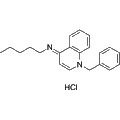
CP 339818 hydrochloride is a selective blocker of Kv1.3 and Kv1.4 ion channels, with an IC50 of 200 nM for Kv1.3. This compound also inhibits HCN channels, displaying IC50 values of 18.9 μM and 43.4 μM for HCN1 and HCN4, respectively, while having minimal effect on other Kv channels such as Kv1.1 and Kv1.2. By selectively targeting Kv1.3, CP 339818 hydrochloride attenuates the activation of human T cells, making it a valuable tool for investigating the physiological roles of HCN and Kv channels in cellular processes.
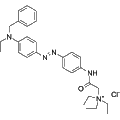
KIO-301 chloride is a photoswitch compound that selectively blocks hyperpolarisation-activated cyclic nucleotide-gated (HCN) channels and voltage-gated potassium channels upon exposure to visible light. This compound can be employed in research to investigate the role of these ion channels in cellular excitability and signaling pathways. Its unique mechanism offers insights into ion channel modulation and potential therapeutic applications in neurobiology and cardiac research.
Out of stock
All 3 sizes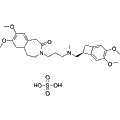
Ivabradine sulfate is a potent HCN (hyperpolarization-activated cyclic nucleotide-gated) channel blocker, primarily functioning to inhibit the cardiac pacemaker current (If). This compound effectively reduces heart rate in a dose-dependent manner while maintaining stable blood pressure levels. Ivabradine sulfate also exhibits notable biological activity, including anticonvulsant, anti-ischemic, and anti-anginal effects, making it a valuable reagent for cardiovascular and neurological research applications.
Out of stock
All 3 sizes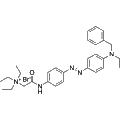
KIO-301 is a photoswitchable blocker of hyperpolarization-activated cyclic nucleotide-gated (HCN) channels. This compound serves as a versatile tool for research in retinal diseases, specifically targeting the reactivation of HCN channels in models of retinitis pigmentosa. Its ability to be controlled by light makes it particularly useful for studies requiring precise spatiotemporal modulation of channel activity.
Out of stock
All 3 sizes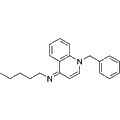
CP-339818 is a selective blocker of the Kv1.3 and Kv1.4 potassium channels, exhibiting an IC50 of 200 nM for Kv1.3. This compound also inhibits HCN channels, with IC50 values of 18.9 μM and 43.4 μM for HCN1 and HCN4, respectively, while demonstrating minimal effects on other Kv channels, such as Kv1.1 and Kv1.2. CP-339818 is valuable for investigating the role of Kv1.3 in T cell activation and the physiological functions of HCN and Kv channels in cellular contexts.