
- Cat. No.
- A21784
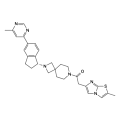
PF-5190457
PF-5190457 is a potent and selective ghrelin receptor inverse agonist with a pKi of 8.36.
In stock
View Details
Search by product name, CAS, target or catalog number. Press Down Arrow to reach product suggestions, Tab to move between links, and Escape to close suggestions.
Ghrelin receptor agonists and antagonists act on the growth hormone secretagogue receptor (GHSR). The receptor was cloned in 1996 from pituitary and hypothalamus as the target of synthetic growth hormone secretagogues. Its endogenous ligand, ghrelin, was identified in 1999 as an acylated stomach peptide that releases growth hormone. GHSR signaling links growth hormone release with appetite and energy balance, which makes the receptor a frequent subject in metabolism research. Anamorelin, capromorelin and ulimorelin are small-molecule GHSR agonists, and des-Gln14-Ghrelin is a natural ghrelin variant. PF-5190457 acts as an inverse agonist, while liver-expressed antimicrobial peptide 2 (LEAP-2) antagonizes the receptor.
PF-5190457 is a potent and selective ghrelin receptor inverse agonist with a pKi of 8.36.
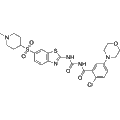
AZ-GHS-38 is an orally active inverse agonist of the growth hormone secretagogue receptor 1a (GHS-R1a), exhibiting an IC50 of 6.7 nM. This compound effectively reduces food intake in wild-type mice, making it a valuable tool for anti-obesity research. Its central nervous system penetration facilitates investigations into the modulation of appetite and energy homeostasis.
Out of stock
All 3 sizes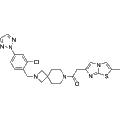
PF-04628935 is a potent inverse agonist of the ghrelin receptor (GHSR) with a reported IC50 of 4.6 nM. It demonstrates oral bioavailability of 43% in rat models and effectively penetrates the blood-brain barrier. This compound is valuable for research applications focused on stress and anxiety, providing insights into the role of ghrelin signaling in these physiological processes.
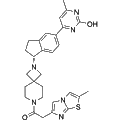
PF-6870961 is a selective inverse agonist of the growth hormone secretagogue receptor 1a (GHSR1a). It demonstrates Ki values of 73.6 nM for human GHSR, 239 nM for rat GHSR, and 217 nM for canine GHSR. This compound effectively inhibits constitutive GHSR1a-induced inositol phosphate accumulation with an IC50 of 300 nM and also blocks β-arrestin mobilization with an IC50 of 1.10 nM. PF-6870961 serves as a valuable tool in research focused on GHSR signaling pathways and their physiological roles.
Out of stock
All 3 sizes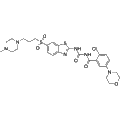
AZ-GHS-22 is a potent inverse agonist targeting the growth hormone secretagogue receptor type 1a (GHS-R1a) with an IC50 of 0.77 nM. This compound exhibits significant inhibition of receptor activity, making it a valuable tool for research into metabolic regulation and appetite control. AZ-GHS-22 is particularly useful for studies focused on obesity and related disorders, enabling exploration of the physiological roles of GHS-R1a in non-central nervous system contexts.
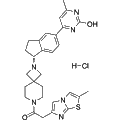
PF-6870961 hydrochloride is a potent inverse agonist of GHSR1a, exhibiting Ki values of 73.6 nM for human GHSR, 239 nM for rat GHSR, and 217 nM for dog GHSR. It effectively inhibits GHSR1a-induced inositol phosphate (IP) accumulation with an IC50 of 300 nM and demonstrates a strong inhibition of constitutive GHSR1a β-arrestin mobilization with an IC50 of 1.10 nM. This compound is relevant for research applications exploring the physiological roles of GHSR1a in metabolic and neuroendocrine processes.
Out of stock
All 3 sizes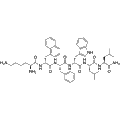
K-(D-1-Nal)-FwLL-NH2 is a potent inverse agonist of the ghrelin receptor, exhibiting a high affinity with an EC50 of 3.4 nM and a Ki of 4.9 nM. This compound is instrumental for studies related to obesity, providing valuable insights into the regulation of appetite and energy balance. Its specificity and efficacy make it a relevant tool for investigating the physiological and pathological roles of ghrelin signaling.
Out of stock
All 3 sizes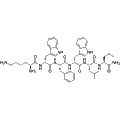
KwFwLL-NH2 is a hexapeptide that functions as an inverse agonist at the growth hormone secretagogue receptor (GHSR). This compound demonstrates moderate potency with an EC50 of 45.6 nM, making it a valuable tool for investigating the role of ghrelin signaling in various biological processes. It is applicable in research focused on appetite regulation, metabolic disorders, and potential therapeutic interventions targeting the ghrelin pathway.
Out of stock
All 3 sizes