- Cat. No.
- A19833
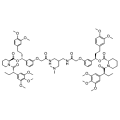
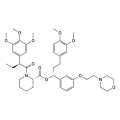
Shield-1
Shield-1 is a specific, cell-permeant and high-affinity ligand of FK506-binding protein-12 (FKBP), and reverses the instability by binding to mutated FKBP (mtFKBP), allowing conditional expression of mtFKBP-fused proteins.
Search by product name, CAS, target or catalog number. Press Down Arrow to reach product suggestions, Tab to move between links, and Escape to close suggestions.
Inducible expression and protein degradation systems switch a gene or a protein on or off with a small molecule. In tetracycline-controlled (Tet-On) systems, doxycycline activates transcription of the target gene. 4-Hydroxytamoxifen activates Cre recombinase fused to a modified estrogen receptor (CreER), and isopropyl β-D-1-thiogalactopyranoside (IPTG) induces lac-controlled genes in bacteria. Chemical inducers of dimerization such as AP20187 and abscisic acid bring fusion proteins together on demand. Degron systems remove tagged proteins within hours, with dTAG-13 for FKBP12 F36V fusions and 5-Ph-IAA for the auxin-inducible degron 2 (AID2) system. Shield-1 offers a further switch, as it stabilizes proteins fused to a destabilizing domain.
Shield-1 is a specific, cell-permeant and high-affinity ligand of FK506-binding protein-12 (FKBP), and reverses the instability by binding to mutated FKBP (mtFKBP), allowing conditional expression of mtFKBP-fused proteins.
Synonyms: B/B Homodimerizer
AP20187 (B/B Homodimerizer) is a cell-permeable ligand used to dimerize FK506-binding protein (FKBP) fusion proteins and initiate biological signaling cascades and gene expression or disrupt protein-protein interactions.
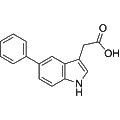
5-Ph-IAA is a ligand that specifically interacts with the auxin-inducible degron 2 (AID2) system, in conjunction with the OsTIR1 (F74G) mutant. This compound facilitates the rapid and efficient degradation of mAID-fused proteins, enabling the investigation of protein function in live cells. 5-Ph-IAA is particularly useful in studies related to protein turnover and regulation, offering insights into cellular processes such as tumor suppression. Its application in research enhances the understanding of protein dynamics in various biological contexts.
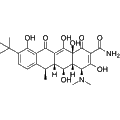
9-tert-Butyldoxycycline acts as a Tet-On ligand, facilitating the control of gene expression in various biological models. It demonstrates immunomodulatory properties by influencing the polarization of polymorphonuclear neutrophils and mitigating inflammatory responses in ischemia-reperfusion injury scenarios. This compound is valuable for research applications involving gene regulation and the study of inflammatory processes.
Out of stock
All 3 sizes
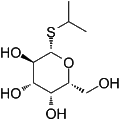
Synonyms: Isopropyl β-D-thiogalactoside
IPTG (Isopropyl β-D-1-thiogalactopyranoside) acts as a molecular mimic of allolactose and serves as an inducer of the lac operon. This compound effectively triggers transcription in systems where gene expression is regulated by the lac operator, enabling controlled protein expression in biological research. IPTG is widely utilized in molecular biology and recombinant protein studies to regulate the activity of target genes within prokaryotic expression systems.
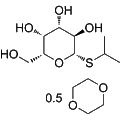
Synonyms: β-D-1-thiogalactopyranoside hemidioxane
IPTG hemidioxane, also known as β-D-1-thiogalactopyranoside hemidioxane, serves as a potent biochemical reagent primarily utilized as an inducer of the lac operon in molecular biology research. It effectively promotes the expression of proteins in bacterial systems, enhancing the study of gene function and protein production. This reagent is essential for assays requiring controlled gene expression and is widely used in recombinant protein technology.
Out of stock
All 3 sizes
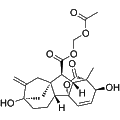
GA3-AM is a cell-permeable analog of the plant hormone gibberellic acid, functioning as a chemical dimerizer or inducer of dimerization. This compound is valuable for studying gibberellic acid signaling pathways and investigating plant growth and developmental processes. Its ability to facilitate protein-protein interactions makes it a useful tool in biochemical and cellular research.