
- Cat. No.
- A10884
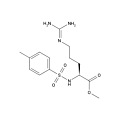
TAME
TAME is a small molecule anaphase-promoting complex/cyclosome (APC) inhibitor with an IC50 of 12 μM.
In stock
View Details
Search by product name, CAS, target or catalog number. Press Down Arrow to reach product suggestions, Tab to move between links, and Escape to close suggestions.
APC/C inhibitors support research on the anaphase-promoting complex/cyclosome and mitotic control. This ubiquitin ligase marks cell cycle regulators for degradation, coordinating chromosome separation and exit from mitosis. Its activity depends on regulatory proteins and the spindle assembly checkpoint. The category contains proTAME and apcin, together with other APC/C-related reagents. It also includes tools associated with adenomatous polyposis coli, a different protein that shares the APC abbreviation. These distinct target groups should be separated when selecting reagents for cell cycle studies.
TAME is a small molecule anaphase-promoting complex/cyclosome (APC) inhibitor with an IC50 of 12 μM.
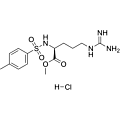
TAME hydrochloride is an inhibitor of anaphase-promoting complex/cyclosome (APC/C or APC), which binds to APC/C and prevents its activation by Cdc20 and Cdh1, produces mitotic arrest.
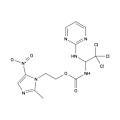
Apcin, a ligand of Cdc20, is a potent and competitive anaphase-promoting complex/cyclosome (APC/C(Cdc20)) E3 ligase activity inhibitor.
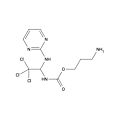
Apcin-A, an Apcin derivative, is an anaphase-promoting complex (APC) inhibitor.
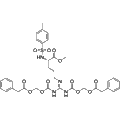
proTAME is a cell-permeable proagent that functions as an inhibitor of the anaphase promoting complex/cyclosome (APC/C). This compound effectively induces cell cycle arrest in the metaphase stage, making it a valuable tool for studying the regulation of mitosis and the role of APC/C in cell division. Its application extends to cancer research and investigations into cell cycle dynamics.
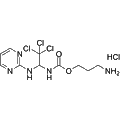
Apcin-A monohydrochloride is a selective inhibitor of the anaphase-promoting complex (APC) that effectively interacts with Cdc20, impeding the ubiquitination of its substrates. This compound is valuable for studying the regulatory mechanisms of protein degradation in mitosis and is applicable in research involving cell cycle regulation. Additionally, Apcin-A monohydrochloride can be utilized in the synthesis of the PROTAC CP5V, facilitating advanced studies in targeted protein degradation.