- Cat. No.
- A20284
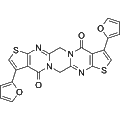
KY1220
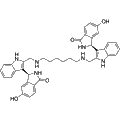
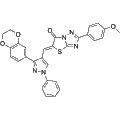
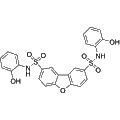
KY1220 is a compound that destabilizes both β-catenin and Ras, via targeting the Wnt/β-catenin pathway; with an IC50 of 2.1 μM in HEK293 reporter cells.
Search by product name, CAS, target or catalog number. Press Down Arrow to reach product suggestions, Tab to move between links, and Escape to close suggestions.
Ras inhibitors and related small GTPase modulators act on KRAS and on the Rac, Rho and Cdc42 proteins. Small GTPases of the Ras superfamily work as molecular switches. They cycle between an active form bound to guanosine triphosphate (GTP) and an inactive form bound to guanosine diphosphate (GDP). Oncogenic KRAS mutations such as G12C keep the protein in its signaling state. ARS-853 and KRas G12C inhibitor 4 target the mutant cysteine of KRAS G12C, while Kobe2602 interferes with binding of Ras to Raf. Salirasib, a farnesylcysteine mimetic, disrupts the membrane association of Ras. Rho-family tools include NSC 23766 and EHT 1864, which inhibit Rac, and CASIN, which targets Cdc42.
KY1220 is a compound that destabilizes both β-catenin and Ras, via targeting the Wnt/β-catenin pathway; with an IC50 of 2.1 μM in HEK293 reporter cells.
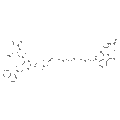
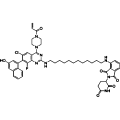
PROTAC K-Ras Degrader-1 (Compound 518) is a cereblon-based PROTAC that selectively degrades K-Ras, achieving ≥70% degradation efficiency in SW1573 cells. It serves as a valuable tool for studying K-Ras-driven signaling pathways and potential therapeutic strategies in cancer research.
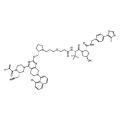
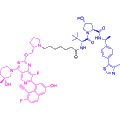
LC-2 is a first-in-class, VHL-based PROTAC designed to degrade endogenous KRAS G12C. Incorporating a MRTX849-derived covalent warhead, LC-2 binds KRAS G12C and recruits the VHL E3 ligase, inducing rapid and sustained degradation with DC₅₀ values between 0.25 and 0.76 μM. It effectively suppresses MAPK signaling in both homozygous and heterozygous KRAS G12C mutant cell lines, making it a valuable tool for targeted cancer research.
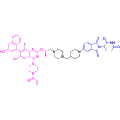
PROTAC SOS1 Degrader-1 (TFA) is a potent PROTAC molecule targeting SOS1, with a DC₅₀ of 98.4 nM. It exhibits antiproliferative activity in cancer cells harboring various KRAS mutations and demonstrates antitumor efficacy with low toxicity, making it a promising candidate for targeted cancer therapy research.
Synonyms: ASP-3082; KRAS G12D inhibitor 17
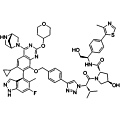
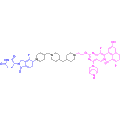
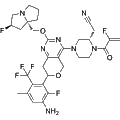
Setidegrasib is a PROTAC degrader specifically targeting the KRAS G12D mutation with a DC50 of 37 nM. This compound effectively induces the degradation of KRAS G12D protein, leading to the suppression of key signaling molecules such as p-ERK, p-AKT, and p-S6 in AsPC-1 cells. Setidegrasib demonstrates significant anti-tumor activity across various cancer xenograft models, making it a valuable tool for studying KRAS(G12D)-mutated solid tumors.
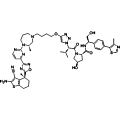
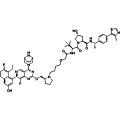
ACBI3 is a PROTAC designed to target KRAS, employing a unique mechanism to induce degradation of this oncogenic protein. It comprises a pan-KRAS degrader linked to an E3 ligase ligand through a specialized linker, facilitating the recruitment of the proteasome for degradation. ACBI3 has demonstrated significant biological activity by achieving durable modulation of signaling pathways and promoting tumor regression in KRAS mutant xenograft mouse models, making it a valuable tool for research into cancer therapeutics aimed at KRAS-driven malignancies.
PROTAC KRAS G12D degrader 1 functions as a selective PROTAC targeting the KRAS G12D mutant by promoting its degradation. This compound effectively inhibits the proliferation of KRAS G12D-mutant cell lines and suppresses phosphorylation of ERK, a critical pathway in cancer signaling. In vivo studies demonstrate its ability to impede tumor growth in mice with AsPC-1 xenografts, making it a valuable tool for research into KRAS G12D-driven cancers.
RGB-1 is a selective RNA G-quadruplex stabilizer that targets and reduces the expression of the NRAS proto-oncogene within breast cancer cells. This compound serves as a valuable tool for exploring the cellular mechanisms and functions of RNA G-quadruplex structures, while also aiding in the identification of novel mRNA sequences capable of forming G-quadruplexes. RGB-1 is particularly relevant for research focused on breast cancer therapeutics and the molecular basis of oncogene regulation.
PROTAC KRAS G12C degrader-1 is a Cereblon-based PROTAC targeting the KRAS G12C mutant. This compound promotes the formation of a dimer between Cereblon and KRAS G12C, leading to the degradation of GFP-tagged KRAS G12C in reporter cell systems. It serves as a valuable tool for research on targeted degradation strategies in KRAS-driven cancers.
PROTAC K-Ras Degrader-5 is a cereblon-based PROTAC specifically designed to target KRASG12D, achieving a DC50 of less than 100 nM. This reagent facilitates the recruitment of KRASG12D to the cereblon E3 ubiquitin ligase complex, leading to its ubiquitination and proteasomal degradation. As a result, it effectively reduces pERK levels and inhibits the proliferation of cancer cells. PROTAC K-Ras Degrader-5 also enhances caspase 3/7 activity and cleaved PARP levels, indicative of apoptosis, in pancreatic cancer models. This compound is a valuable tool for researching both pancreatic and colorectal cancer.
MCB-36 is a VHL-recruiting pan-KRAS PROTAC degrader that targets various KRAS mutants, including G12D, G12C, G12V, and wild-type forms, with an exceptionally high binding affinity (Kd ≈ 1 pM). This compound effectively lowers p-ERK levels, promoting apoptosis in KRAS-driven cancer cells while showing minimal impact on HRAS and NRAS protein levels. MCB-36 is particularly useful for investigating colorectal and lung cancers, as it demonstrates efficacy against KRASG12C inhibitor-resistant tumors and aids in remodeling the tumor immune microenvironment.
PROTAC KRAS G12C degrader-2 is a bifunctional molecule that targets the KRAS G12C mutant protein for degradation via the proteasome. It features a cereblon inhibitor that modulates the activity of inhibitors of apoptosis proteins (IAPs) to facilitate the targeted destruction of KRAS. This reagent is valuable for research applications aimed at elucidating the role of KRAS in cancer biology and developing effective targeted therapies for KRAS-driven malignancies.
(Rac)-D3S-001 is a racemic mixture of the compound D3S-001, which serves as a potent modulator of specific biological pathways. This compound exhibits significant activity in regulating cellular processes, making it a valuable tool for investigating the underlying mechanisms of disease. It is particularly useful in pharmacological studies and in the development of therapeutic strategies targeting related biological systems.
Out of stock
All 3 sizes
PPI stabilizer-1 is a KRAS dimerizing agent that effectively promotes the dimerization of KRAS with a dissociation constant (KD) of 3.8 µM. This compound has the ability to co-crystallize with GCP-KRASG12D, facilitating structural studies and elucidating the role of KRAS in cellular signaling. PPI stabilizer-1 is valuable for researching KRAS-driven cancers, providing insights into therapeutic strategies targeting this critical pathway.
Out of stock
All 3 sizes
Palmostatin M is a Ras signaling modulator that specifically targets acyl-protein thioesterases 1 and 2 (APT1 and APT2), exhibiting an IC50 of 2.5 nM for APT1. By disrupting the depalmitoylation cycle of Ras, Palmostatin M effectively downregulates the Ras signaling pathway. This compound is particularly relevant for studies investigating cancer biology and the modulation of Ras-driven signaling networks.
Out of stock
All 3 sizes
KRAS G12D modulator-1 is an effective modulator targeting the KRAS G12D mutation. It exhibits potent activity with IC50 values ranging from 1 to 10 μM against NEA-G12D, PPI-G12D, and phosphorylated ERK in AGS cells. This compound is suitable for research applications focused on cancer biology and the modulation of KRAS signaling pathways.
Out of stock
All 3 sizes
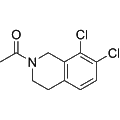
Ras Modulator-1 is a selective modulator of the Ras protein, which plays a critical role in cell signaling pathways associated with growth and differentiation. This compound has been shown to influence the activity of Ras, making it a valuable tool for investigating cancer biology and therapeutic interventions targeting Ras-driven malignancies. Research applications include studying signal transduction mechanisms and evaluating potential treatments in oncogenic signaling pathways.
(R)-ACBI-4 is a selective PROTAC degrader targeting the GTP-loaded active state of KRAS (KRAS(on)). It exhibits notable anti-proliferative activity and effectively degrades various KRAS mutants, including KRASG12R, in cancer cell lines. This compound is utilized in research focused on understanding KRAS-driven oncogenesis and therapeutic interventions in KRAS-related cancers.
Out of stock
All 3 sizes
ZCL279 is a small molecule modulator that selectively inhibits the interaction between Cdc42 and intersectin (ITSN). At lower concentrations (
LZTR1-KRAS modulator 1 is designed to modulate the interaction between KRAS and LZTR1, thereby enhancing the recruitment of the LZTR1-KRAS complex. This compound is crucial for studies investigating the regulation of KRAS signaling pathways and their implications in cellular processes. Its application can further elucidate the role of LZTR1 in cancer biology and potential therapeutic interventions targeting KRAS-driven tumors.
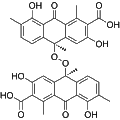
(+)-Oxanthromicin is a K-Ras localization modulator that disrupts the localization of oncogenic mutant K-Ras from the plasma membrane in intact Madin-Darby canine kidney (MDCK) cells. This compound demonstrates significant antitumor efficacy, making it valuable for research into cancer biology and potential therapeutic strategies targeting K-Ras-mediated signaling pathways. Its ability to alter K-Ras localization positions it as a promising candidate in the development of targeted cancer therapies.