Carboxylesterase (CES)

Carboxylesterase (CES) inhibitors and substrates act on serine hydrolases that cleave ester bonds. Mammalian carboxylesterases hydrolyze endogenous esters and many ester-containing drugs and prodrugs, as a 1998 review summarized. Human CES1 is abundant in liver, whereas CES2 predominates in the small intestine. Nevadensin is a natural flavone reported to inhibit human carboxylesterase 1 (hCE1), and WZU-13 is a further carboxylesterase inhibitor. CEMT is listed as a carboxylesterase substrate with mitochondria-targeting properties. Carboxylesterase-IN-2 and Carboxylesterase-IN-3 inhibit Notum, a secreted carboxylesterase shown in 2015 to remove the palmitoleate group that Wnt proteins need for signaling. The set is mixed and also includes loperamide hydrochloride and tefinostat, whose main targets lie elsewhere.

1 Item

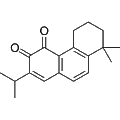
  • Miltirone
    Cat. No.
    A30275

    Miltirone

    Synonyms: Rosmariquinone

    Miltirone is a partial agonist of the central benzodiazepine receptor, exhibiting an IC50 value of 0.3 μM. This natural compound, derived from the root of Salvia miltiorrhiza, demonstrates significant biological activity by inducing ROS- and p53-dependent apoptosis. Additionally, Miltirone effectively inhibits carboxylesterase 2 (CES2) with a Ki of 0.04 μM and the main protease (Mpro) of SARS-CoV, making it valuable for research involving apoptosis, enzymatic regulation, and virology.

    1 mg
    $110.00
    5 mg
    $175.00
    All 6 sizes

1 Item

Added to your cart

View Cart Checkout

    Loading...