
- Cat. No.
- A16077
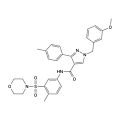
DY 268
DY 268 is a trisubstituted-pyrazol carboamide based compound that acts as a potent FXR antagonist (IC50 = 7.5 nM).
In stock
View Details
Search by product name, CAS, target or catalog number. Press Down Arrow to reach product suggestions, Tab to move between links, and Escape to close suggestions.
Farnesoid X receptor (FXR) agonists and antagonists act on a nuclear receptor that senses bile acids. In 1999 three groups identified bile acids such as chenodeoxycholic acid as endogenous FXR ligands. FXR is expressed mainly in liver, intestine and kidney, where it controls bile acid synthesis, transport and enterohepatic circulation. Activated FXR induces small heterodimer partner, which represses cholesterol 7α-hydroxylase, the rate-limiting enzyme of bile acid synthesis. FXR ligands are used to study bile acid, lipid and glucose metabolism and liver fibrosis models. Steroidal agonists include obeticholic acid, a semisynthetic bile acid analog. GW4064, cilofexor and tropifexor are nonsteroidal agonists, while DY 268 serves as an FXR antagonist.
DY 268 is a trisubstituted-pyrazol carboamide based compound that acts as a potent FXR antagonist (IC50 = 7.5 nM).
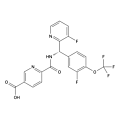

Synonyms: Z-Guggulsterone
(Z)-Guggulsterone is a phytosteroid found in the resin of the guggul plant, Commiphora mukul. It acts as an antagonist of the farnesoid X receptor in humans.
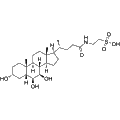
Synonyms: TβMCA
Tauro-β-muricholic acid (TβMCA) serves as a competitive and reversible antagonist of the farnesoid X receptor (FXR), exhibiting an IC50 of 40 μM. This trihydroxylated bile acid demonstrates significant ability to inhibit bile acid-induced hepatocyte apoptosis by preserving mitochondrial membrane potential and hindering FXR signaling. It influences bile acid synthesis, hepatic lipid metabolism, and insulin sensitivity, while its accumulation can disrupt metabolic homeostasis, facilitating cancer stem cell proliferation and tumor progression. TβMCA is valuable in studies related to bile acid metabolism disorders, non-alcoholic fatty liver disease, colorectal cancer, and liver fibrosis, owing to its dual functionality in stabilizing mitochondrial integrity and regulating hepatic metabolism.
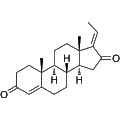
Synonyms: (E)-Guggulsterone
(-)-(E)-Guggulsterone is a natural stereoisomer of Guggulsterone that functions as a Farnesoid X Receptor (FXR) antagonist with an IC50 of 24.06 μM. This compound exhibits significant hypolipidemic effects and demonstrates the ability to suppress dengue virus (DENV) replication by enhancing antiviral interferon responses through the activation of Nrf2 and upregulation of HO-1 expression. Additionally, (-)-(E)-Guggulsterone displays antibacterial properties against various strains, including Bacillus subtilis, Staphylococcus aureus, and Pseudomonas aeruginosa, as well as offering cardiac protective and antioxidant benefits in rat models.
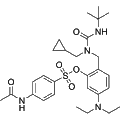
F44-A13 is a highly selective antagonist of the farnesoid X receptor (FXR), exhibiting an IC50 value of 1.1 μM. This compound modulates cholesterol metabolism by inducing the expression of CYP7A1, leading to significant reductions in cholesterol, triglycerides, and low-density lipoprotein cholesterol (LDL-C) in murine models. F44-A13 serves as a valuable tool for investigating metabolic diseases related to lipid dysregulation.
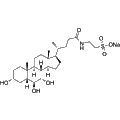
Synonyms: T-α-MCA sodium
Tauro-α-muricholic acid sodium is a sodium salt of a taurine-conjugated primary bile acid that functions as an antagonist of the farnesoid X receptor (FXR) with an IC50 of 28 µM. This compound effectively inhibits FXR signaling mediated by other bile acids. Research applications include studies on Alzheimer's disease, glucose metabolism, and lipid metabolism, providing valuable insights into metabolic regulation and related disorders.
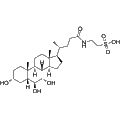
Synonyms: T-α-MCA
Tauro-α-muricholic acid (T-α-MCA) is a conjugated bile acid that acts as an antagonist of the farnesoid X receptor (FXR), exhibiting an IC50 of 28 µM. This compound is instrumental in modulating FXR signaling pathways, particularly in the context of bile acid activation. Its research applications include investigations into Alzheimer's disease, as well as studies on glucose and lipid metabolism.
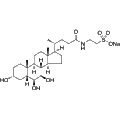
Synonyms: T-βMCA sodium
Tauro-β-muricholic acid sodium is a competitive and reversible antagonist of the farnesoid X receptor (FXR), exhibiting an IC50 of 40 μM. This compound plays a significant role in the modulation of bile acid signaling and is utilized in research applications related to metabolic diseases, liver function, and cholesterol homeostasis. Its ability to inhibit FXR makes it a valuable tool for studying the physiological and pathological roles of bile acids in various biological systems.
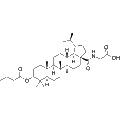
FXR Antagonist 1 is a selective antagonist of the farnesoid X receptor (FXR) with an IC50 of 2.1 μM. This compound effectively inhibits intestinal FXR signaling, promoting feedback activation of hepatic FXR. Its primary biological activity involves ameliorating hepatic steatosis, inflammation, and fibrosis in models of nonalcoholic steatohepatitis (NASH). FXR Antagonist 1 is a valuable tool for research focused on NASH and related metabolic disorders.
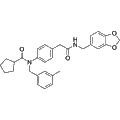
V023-9340 is a potent antagonist of the farnesoid X receptor (FXR), exhibiting an IC50 of 4.27 μM. This compound is a valuable tool for investigating the role of FXR in the pathology of nonalcoholic steatohepatitis (NASH) and other related metabolic disorders. Its inhibitory action allows for the exploration of FXR's involvement in lipid metabolism and inflammation pathways, making it useful in therapeutic research targeting these conditions.
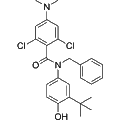
NDB is a selective antagonist of the human farnesoid X receptor alpha (hFXRα), serving to modulate the transcription of downstream genes associated with this pathway. This compound demonstrates potential in anti-diabetic research by influencing metabolic processes regulated by FXRα. Its application is particularly relevant for studies investigating the role of bile acids and metabolism in diabetes and related disorders.
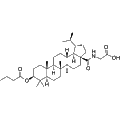
β-FXR antagonist 1 is a selective antagonist of the Farnesoid X receptor (FXR), a key regulator of bile acid and lipid metabolism. This compound has demonstrated biological activity in inhibiting FXR-mediated signaling pathways, making it valuable for research focused on metabolic diseases and liver function. Its application spans studies on cholesterol homeostasis, insulin sensitivity, and potential therapeutic interventions in conditions such as non-alcoholic fatty liver disease (NAFLD).
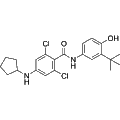
FXR Antagonist 2 is a diarylamide derivative that serves as a moderate antagonist of the farnesoid X receptor (FXR). This compound demonstrates potential in the investigation of metabolic disorders, specifically hyperlipidemia and type 2 diabetes. Its ability to modulate FXR activity makes it a valuable tool for exploring therapeutic strategies targeting these conditions.
Out of stock
All 3 sizes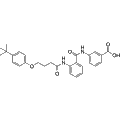
FXR agonist 9 is a selective partial agonist of the farnesoid X receptor (FXR) with an EC50 of 0.09 µM, exhibiting 75.13% maximum efficacy. This compound has demonstrated the ability to improve pathological features associated with metabolic dysfunction and steatohepatitis in mouse models induced by a high-fat diet and carbon tetrachloride. FXR agonist 9 is valuable for research into metabolic disorders and liver diseases.
Out of stock
All 3 sizes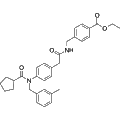
FXR antagonist 3 is a selective antagonist of the farnesoid X receptor (FXR) with an IC50 of 0.89 μM. This compound exhibits notable activity in modulating intestinal FXR signaling pathways, making it valuable for research related to metabolic disease and bile acid regulation. It serves as a useful tool in studying the physiological roles of FXR in gastrointestinal disorders and potential therapeutic interventions.
Out of stock
All 3 sizes