ATM/ATR

ATM and ATR inhibitors act on ataxia telangiectasia mutated (ATM) and ATM and Rad3-related (ATR) kinases. The ATM gene was cloned in 1995 and encodes a protein similar to phosphatidylinositol 3-kinase (PI3K). ATR was cloned in 1996 as a candidate human cell cycle checkpoint protein. ATM responds mainly to DNA double-strand breaks, whereas ATR is activated by stalled replication forks. KU-55933, described in 2004 as a specific ATM inhibitor, is joined by KU-60019 and AZD0156. Ceralasertib, VE-821 and BAY-1895344 inhibit ATR and are used to study replication stress. Broader inhibitors of PI3K-related kinases, such as wortmannin, also appear in this list. Inhibitors of DNA-dependent protein kinase are listed in the sibling category DNA-PK.

2 Items

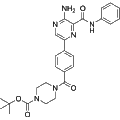
  • ATR-IN-30
    Cat. No.
    A54096

    ATR-IN-30

    ATR-IN-30 is a selective ATR (ataxia telangiectasia and Rad3-related protein) ligand that plays a crucial role in disrupting ATR signaling pathways. This compound can be utilized for the development of ATR PROTACs, including PROTAC ATR degrader-2, facilitating targeted protein degradation studies. ATR-IN-30 is valuable for researchers investigating DNA damage response mechanisms and potential therapeutic avenues in cancer treatment.

    Out of stock

    All 3 sizes
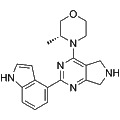
  • ATR ligand 2
    Cat. No.
    A54099

    ATR ligand 2

    ATR Ligand 2 targets the ATR protein as a PROTAC ligand, facilitating the degradation of ATR through the ubiquitin-proteasome system. By conjugating ATR Ligand 2 with an E3 ligase ligand and linker, researchers can synthesize PROTAC ATR degrader-3, enabling the selective modulation of ATR levels in cells. This compound is instrumental for studies focusing on DNA damage response, cancer therapeutics, and the mechanism of action of DNA-targeting agents.

    Out of stock

    All 3 sizes

2 Items

Added to your cart

View Cart Checkout

    Loading...