
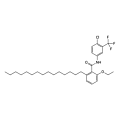
- Cat. No.
- A18558
CTPB
CTPB is an activator of p300 HAT (histone acetyltransferase) without PCAF (p300/CBP-associated factor) HAT activities.
In stock
View Details
Search by product name, CAS, target or catalog number. Press Down Arrow to reach product suggestions, Tab to move between links, and Escape to close suggestions.
Histone acetyltransferase (HAT) inhibitors target the writers of lysine acetylation on histones and other proteins. Acetylation neutralizes the positive charge of histone tails and favors transcription. In 1996 a Tetrahymena HAT was found to be related to a yeast transcriptional regulator, which linked histone acetylation to gene activation. In the same year the coactivators p300 and CREB-binding protein (CBP) were shown to be histone acetyltransferases. C646, found in 2010 by virtual ligand screening, is a selective inhibitor of the p300/CBP HAT domain. MG149 and NU 9056 target lysine acetyltransferase 5 (KAT5, Tip60), and garcinol is a natural product with broad HAT inhibition. SGC-CBP30 and I-CBP112 bind the CBP/p300 bromodomain rather than the catalytic site.
CTPB is an activator of p300 HAT (histone acetyltransferase) without PCAF (p300/CBP-associated factor) HAT activities.
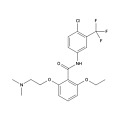
YF-2 is a highly selective, blood-brain-barrier permeable histone acetyltransferase activator, acetylates H3 in the hippocampus, with EC50s of 2.75 μM, 29.04 μM and 49.31 μM for CBP, PCAF, and GCN5, respectively, shows no effect on HDAC. Anti-cancer and anti-Alzheimer's disease.
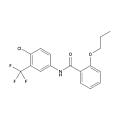
TTK21 is a CBP/p300 histone acetyltransferase activator.
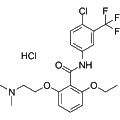
YF-2 hydrochloride is a selective histone acetyltransferase activator targeting CBP, PCAF, and GCN5 with EC50 values of 2.75 μM, 29.04 μM, and 49.31 μM, respectively, while demonstrating no inhibitory effects on HDAC. This compound effectively acetylates histone H3 in the hippocampus and is capable of crossing the blood-brain barrier. YF-2 hydrochloride is primarily utilized in research focused on cancer biology and neurodegenerative diseases, including Alzheimer's disease.
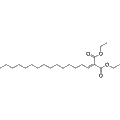
SPV106 is an activator of histone acetylases (HAT) and GCN5-related N-acetyltransferases (GNAT). This compound enhances the activity of these enzymes, facilitating the acetylation of histones and impacting gene expression. SPV106 is particularly relevant for studies related to type 2 diabetes (T2D), offering insights into the epigenetic mechanisms that may contribute to the disease. Its application may provide valuable information for understanding the role of protein acetylation in metabolic disorders.
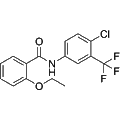
CTB is a potent activator of the p300 histone acetyltransferase, known for its role in regulating gene expression through histone acetylation. This compound has demonstrated the ability to induce apoptosis in MCF-7 breast cancer cells, making it a valuable tool for research into cancer biology and therapeutic approaches targeting acetylation pathways. Its specificity for p300 highlights its potential in studies of transcriptional regulation and chromatin dynamics.