






Epigenetics
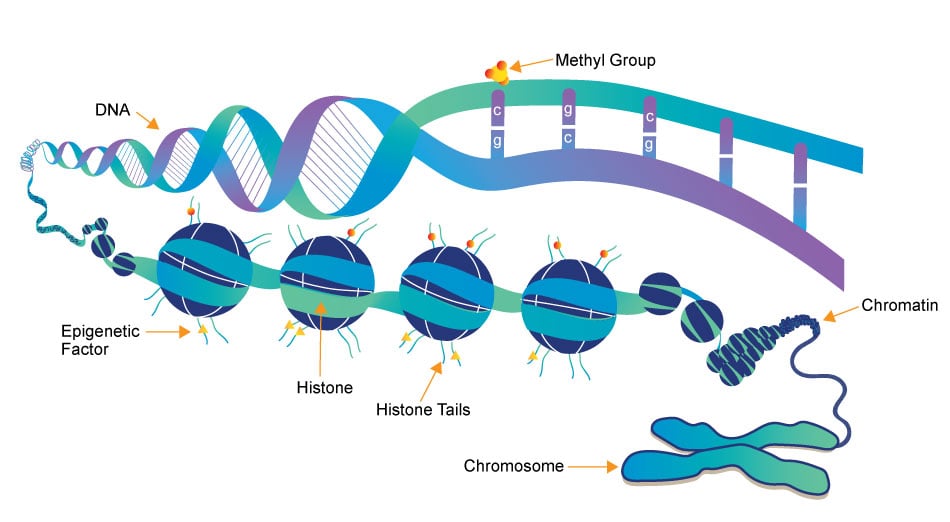
Epigenetics research delves into the molecular mechanisms that control gene expression and cellular traits without altering the underlying DNA sequence. One crucial aspect of this field is the role of small molecules, which act as powerful regulators of epigenetic modifications. These small compounds, typically comprising a few dozen to a few hundred atoms, have emerged as essential tools in understanding and manipulating the epigenome.
- DNA Methylation Inhibitors: Small molecules like 5-azacytidine and 5-aza-2'-deoxycytidine are DNA methyltransferase inhibitors. They block the addition of methyl groups to DNA, leading to DNA demethylation. This can reactivate silenced genes, potentially offering therapeutic avenues for conditions like cancer.
- HDAC inhibitors: HDACs remove acetyl groups from histone proteins, contributing to gene repression. Small molecule HDAC inhibitors, such as Vorinostat and Romidepsin, can reverse this process by increasing histone acetylation, allowing genes to be more accessible for transcription. These inhibitors are being explored for cancer therapy and other conditions.
- Histone Methyltransferase Inhibitors: Small molecules like GSK126 inhibit specific histone methyltransferases, affecting histone methylation patterns. This can alter gene expression, making them promising candidates for cancer and other diseases with epigenetic dysregulation.
- RNA Modulators: Small molecules can also target non-coding RNAs involved in epigenetic regulation. For instance, small molecules called small interfering RNAs (siRNAs) can be designed to target and degrade specific long non-coding RNAs, influencing gene expression.
- Epigenetic Reader Domain Inhibitors: These small molecules target proteins that recognize and bind to specific epigenetic marks. Examples include inhibitors of bromodomain-containing proteins (BET inhibitors), which can disrupt gene regulation by interfering with protein-DNA interactions.
Small molecules in epigenetics research not only provide insights into the fundamental biology of gene regulation but also hold immense promise for developing novel therapeutics. Their ability to selectively modulate specific epigenetic marks and pathways has led to ongoing clinical trials and drug development efforts for various diseases, including cancer, neurological disorders, and inflammatory conditions. Understanding and harnessing the power of these small molecules is at the forefront of modern epigenetics research, offering new hope for precision medicine and targeted therapies.
3 key components involved in the regulation of epigenetic modifications
Epigenetics Writer
Epigenetics writers are enzymes responsible for adding chemical marks or modifications to DNA or histone proteins. These marks include DNA methylation (addition of methyl groups to DNA) and histone modifications (such as acetylation, methylation, phosphorylation, etc.).
Epigenetics Reader
Function: Epigenetics readers are proteins that can recognize and bind to specific epigenetic marks on DNA or histones. These reader proteins interpret the epigenetic code and facilitate downstream cellular processes, such as gene activation or repression.
Epigenetics Eraser
Function: Epigenetics erasers are enzymes responsible for removing or reversing epigenetic marks on DNA or histones. This process allows for the dynamic regulation of gene expression and the resetting of epigenetic states during various stages of development and in response to environmental changes.
-
multi-targeted tyrosine kinase inhibitor
Cerdulatinib (PRT-062070) is an oral active, multi-targeted tyrosine kinase inhibitor with IC50 of 12 nM/6 nM/8 nM/0.5 nM and 32 nM for JAK1/JAK2/JAK3/TYK2 and Syk, respectively. -
NAT10 inhibitor
Remodelin Hydrobromide is a potent acetyl-transferase NAT10 inhibitor. -
NAD(+)-dependent histone deacetylase Sir2p inhibitor
Splitomicin is a selective NAD(+)-dependent histone deacetylase Sir2p inhibitor with IC50 of 60 uM, showing a higher activity in a cell-based assay. -
KAT5 (Tip60), p300/PCAF inhibitor
Anacardic Acid is a potent inhibitor of p300 and p300/CBP-associated factor histone acetyltranferases. -
JAK inhibitor
Filgotinib is a selective JAK1 inhibitor with IC50 of 10 nM, 28 nM, 810 nM, and 116 nM for JAK1, JAK2, JAK3, and TYK2, respectively. -
HDAC inhibitor
Santacruzamate A (CAY10683) is a potent and selective HDAC inhibitor with IC50 of 119 pM for HDAC2, >3600-fold selectivity over other HDACs. -
Sodium channel blocker/DNMT inhibitor
Procainamide HCl is a sodium channel blocker, and also a DNA methyltransferase inhibitor. -
Pan-PIM kinase inhibitor
CX-6258 HCl is a potent, orally efficacious pan-Pim kinase inhibitor with IC50 of 5 nM, 25 nM and 16 nM for Pim1, Pim2, and Pim3. -
HDAC inhibitor
4SC-202 is an orally bioavailable benzamide and inhibitor of human class I histone deacetylases (HDACs) isoenzymes 1, 2 and 3, with potential antineoplastic activity. -
PARP-1 inhibitor
TAK1/MAP4K2 inhibitor 1 is a potent dual inhibitor targeting transforming growth factor β-activated kinase 1 (TAK1) and mitogen-activated protein kinase kinase kinase kinase 2 (MAP4K2), exhibiting IC₅₀ values of 41.1 nM and 18.2 nM, respectively.
-
Aurora Kinase inhibitor
SAR156497 is an exquisitely selective Aurora A, B, and C inhibitor with in vitro and in vivo efficacy with IC50 = 0.5 nM (Aurora A), 1 nM (Aurora B / incenp), 3 nM (Aurora C / incenp) respectively SAR156497 combines high in vitro potency with satisfactory metabolic stability and limited CYP3A4 and PDE3 inhibition. -
JAK inhibitor
LY2784544 is identified as being highly selective for JAK2-V617F and has advanced into human clinical trials for the treatment of several myeloproliferative disorders. - Parthenolide ((-)-Parthenolide) is a sesquiterpene lactone which occurs naturally in the plant feverfew (Tanacetum parthenium).
-
Aurora inhibitor
PHA-680632 is potent inhibitor of Aurora A, Aurora B and Aurora C with IC50 of 27 nM, 135 nM and 120 nM, respectively. It has 10- to 200-fold higher IC50 for FGFR1, FLT3, LCK, PLK1, STLK2, and VEGFR2/3. -
HDAC Inhibitor
Pyroxamide (NSC 696085) is a potent inhibitor of affinity-purified HDAC1 and causes the accumulation of acetylated core histones in MEL cells cultured with the agent. -
Aurora inhibitor
SNS-314 Mesylate is a potent and selective inhibitor of Aurora A, Aurora B and Aurora C with IC50 of 9 nM, 31 nM, and 3 nM, respectively. It is less potent to Trk A/B, Flt4, Fms, Axl, c-Raf and DDR2. Phase 1. -
HDAC inhibitor
Sodium butyrate (NaB, Butanoic acid sodium salt), sodium salt of butyric acid, is a histone deacetylase inhibitor and competitively binds to the zinc sites of class I and II histone deacetylases (HDACs). -
HDAC inhibitor
Valproic acid sodium salt (Sodium Valproate) is an HDAC inhibitor, with IC50 in the range of 0.5 and 2 mM, also inhibits HDAC1 (IC50, 400 μM), and induces proteasomal degradation of HDAC2. -
JAK2/FLT3 inhibitor
TG-101348 is an orally bioavailable, ATP-competitive and selective inhibitor of Janus-associated kinase 2 with potential antineoplastic activity. -
Aurora A Inhibitor
Aurora A Inhibitor I is a potent and selective inhibitor of Aurora A kinase (AurA), with IC50 values to be 3.4 nM (Aurora A) and unusually high selectivity 1000 fold against Aurora B; a useful tool compound for investigating the cellular role of Aurora A kinases.
-
Aurora Inhibitor
CCT129202 is a representative of a structurally novel series of imidazopyridine small-molecule inhibitors of Aurora kinase activity. It shows high selectivity for the Aurora kinases over a panel of other kinases tested and inhibits proliferation in multiple cultured human tumor cell lines.
-
HDAC inhibitor
Droxinostat is a selective inhibitor of HDAC3, HDAC6, and HDAC8 that shows comparable inhibition of HDAC6 and HDAC8 with IC50 = 2.47 and 1.46 μmol/L, respectively. -
JAK inhibitor
Peficitinib is a novel potent JAK inhibitor, which demonstrated potent efficacy in adjuvant-induced arthritis model in rats.
