Complement System

The complement system is a sophisticated part of the immune system that enhances the ability of antibodies and phagocytic cells to clear microbes and damaged cells, promotes inflammation, and attacks the pathogen's cell membrane. This system is named for its capacity to "complement" the killing of pathogens by antibodies.

Comprising over 30 small proteins produced by the liver, the complement system circulates in the blood serum and within tissues throughout the body. These proteins are normally inactive but become sequentially activated in response to a pathogen. Activation can occur via three pathways: the classical pathway, which is triggered by antibodies bound to a pathogen; the lectin pathway, which is activated by mannose-binding lectin attaching to the pathogen surface; and the alternative pathway, which can be initiated directly by pathogen surfaces.

Each pathway leads to the cleavage of the protein C3, generating C3a and C3b fragments. C3b binds to the pathogen surface and can lead to direct opsonization—tagging the pathogen for destruction by phagocytes. C3a, along with other small fragments released during complement activation, acts as a chemoattractant to recruit immune cells to the site of infection and promote inflammation.

The final common step of the complement activation pathways is the assembly of the membrane attack complex (MAC). This complex forms a pore in the membrane of the target cell, leading to cell lysis and death. The MAC is particularly effective against gram-negative bacteria.

Regulation of the complement system is crucial, as overactivation can damage host cells. Regulators are present in blood plasma and on cell surfaces, ensuring the system is directed only at pathogens or damaged cells.

The complement system plays a crucial role not only in innate immunity but also as a bridge to adaptive immunity. It assists in clearing immune complexes and apoptotic cells, and in enhancing the humoral response and immune memory.

Understanding and manipulating the complement system has therapeutic potential for numerous diseases, including those that involve excessive or inappropriate activation of the complement pathways.

11 Items

  • Dexamethasone
    Cat. No.
    A10299

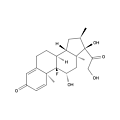
    Dexamethasone

    Synonyms: Decadron

    Dexamethasone is a potent synthetic member of the glucocorticoid class of steroid drugs. It acts as an anti-inflammatory and immunosuppressant. Its potency is about 20-30 times that of the naturally occurring hormone hydrocortisone and 4-5 times of prednisone.

    50 mg
    $20.00
    100 mg
    $25.00
    All 6 sizes
  • Leukadherin 1
    Cat. No.
    A13968

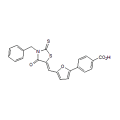
    Leukadherin 1

    Leukadherin 1 is an allosteric activator of CD11b/CD18. Increases CD11b/CD18-dependent cell adhesion to fibrinogen (EC50 = 4 μM).

    5 mg
    $30.00
    10 mg
    $55.00
    All 7 sizes
  • Dexamethasone acetate
    Cat. No.
    A16494

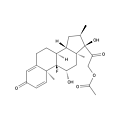
    Dexamethasone acetate

    Synonyms: Dexamethasone 21-acetate; Hexadecadrol acetate

    Dexamethasone acetate (Dexamethasone 21-acetate) is a glucocorticoid receptor agonist.

    500 mg
    $40.00
    1 g
    $70.00
    All 4 sizes
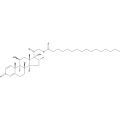
  • Dexamethasone palmitate
    Cat. No.
    A18453

    Dexamethasone palmitate

    Synonyms: Limethason; Dexamethasone 21-palmitate

    Dexamethasone palmitate (DXP) is a prodrug of Dexamethasone, which is a glucocorticoid receptor agonist. Dexamethasone palmitate (DXP) has a 47-fold lower affinity for the glucocorticoid receptor than Dexamethasone. Anti-inflammatory agent.

    5 mg
    $20.00
    10 mg
    $35.00
    All 7 sizes
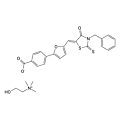
  • ADH-503
    Cat. No.
    A24351

    ADH-503

    Synonyms: (Z)-Leukadherin-1 choline

    ADH-503 ((Z)-Leukadherin-1 choline) is an orally active, allosteric agonist of CD11b, an integrin subunit expressed on myeloid cells. By activating CD11b, ADH-503 promotes the repolarization of tumor-associated macrophages (TAMs) toward a pro-inflammatory phenotype, reduces the infiltration of immunosuppressive myeloid cells into tumors, and enhances dendritic cell responses. These immunomodulatory effects support its potential use in cancer immunotherapy.

    5 mg
    $45.00
    10 mg
    $78.00
    All 4 sizes
  • BM213
    Cat. No.
    A24475

    BM213

    BM213 is a potent and selective agonist of C5aR1 that demonstrates antitumor activity in a mouse model of mammary carcinoma.

    5 mg
    $90.00
    10 mg
    $155.00
    All 4 sizes
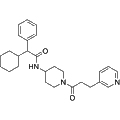
  • C3a receptor agonist 1
    Cat. No.
    A24478

    C3a receptor agonist 1

    C3a Receptor Agonist 1 (a benzeneacetamide derivative) is a potent agonist of the C3a receptor. It holds potential for research in acute inflammation and complement system–mediated responses.

    1 mg
    $81.00
    5 mg
    $243.00
    All 4 sizes
  • C5a Receptor agonist, W5Cha
    Cat. No.
    A35186

    C5a Receptor agonist, W5Cha

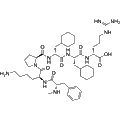
    C5a Receptor agonist, W5Cha, is a selective agonist of the complement C5a receptor (C5aR), exhibiting an EC50 of 0.2 μM. This hexapeptide is derived from the C-terminus of C5a and features specific amino acid modifications that enhance its bioactivity. W5Cha effectively activates the C5aR by interacting with the Arg-206 site, making it a valuable tool for studying C5aR-mediated signaling pathways and related biological processes in inflammatory responses.

    5 mg
    $80.00
    10 mg
    $125.00
    All 2 sizes
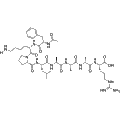
  • (Trp63,Trp64)-C3a(63-77)
    Cat. No.
    A35196

    (Trp63,Trp64)-C3a(63-77)

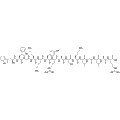
    (Trp63,Trp64)​-​C3a(63-77) is a synthetic analogue of the complement component C3a, acting as a potent C3a receptor agonist. This peptide demonstrates robust calcium-stimulating activity in human neutrophils and rat basophilic leukemia (RBL-2H3) cells expressing the human and mouse C3a receptors, with EC50 values of 9.5 nM, 2.0 nM, and 0.8 nM, respectively. It is valuable for studies exploring immune response modulation and related signaling pathways.

    1 mg
    $190.00
    5 mg
    $485.00
    All 3 sizes
  • Entadamide-A-β-D-glucopyranoside
    Cat. No.
    A35202

    Entadamide-A-β-D-glucopyranoside

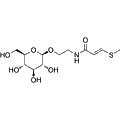
    Entadamide-A-β-D-glucopyranoside serves as an anti-complement activator, derived from the seeds of Entada phaseoloides. This compound exhibits significant biological activity by inhibiting complement activation, making it a valuable tool for research in immunology and inflammation. Its applications extend to studies focused on understanding the roles of the complement system in various diseases.

    5 mg
    $30.00
    10 mg
    $45.00
    All 6 sizes

11 Items

Added to your cart

View Cart Checkout

    Loading...