- Cat. No.
- A19049
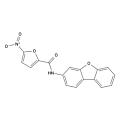
C-178
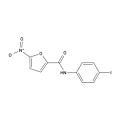
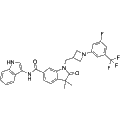
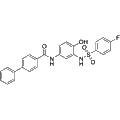
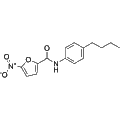
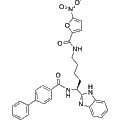
C-178, a covalent inhibitor of STING, binds to Cys91, potently and selectively suppresses the STING responses elicited by distinct bona fide activators in mouse but not human.
Search by product name, CAS, target or catalog number. Press Down Arrow to reach product suggestions, Tab to move between links, and Escape to close suggestions.
STING agonists and inhibitors act on an adaptor protein of the cytosolic DNA sensing pathway. Stimulator of interferon genes (STING) was described in 2008 as an endoplasmic reticulum adaptor needed for innate immune signaling and type I interferon induction. STING binds cyclic dinucleotides directly, both bacterial molecules such as cyclic di-GMP and the mammalian second messenger made by cyclic GMP-AMP synthase (cGAS) once it detects cytosolic DNA. Agonists listed here include 2',3'-cGAMP, Cyclic-di-GMP, ADU-S100 disodium salt (MIW815 disodium salt) and numbered compounds such as STING agonist-1. Inhibitors include H-151 and the mouse-directed C-176 and C-178, which belong to a class of covalent compounds that modify a cysteine of the transmembrane region.
C-178, a covalent inhibitor of STING, binds to Cys91, potently and selectively suppresses the STING responses elicited by distinct bona fide activators in mouse but not human.
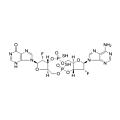
STING agonist-4 is an stimulator of Interferon Genes (STING) receptor agonist with an apparent inhibitory constant (IC50) of 20 nM.
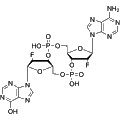
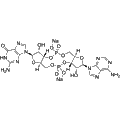
Synonyms: c-[2??FdAMP(S)-2??FdIMP(S)]
CL656 is an activator of stimulator of interferon genes (STING).
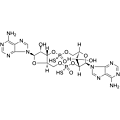
Synonyms: ML RR-S2 CDA; MIW815
ADU-S100 (ML RR-S2 CDA; MIW815), an activator of stimulator of interferon genes (STING), leads to potent and systemic tumor regression and immunity.
Out of stock
All 4 sizes
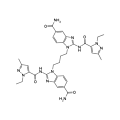
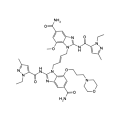
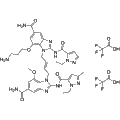
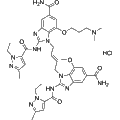
diABZI STING agonist-1 is a selective stimulator of interferon genes (STING) receptor agonist, with an EC50s of 130 nM for human PBMCs.
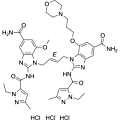
diABZI STING agonist-1 (trihydrochloride) is a selective stimulator of interferon genes (STING) receptor agonist, with an EC50s of 130 for human PBMCs.
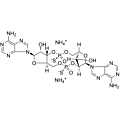
Synonyms: ML RR-S2 CDA ammonium salt; MIW815 ammonium salt
ADU-S100 ammonium salt (ML RR-S2 CDA ammonium salt; MIW815 ammonium salt), an activator of stimulator of interferon genes (STING), leads to potent and systemic tumor regression and immunity.
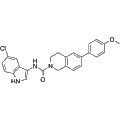
STING-IN-17 is a potent inhibitor of STING (Stimulator of Interferon Genes), with human STING IC50 of 29 nM and mouse STING IC50 of 15 nM. This compound effectively inhibits the phosphorylation of STING, TBK1, and IRF3, leading to a dose-dependent reduction in the mRNA expression of key inflammatory markers such as IP10, IFNB1, and ISG56. STING-IN-17 also decreases reactive oxygen species (ROS) levels and inhibits the activation of apoptosis-related proteins cleaved-PARP and caspase-3. Its potential applications make it valuable for research into inflammatory conditions, particularly acute kidney injury.
Out of stock
All 3 sizes
Synonyms: PDIC-NS
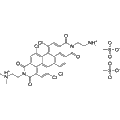
PDIC-NN dimethanesulfonate is a potent STING activator known for its anticancer properties. It enhances the stability and levels of endogenous cyclic dinucleotides (CDNs), triggering a reactive oxygen species (ROS) burst that damages mitochondria, thereby inducing apoptosis and inhibiting DNA replication. By activating the cGAS-STING signaling pathway, PDIC-NN dimethanesulfonate boosts the immunogenicity of tumor cells and stimulates a robust innate immune response, making it a valuable reagent for cancer immunotherapy research.
Out of stock
All 3 sizes
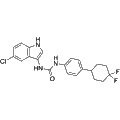
STING-IN-16 is a potent inhibitor of the Stimulator of Interferon Genes (STING) pathway, exhibiting IC50 values of 44 nM in human cells and 32 nM in murine cells. It effectively inhibits STING activation, leading to restoration of renal mitochondrial function, reduction of reactive oxygen species (ROS) production, and decreased cell apoptosis. With demonstrated anti-inflammatory efficacy in vivo, STING-IN-16 is valuable for research focused on autoimmune and autoinflammatory diseases.
Out of stock
All 3 sizes
Synonyms: PDIC-NS free base
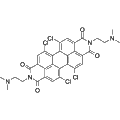
PDIC-NN is a potent STING (Stimulator of Interferon Genes) activator that demonstrates significant anticancer activity. This compound enhances the stability and levels of endogenous cyclic dinucleotides (CDNs), triggering reactive oxygen species (ROS) production and inducing mitochondrial damage. Additionally, PDIC-NN promotes cell apoptosis and inhibits DNA replication while activating the cGAS-STING signaling pathway, thereby augmenting the immunogenicity of tumor cells and eliciting a robust innate immune response. This makes PDIC-NN a valuable tool for studying immune modulation and therapeutic strategies in cancer research.
STING-IN-11 is a potent STING inhibitor with an IC50 of 37.8 nM. By blocking the palmitoylation of the STING protein, it effectively inhibits STING-mediated downstream signaling and associated inflammatory pathways. This compound demonstrates favorable in vivo safety, making it an excellent candidate for research into STING-related inflammatory and autoimmune diseases.
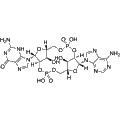
c-(2'FdAMP-2'FdIMP) is a cyclic dinucleotide (CDN) that functions as a STING activator. It effectively stimulates STING-dependent signaling pathways, including IRF and NF-κB, leading to enhanced immune responses. This compound is valuable for research into STING-based immunotherapy applications, particularly in the context of cancer and infectious disease studies.
Out of stock
All 3 sizes
STING agonist-18 diTFA is a potent STING (Stimulator of Interferon Genes) agonist that activates the STING pathway, leading to enhanced immune responses. This compound is useful for the synthesis of antibody-drug conjugates (ADCs), enabling targeted delivery of therapeutics. Its potential applications in cancer immunotherapy and other immune-mediated therapies make it a valuable reagent for research in drug development and immunological studies.
Out of stock
All 3 sizes
STING agonist-49 is a powerful stimulator of the STING (Stimulator of Interferon Genes) pathway, engaging the immune response through Type I interferon production. This compound demonstrates potent biological activity in modulating immune responses, making it a valuable tool in lung cancer research. STING agonist-49 can also serve as an effective payload in antibody-drug conjugates (ADCs), enhancing targeted therapeutic approaches in various malignancies.
Out of stock
All 3 sizes
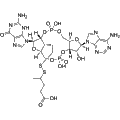
2',3'-cGAMP-C2-PPA is a cyclic dinucleotide that acts as a STING (Stimulator of Interferon Genes) agonist. It modulates immune responses by stimulating the production of interferons and other cytokines, making it a valuable tool in cancer immunotherapy research. This compound is particularly useful for studying immune responses in tumor microenvironments and exploring therapeutic strategies for cancer treatment.
Out of stock
All 3 sizes
diABZI-4 is a potent STING activator that enhances the host immune response through immunostimulatory activity. By promoting STING oligomerization, diABZI-4 activates the TBK1-IRF3 and NF-κB signaling pathways, leading to increased production of type I/III interferons and proinflammatory cytokines. This reagent demonstrates broad-spectrum antiviral efficacy against various viruses, including influenza A, SARS-CoV-2, and herpes simplex virus. diABZI-4 is instrumental in research related to COVID-19, respiratory viral infections, and the associated immunopathological mechanisms, making it a valuable tool for studying viral pathogenesis and developing therapeutic strategies.
2'2'-cGAMP is a synthetic cyclic dinucleotide (CDN) that targets the STING (Stimulator of Interferon Genes) pathway, playing a crucial role in the immune response. It effectively induces the production of interferon-beta (IFN-β), a key cytokine involved in antiviral defense. While 2'2'-cGAMP exhibits a weaker affinity for STING compared to 2'3'-cGAMP, it demonstrates a stronger interaction than other CDNs, making it valuable for research in immunology and therapeutic applications related to immune modulation.
SN-011 is a selective inhibitor of the STING pathway, displaying an IC50 of 76 nM. By competing with cyclic dinucleotides (CDNs) for the binding site on the STING dimer, SN-011 effectively prevents CDN binding and subsequent STING activation. This compound is valuable for investigating STING-mediated autoimmune and inflammatory diseases, offering insights into therapeutic strategies targeting this critical signaling pathway.
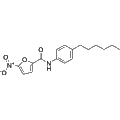
STING-IN-2 is a potent covalent inhibitor of Stimulator of Interferon Genes (STING), effectively targeting both mouse and human STING isoforms. This compound is instrumental in studying the role of STING in autoinflammatory diseases, facilitating the exploration of therapeutic interventions. Its ability to modulate STING activity makes it a valuable tool for researchers investigating immune response and signaling pathways.
Synonyms: Cyclic GMP-AMP disodium; 3',3'-cGAMP disodium
cGAMP disodium, a potent STING activator, functions as an endogenous second messenger that triggers the production of interferons in response to cytosolic DNA. It initiates the stimulator of interferon genes (STING) pathway, resulting in an immune response marked by the production of type I interferons and various immune mediators. This compound is widely used in research focused on innate immunity, cancer immunotherapy, and understanding viral infections.
LB244 is a STING inhibitor that functions by modulating the STING signaling pathway to reduce inflammation. It exhibits a potent inhibitory effect (EC50 = 0.8 μM) on STING-dependent inflammatory responses. While LB244 shows promising potential in preclinical studies, its pharmacokinetic profile suggests limited oral bioavailability in murine models. This compound is suitable for research applications focused on understanding STING-related inflammatory disorders.
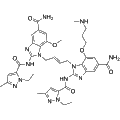
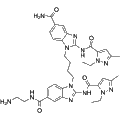
diABZI-C2-NH2 is a potent STING (Stimulator of Interferon Genes) agonist that features a primary amine group. This compound activates the STING pathway, leading to enhanced type I interferon production and immune response modulation. diABZI-C2-NH2 is valuable for research applications focused on immunotherapy, autoimmunity, and infectious disease, making it a key tool in studying the role of STING in immune signaling.
STING-IN-3 is a potent inhibitor of the stimulator of interferon genes (STING), specifically targeting both human and murine STING. It covalently modifies the conserved transmembrane cysteine residue at position 91, effectively preventing activation-induced palmitoylation. This activity provides valuable utility in research applications exploring STING-related pathways in immune response and therapeutic interventions in autoimmune diseases and cancer.