- Cat. No.
- A12497
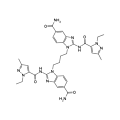
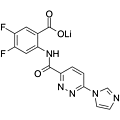
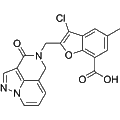
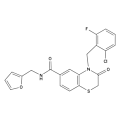
STING agonist-1
Synonyms: G10
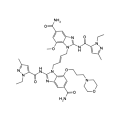
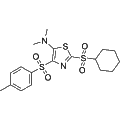
STING agonist-1 (G10) is a novel human-specific STING agonist that elicits antiviral activity against emerging Alphaviruses.
Search by product name, CAS, target or catalog number. Press Down Arrow to reach product suggestions, Tab to move between links, and Escape to close suggestions.
STING agonists and inhibitors act on an adaptor protein of the cytosolic DNA sensing pathway. Stimulator of interferon genes (STING) was described in 2008 as an endoplasmic reticulum adaptor needed for innate immune signaling and type I interferon induction. STING binds cyclic dinucleotides directly, both bacterial molecules such as cyclic di-GMP and the mammalian second messenger made by cyclic GMP-AMP synthase (cGAS) once it detects cytosolic DNA. Agonists listed here include 2',3'-cGAMP, Cyclic-di-GMP, ADU-S100 disodium salt (MIW815 disodium salt) and numbered compounds such as STING agonist-1. Inhibitors include H-151 and the mouse-directed C-176 and C-178, which belong to a class of covalent compounds that modify a cysteine of the transmembrane region.
Synonyms: G10
STING agonist-1 (G10) is a novel human-specific STING agonist that elicits antiviral activity against emerging Alphaviruses.
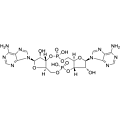
Synonyms: MIW 815; ADUS100
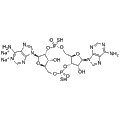
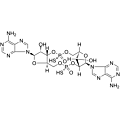
ADU-S100 (MIW815) is a synthetic cyclic dinucleotide (CDN) agonist (activator) of Stimulator of Interferon Genes (STING), a receptor crucial to activate the innate (endogenous) immune system.
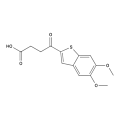
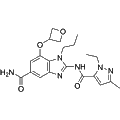
STING agonist-4 is an stimulator of Interferon Genes (STING) receptor agonist with an apparent inhibitory constant (IC50) of 20 nM.
Synonyms: c-di-GMP; cyclic diguanylate; 5GP-5GP
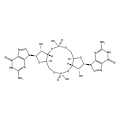
Cyclic-di-GMP is a STING agonist and a ubiquitous second messenger that regulates biofilm formation, motility, and virulence in diverse bacterial species.
STING agonist-3, compound 3, is a selective and non-nucleotide small-molecule STING agonist, which has durable anti-tumor effect and tremendous potential to improve treatment of cancer.
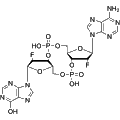
Synonyms: c-[2??FdAMP(S)-2??FdIMP(S)]
CL656 is an activator of stimulator of interferon genes (STING).
Synonyms: ML RR-S2 CDA; MIW815
ADU-S100 (ML RR-S2 CDA; MIW815), an activator of stimulator of interferon genes (STING), leads to potent and systemic tumor regression and immunity.
Out of stock
All 4 sizes
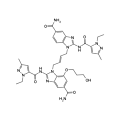
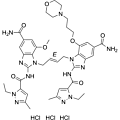
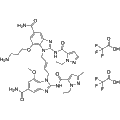
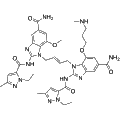
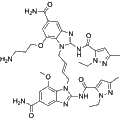
diABZI STING agonist-1 is a selective stimulator of interferon genes (STING) receptor agonist, with an EC50s of 130 nM for human PBMCs.
diABZI STING agonist-1 (trihydrochloride) is a selective stimulator of interferon genes (STING) receptor agonist, with an EC50s of 130 for human PBMCs.
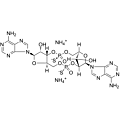
Synonyms: ML RR-S2 CDA ammonium salt; MIW815 ammonium salt
ADU-S100 ammonium salt (ML RR-S2 CDA ammonium salt; MIW815 ammonium salt), an activator of stimulator of interferon genes (STING), leads to potent and systemic tumor regression and immunity.
Synonyms: Cyclic diadenylate; Cyclic-di-AMP
c-di-AMP (Cyclic diadenylate) is a STING agonist, which binds to the transmembrane protein STING thereby activating the TBK3-IRF3 signaling pathway, subsequently triggering the production of type I IFN and TNF.
Out of stock
All 7 sizes
SR-717 is a non-nucleotide STING agonist with EC50s of 2.1 μM and 2.2 μM in ISG-THP1 (WT) and ISG-THP1 cGAS KO (cGAS KO) cell lines, respectively.
MSA-2, a potent and orally available non-nucleotide STING agonist, is bound to STING as a noncovalent dimer with nanomolar affinity.
M04 is a potent agonist of stimulator of interferon genes (STING), specifically activating the wild-type human STING in HEK293T cells while demonstrating no efficacy with the HAQ STING variant or in mouse RAW 264.7 cells. It effectively induces the expression of pro-inflammatory cytokines such as TNF-α, IL-10, IL-1β, and IL-12p70 in human peripheral blood mononuclear cells (PBMCs). At a concentration of 50 µM, M04 enhances dendritic cell maturation, promoting the expression of MHC class II (HLA-DR) and co-stimulatory molecules (CD40, CD80, CD86), thereby boosting T cell activation. This reagent is valuable for research in inflammatory immune diseases.
Out of stock
All 3 sizes
STING Agonist-45 is a selective agonist of the stimulator of interferon genes (STING), exhibiting an EC50 value of 0.28 μM. It activates the innate immune response via the cGAS-STING pathway, leading to the upregulation of critical markers such as p-TBK1 and IRF3. STING Agonist-45 effectively stimulates the production of type I interferons, including IFN-β, as well as cytokines like TNF-α and IL-6 in human peripheral blood mononuclear cells (PBMCs). This compound shows potential in enhancing anti-tumor immunity, inhibiting tumor growth, and promoting CD8+ T cell infiltration in animal models, making it a valuable tool for research into STING-related diseases.
Synonyms: PDIC-NS
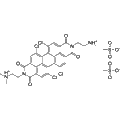
PDIC-NN dimethanesulfonate is a potent STING activator known for its anticancer properties. It enhances the stability and levels of endogenous cyclic dinucleotides (CDNs), triggering a reactive oxygen species (ROS) burst that damages mitochondria, thereby inducing apoptosis and inhibiting DNA replication. By activating the cGAS-STING signaling pathway, PDIC-NN dimethanesulfonate boosts the immunogenicity of tumor cells and stimulates a robust innate immune response, making it a valuable reagent for cancer immunotherapy research.
Out of stock
All 3 sizes
Synonyms: PDIC-NS free base
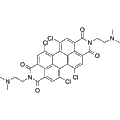
PDIC-NN is a potent STING (Stimulator of Interferon Genes) activator that demonstrates significant anticancer activity. This compound enhances the stability and levels of endogenous cyclic dinucleotides (CDNs), triggering reactive oxygen species (ROS) production and inducing mitochondrial damage. Additionally, PDIC-NN promotes cell apoptosis and inhibits DNA replication while activating the cGAS-STING signaling pathway, thereby augmenting the immunogenicity of tumor cells and eliciting a robust innate immune response. This makes PDIC-NN a valuable tool for studying immune modulation and therapeutic strategies in cancer research.
PDIC-NC is a STING agonist that promotes the activation of the STING pathway, leading to enhanced immune responses against tumors. This compound is cytotoxic to tumor cells and induces reactive oxygen species (ROS) production, as well as apoptosis and autophagy. With its specific distribution to lung tissue, PDIC-NC is particularly valuable for research applications focused on lung cancer.
STING Agonist-50 is a potent oral STING agonist that activates the STING signaling pathway with an IC50 of 3.457 μM. It facilitates the phosphorylation of downstream proteins TBK1 and IRF3, leading to the enhanced expression of key cytokines such as IFN-β, CXCL10, and IL-6. This compound has demonstrated the ability to inhibit tumor growth in syngeneic mouse models, making it a valuable tool for research focused on colorectal cancer.
Out of stock
All 3 sizes
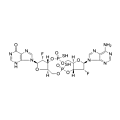
c-(2'FdAMP-2'FdIMP) is a cyclic dinucleotide (CDN) that functions as a STING activator. It effectively stimulates STING-dependent signaling pathways, including IRF and NF-κB, leading to enhanced immune responses. This compound is valuable for research into STING-based immunotherapy applications, particularly in the context of cancer and infectious disease studies.
Out of stock
All 3 sizes
STING agonist-18 diTFA is a potent STING (Stimulator of Interferon Genes) agonist that activates the STING pathway, leading to enhanced immune responses. This compound is useful for the synthesis of antibody-drug conjugates (ADCs), enabling targeted delivery of therapeutics. Its potential applications in cancer immunotherapy and other immune-mediated therapies make it a valuable reagent for research in drug development and immunological studies.
Out of stock
All 3 sizes
STING agonist-49 is a powerful stimulator of the STING (Stimulator of Interferon Genes) pathway, engaging the immune response through Type I interferon production. This compound demonstrates potent biological activity in modulating immune responses, making it a valuable tool in lung cancer research. STING agonist-49 can also serve as an effective payload in antibody-drug conjugates (ADCs), enhancing targeted therapeutic approaches in various malignancies.
Out of stock
All 3 sizes
STING agonist-18 is a potent agonist of the stimulator of interferon genes (STING) pathway, known for its ability to activate immune responses. This compound is particularly useful in the synthesis of antibody-drug conjugates (ADCs), such as Trastuzumab conjugates, facilitating targeted therapeutic approaches. Its application in cancer immunotherapy and related research enhances the understanding of STING pathway modulation in tumor microenvironments.
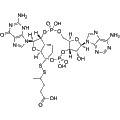
2',3'-cGAMP-C2-PPA is a cyclic dinucleotide that acts as a STING (Stimulator of Interferon Genes) agonist. It modulates immune responses by stimulating the production of interferons and other cytokines, making it a valuable tool in cancer immunotherapy research. This compound is particularly useful for studying immune responses in tumor microenvironments and exploring therapeutic strategies for cancer treatment.
Out of stock
All 3 sizes
Synonyms: Cyclic diadenylate disodium; Cyclic-di-AMP disodium
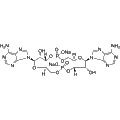
c-di-AMP disodium is a cyclic dinucleotide serving as a STING agonist, which interacts with the STING protein to activate the TBK1-IRF3 signaling pathway. This activation leads to the production of type I interferons and tumor necrosis factor, playing a pivotal role in the immune response. In addition to its function in immune modulation, c-di-AMP is a bacterial second messenger that regulates various physiological processes in Gram-positive bacteria, including growth and virulence. Its properties also make it an effective mucosal adjuvant for enhancing both humoral and cellular immune responses in research applications.