
- Cat. No.
- A16231
APS-2-79
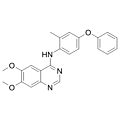
APS-2-79 is an antagonist of MEK phosphorylation by RAF through direct binding of the KSR active site.
In stock
View Details
Search by product name, CAS, target or catalog number. Press Down Arrow to reach product suggestions, Tab to move between links, and Escape to close suggestions.
Extracellular signal-regulated kinase (ERK) inhibitors act on ERK1 and ERK2 at the end of a growth factor cascade. ERK1 and ERK2 were described in 1991 as kinases activated and tyrosine phosphorylated in response to insulin and nerve growth factor. Mitogen-activated protein kinase kinases (MEK1, MEK2) activate them, and they phosphorylate many cytoplasmic and nuclear substrates. SCH772984, reported in 2013, inhibits ERK1 and ERK2 in models of acquired resistance to B-Raf and MEK1/2 inhibitors. Ulixertinib and FR 180204 are further ERK1/2 inhibitors, whereas XMD8-92 targets ERK5, also called big mitogen-activated protein kinase 1 (BMK1). The list also holds compounds with an indirect link to the pathway, such as the plant cytokinin trans-zeatin.
APS-2-79 is an antagonist of MEK phosphorylation by RAF through direct binding of the KSR active site.
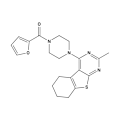
ML192 is a selective antagonist of G protein-coupled receptor 55 (GPR55), effectively inhibiting GPR55-mediated signaling pathways. It blocks β-arrestin trafficking, suppresses ERK1/2 phosphorylation, and prevents PKCβII translocation, thereby interfering with downstream cellular responses. ML192 is a valuable tool for studying the physiological and pathological roles of GPR55 in processes such as inflammation, pain, cancer, and metabolic regulation.
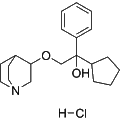
Synonyms: Penequinine hydrochloride
Penehyclidine hydrochloride (also known as Penequinine hydrochloride) is a selective anticholinergic agent that acts as an antagonist of muscarinic M1 and M3 receptors. It exerts anti-inflammatory effects by modulating immune signaling in lung tissue, notably through activation of the NF-κB pathway and inhibition of pro-inflammatory cytokine release. In preclinical studies, Penehyclidine hydrochloride has been shown to alleviate pulmonary inflammation in rat models of chronic obstructive pulmonary disease (COPD), particularly under conditions of mechanical ventilation. These properties suggest its potential utility in managing respiratory inflammatory conditions and improving outcomes in mechanically ventilated patients with COPD.
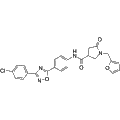
RLX-33 is a potent, selective, and blood-brain barrier-permeable antagonist of the relaxin family peptide 3 receptor (RXFP3), with an IC50 of 2.36 μM. It effectively inhibits relaxin-3-induced phosphorylation of ERK1 and ERK2, with IC50 values of 7.82 μM and 13.86 μM, respectively. RLX-33 suppresses RXFP3 agonist (R3/I5)-induced food intake in rats and is a valuable tool for metabolic syndrome research.
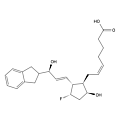
AL-8810 is a potent and selective antagonist of the prostaglandin F2α (PGF2α) receptor (FP receptor), with Ki values of 0.2 ± 0.06 μM in mouse 3T3 cells and 0.4 ± 0.1 μM in rat A7r5 cells. In addition to its antagonistic activity, AL-8810 also activates MAPK and ERK1/2 signaling pathways. It is commonly used in research related to elevated intraocular pressure (OHT) and primary open-angle glaucoma (POAG).