Fungal

Antifungal compounds in Fungal act on fungal membranes, ergosterol synthesis and other targets in yeasts and molds. Ergosterol is the main sterol of fungal membranes, so its synthesis pathway is the most common antifungal target. Azoles such as fluconazole, miconazole and oxiconazole inhibit lanosterol 14α-demethylase, a cytochrome P450 enzyme needed for ergosterol synthesis. Terbinafine and liranaftate inhibit squalene epoxidase at an earlier step of the same pathway. The morpholine amorolfine blocks later steps of ergosterol synthesis, while the polyene natamycin binds ergosterol itself. Thiabendazole, a benzimidazole, is also listed for fungal and parasitology research.

4 Items

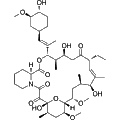
  • L685818
    Cat. No.
    A28078

    L685818

    L685818 is a specific immunophilin ligand that exhibits antifungal activity against Cryptococcus neoformans. In addition to its antifungal properties, L685818 demonstrates neuroregenerative effects by safeguarding dopaminergic neurons from toxicity associated with MPP+ and 6-OHDA. The compound effectively reduces the loss of tyrosine hydroxylase (TH) and promotes neuronal process regeneration, making it a valuable tool for research in neurodegenerative disease models and fungal infections.

    25 mg
    $1,275.00
    All 1 sizes
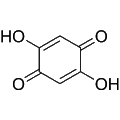
  • 2,5-Dihydroxy-1,4-benzoquinone
    Cat. No.
    A28489

    2,5-Dihydroxy-1,4-benzoquinone

    Synonyms: DHBQ

    2,5-Dihydroxy-1,4-benzoquinone (DHBQ) is a redox-active organic ligand known for its antibacterial properties. This compound is derived from fungal metabolites and plays a significant role in enhancing the performance of Li+-ion battery cathodes through a two-electron redox process when incorporated into Fe (dhbq) metal-organic frameworks. Additionally, 2,5-Dihydroxy-1,4-benzoquinone is utilized in the construction of conductive metal-organic frameworks, making it valuable for research in energy storage and related applications.

    100 mg
    $20.00
    5 g
    $25.00
    All 6 sizes
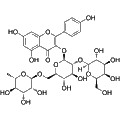
  • Camelliaside A
    Cat. No.
    A28914

    Camelliaside A

    Camelliaside A is a phytochemical that functions as a HER2 ligand. It plays a significant role in breast cancer-related research, contributing to the understanding of HER2 signaling pathways. Notably, Camelliaside A does not exhibit antifungal activity against the pathogen Rhizoctonia solani, demonstrating its specificity in targeting HER2 without adversely affecting mycelial growth.

    1 mg
    $80.00
    5 mg
    $185.00
    All 6 sizes
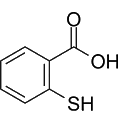
  • Thiosalicylic acid
    Cat. No.
    A87512

    Thiosalicylic acid

    Synonyms: 2-Mercaptobenzoic acid

    Thiosalicylic acid, an organosulfur compound featuring both sulfhydryl and carboxyl functional groups, primarily functions as a desulfurizing agent. This compound is utilized as a ligand in the synthesis of azosulfonamide derivatives, which exhibit antibacterial and antifungal properties. Additionally, thiosalicylic acid facilitates the formation of metal chelates, specifically with Fe3+, Cu2+, and Hg2+, enhancing its versatility in various biochemical applications.

    50 g
    $20.00
    100 g
    $30.00
    All 3 sizes

4 Items

Added to your cart

View Cart Checkout

    Loading...