- Cat. No.
- A10355
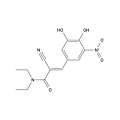
Entacapone
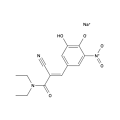
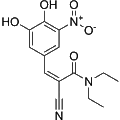
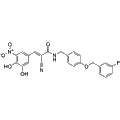
Entacapone is a specific, potent, peripherally acting catechol-O-methyltransferase (COMT) inhibitor with IC50 of 151 nM for PD treatment.
Search by product name, CAS, target or catalog number. Press Down Arrow to reach product suggestions, Tab to move between links, and Escape to close suggestions.
Catechol-O-methyltransferase (COMT) inhibitors block an enzyme that inactivates catecholamines such as dopamine. COMT transfers a methyl group from S-adenosylmethionine (SAM) to one hydroxyl group of the catechol ring. Enzymatic O-methylation of epinephrine and related catechols was first described in 1958. The enzyme converts dopamine into 3-methoxytyramine, a metabolite also listed here as 3-methoxyTyramine HCl. A common functional polymorphism, reported in 1996, lowers COMT activity and is studied in neuropsychiatric research. Entacapone, tolcapone, opicapone and nebicapone are nitrocatechol inhibitors used to study catecholamine and levodopa metabolism. The listing also includes related monoamine compounds such as serotonin maleate.
Entacapone is a specific, potent, peripherally acting catechol-O-methyltransferase (COMT) inhibitor with IC50 of 151 nM for PD treatment.
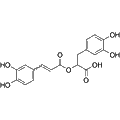
Synonyms: Labiatenic acid racemate
Rosmarinic acid racemate acts as a monoamine oxidase inhibitor, specifically targeting the MAO-A and MAO-B enzymes as well as catechol-O-methyltransferase (COMT). It demonstrates inhibition with IC50 values of 50.1 μM for MAO-A, 184.6 μM for MAO-B, and 26.7 μM for COMT. This compound is useful in research applications focused on neurochemical regulation, mood disorders, and the modulation of catecholamine levels.
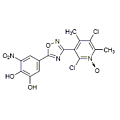
Synonyms: BIA9-1067
opicapone is a novel catechol-O-methyltransferase inhibitor
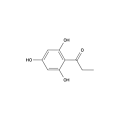
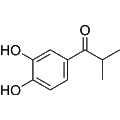
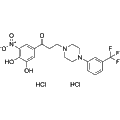
Flopropione is a 5-HT1A receptor antagonist and also a catechol-o-methyltransferase (COMT) inhibitor.
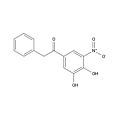
Synonyms: BIA 3-202
Nebicapone (BIA 3-202), a reversible catechol-O-methyltransferase (COMT) inhibitor, is mainly metabolized by glucuronidation.
Synonyms: Ro 40-7592
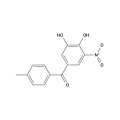
Tolcapone (Ro 40-7592) is a selective, potent and orally active COMT inhibitor.
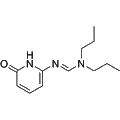
Synonyms: ADX47273
Entacapone is a specific, potent, peripherally acting catechol-O-methyltransferase (COMT) inhibitor with IC50 of 151 nM for PD treatment.
Synonyms: Ro 40-7591
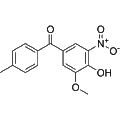
3-O-Methyltolcapone is a drug metabolite derived from Tolcapone, a selective and potent inhibitor of catechol-O-methyltransferase (COMT) with an IC50 of 773 nM. This compound is known to block α-synuclein and Aβ42 oligomerization and fibrillogenesis, while also inducing oxidative stress, apoptosis in cancer cells, and reactive oxygen species (ROS) production. Research applications include studies related to cancer and neurological disorders, particularly in the context of Parkinson’s disease and neuroblastoma.
Synonyms: Ro 61-1448
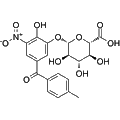
Tolcapone 3-β-D-glucuronide is a drug metabolite derived from Tolcapone, which serves as a selective and potent inhibitor of catechol-O-methyltransferase (COMT). While Tolcapone exhibits notable pharmacological activity, Tolcapone 3-β-D-glucuronide itself is pharmacologically inactive. Research indicates that Tolcapone plays a role in inhibiting α-synuclein and Aβ42 oligomerization, contributing to oxidative stress, cancer cell apoptosis, and reactive oxygen species (ROS) production. This metabolite is valuable for investigations into cancer mechanisms and neurological disorders, including Parkinson's disease and neuroblastoma.
Out of stock
All 3 sizes
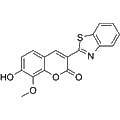
3-BTMD is a fluorescent compound generated through the action of the COMT enzyme on its substrate, 3-BTD, exhibiting an excitation wavelength of 390 nm and an emission wavelength of 510 nm. This reagent is primarily utilized in fluorescent labeling and imaging applications, facilitating the study of enzymatic activity and biomolecular interactions in various biological contexts. Its distinct fluorescence properties make it a valuable tool for researchers in the fields of biochemistry and molecular biology.
Synonyms: BMS-986419; EVT-8683; EOAI-4018683
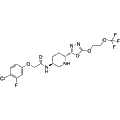
Comtifator is an integrated stress response pathway modulator that influences cellular responses to various stressors. This compound is essential for studying the role of the integrated stress response in diseases such as neurodegeneration and cancer. Its ability to alter stress signaling makes it a valuable tool for research investigating therapeutic interventions and mechanisms underlying stress-related disorders.
Out of stock
All 3 sizes
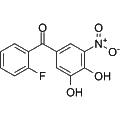
Neluxicapone is a potent inhibitor of catechol-O-methyltransferase (COMT), primarily utilized in the research of Parkinson's disease (PD). By inhibiting COMT, this compound enhances dopamine levels in the brain, which may alleviate motor symptoms associated with PD. Researchers can use neluxicapone to investigate its pharmacological effects and potential therapeutic benefits in neurodegenerative conditions.
Ro 41-0960 is a selective inhibitor of catechol-O-methyltransferase (COMT), which plays a crucial role in the metabolism of catecholamines. By inhibiting COMT, this compound enhances the levels of neurotransmitters such as dopamine, norepinephrine, and epinephrine. It is widely used in research to investigate the biochemical pathways of neurotransmission and to explore potential therapeutic applications in conditions such as Parkinson's disease and other neuropsychiatric disorders.
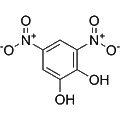
Synonyms: OR-486; 3,5-Dinitropyrocatechol
3,5-Dinitrocatechol is a potent inhibitor of catechol-O-methyltransferase, exhibiting an IC50 of 12 nM. This compound is instrumental in studying the regulation of catecholamine metabolism and neurotransmitter biosynthesis. Additionally, it serves as a precursor in the formation of molybdenum (VI)-3,5-Dinitrocatechol complexes, making it valuable for various biochemical applications in research.
Synonyms: OR-462
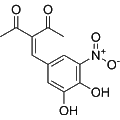
Nitecapone is an orally active and short-acting catechol-O-methyltransferase (COMT) inhibitor. It exhibits notable gastroprotective and antioxidant properties by scavenging reactive oxygen and nitrogen species, thereby preventing lipid peroxidation. Nitecapone is valuable in research applications focusing on neurodegenerative diseases and other conditions where COMT modulation may play a therapeutic role.
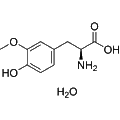
Synonyms: 3-Methoxy-L-tyrosine monohydrate; 3-O-Methyl-L-DOPA monohydrate
3-O-Methyldopa monohydrate is a notable metabolite of L-DOPA, primarily interacting with catechol O-methyltransferase (COMT). It does not function as a substrate or inhibitor of L-amino acid decarboxylase, distinguishing it from its precursor. The inhibition of COMT by this compound may enhance the therapeutic effects of L-DOPA in Parkinson's disease, making it a valuable tool in neurological research and studies on Parkinson's treatments.
hMAO-B/MB-COMT-IN-1 is a dual inhibitor of human monoamine oxidase B (hMAO-B) and membrane-bound catechol-O-methyltransferase (MB-COMT), exhibiting IC50 values of 2.5 µM and 3.84 µM, respectively. This compound is effective in protecting cells from oxidative damage, making it a valuable tool for studying neurodegenerative diseases, including Parkinson's Disease. Its dual inhibition profile provides insights into the molecular mechanisms underlying these conditions and aids in the development of potential therapeutic strategies.
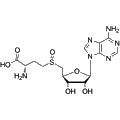
S-Adenosylhomocysteine sulfoxide is a potent inhibitor of catechol-O-methyltransferase (COMT) with an IC50 value of 860 μM. This compound is utilized in research to investigate the modulation of methylation reactions, providing valuable insights into biochemical pathways involving methyltransferases. Its inhibitory properties make it a significant tool for studies related to neurotransmitter metabolism and epigenetic regulation.
U-0521 is a selective inhibitor of catechol-O-methyltransferase (COMT), an enzyme involved in the metabolism of catecholamines. This compound exhibits significant biological activity by modulating neurotransmitter levels, which is crucial for investigations into Parkinson's disease and related disorders. U-0521 is valuable for research focused on understanding the role of COMT in neurodegenerative conditions and for exploring potential therapeutic strategies targeting this pathway.
(Z)-Entacapone is a selective inhibitor of catechol-O-methyltransferase (COMT), crucial for catecholamine metabolism. This compound serves as a valuable tool in studying COMT's role in neurological disorders and drug metabolism. Additionally, it may appear as a potential impurity in commercial Entacapone preparations or as a degradation product due to UV light exposure, providing further relevance in quality control and biological research applications.
hMAO-B/MB-COMT-IN-2 is a potent dual inhibitor of hMAO-B and MB-COMT, exhibiting IC50 values of 4.27 μM and 2.69 μM, respectively. This compound effectively protects cells from oxidative damage, making it valuable for studies related to neurodegenerative diseases. hMAO-B/MB-COMT-IN-2 is particularly relevant in the research of conditions such as Parkinson’s Disease, offering insights into potential therapeutic strategies.
Out of stock
All 3 sizes
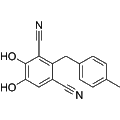
COMT-IN-1 is a potent catechol-O-methyltransferase (COMT) inhibitor, demonstrating an IC50 of 0.37 μM for COMT activity. This nitrophenolic analogue effectively inhibits monoamine oxidase A (MAO-A) and MAO-B with IC50 values of 95.58 μM and 58.82 μM, respectively. With good blood-brain barrier permeability, COMT-IN-1 enhances dopamine levels and alleviates symptoms associated with MPTP-induced Parkinson's disease in murine models, making it a valuable tool for research into Parkinson's disease and dopamine metabolism.
Out of stock
All 3 sizes
CGP 28014 is a potent inhibitor of catechol-O-methyltransferase (COMT), an enzyme involved in the metabolism of catecholamines. This compound has been shown to lower homovanillic acid (HVA) levels and increase dihydroxyphenylacetic acid (DOPAC) levels in the striatum of rat models. CGP 28014 is valuable in research focused on the pathophysiology and potential treatment strategies for Parkinson's disease, providing insights into dopaminergic signaling and neurotransmitter dynamics.
BIA 3-335 is a potent inhibitor of catechol-O-methyltransferase (COMT), an enzyme involved in the metabolism of catecholamines. Its primary mechanism disrupts the methylation of catechols, leading to increased levels of dopamine, which may be beneficial in the study of Parkinson's disease and related neurological disorders. This compound is widely used in research settings to explore therapeutic strategies aimed at enhancing dopaminergic signaling.
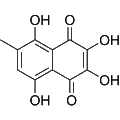
Methylspinazarin is a potent inhibitor of catechol O-methyltransferase (COMT), exhibiting an IC50 of 0.8 μg/ml. Isolated from the actinobacterium Streptomyces, Methylspinazarin demonstrates selectivity for COMT compared to tyrosine hydroxylase. This compound is valuable for research applications focused on neurotransmitter metabolism and the pharmacological modulation of catecholamine pathways.