- Cat. No.
- A23961
QC-01–175
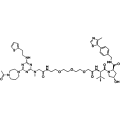
QC-01-175 is a heterobifunctional PROTAC molecule designed to degrade aberrant tau protein. It effectively reduces levels of A152T and P301L mutant tau, mitigates tau-mediated neurotoxicity, and enhances neuronal survival.
Search by product name, CAS, target or catalog number. Press Down Arrow to reach product suggestions, Tab to move between links, and Escape to close suggestions.
Tau protein compounds act on the microtubule-associated protein tau (MAPT) and its aggregation in neurodegeneration. Tau was described in 1975 as a protein factor essential for microtubule assembly. In 1986 abnormally phosphorylated tau was identified in the cytoskeletal pathology of Alzheimer disease. Assembly of tau into paired helical filaments depends on the hexapeptide motif VQIVYK at residues 306 to 311, which forms beta structure. Tau Peptide (306-317) spans this motif and serves as a substrate in aggregation assays. TRx0237 (LMTX) mesylate, PE859 and nimbin are listed as inhibitors of tau aggregation. QC-01–175 is a proteolysis targeting chimera (PROTAC) that degrades tau, whereas MRL828 is an autophagosome-tethering compound (ATTEC) for tau.
QC-01-175 is a heterobifunctional PROTAC molecule designed to degrade aberrant tau protein. It effectively reduces levels of A152T and P301L mutant tau, mitigates tau-mediated neurotoxicity, and enhances neuronal survival.
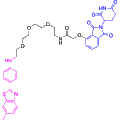
C004019 is a small-molecule PROTAC designed to target tau, functioning as a tau scavenger. This compound effectively recruits tau and E3 ligase, promoting the ubiquitination and proteasome-dependent degradation of tau proteins. C004019 has demonstrated the potential to enhance synaptic and cognitive functions in models of Alzheimer's disease, making it a valuable tool for research into Alzheimer's and tau protein-related pathologies.
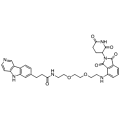
PROTAC α-Synuclein/Tau degrader 1 targets α-synuclein and tau for degradation through the ubiquitin-proteasome system. This dual PROTAC degrader demonstrates effective binding with dissociation constants of 0.47 μM and 2.78 μM for α-synuclein and tau, respectively, and has DC50 values of 1.57 μM and 4.09 μM. Its ability to penetrate the blood-brain barrier makes it a valuable tool for research into neurodegenerative diseases, particularly Parkinson's disease. The compound's design includes components for ligand binding and a linker optimized for efficient degradation.