PI3K

Phosphoinositide 3-kinases (PI3Ks) are lipid kinases that catalyze the phosphorylation of phosphatidylinositol 4,5-bisphosphate (PI(4,5)P₂) to generate the second messenger phosphatidylinositol (3,4,5)-trisphosphate (PI(3,4,5)P₃). The production of PI(3,4,5)P₃ facilitates the recruitment and activation of pleckstrin homology (PH) domain–containing proteins at the plasma membrane, thereby initiating downstream signaling cascades essential for cellular proliferation, survival, and migration.

PI3Ks are divided into three major classes, among which Class I PI3Ks are most prominently implicated in cancer biology. Class I enzymes comprise four distinct catalytic isoforms: PI3Kα, PI3Kβ, PI3Kδ, and PI3Kγ.

Class IA PI3Ks, the subclass most commonly associated with oncogenic signaling, function as heterodimeric lipid kinases composed of a catalytic p110 subunit (p110α, p110β, or p110δ, encoded by PIK3CA, PIK3CB, and PIK3CD, respectively) and a regulatory p85 subunit.

The PI3K signaling pathway plays a central role in diverse biological processes, including cell cycle progression, cellular growth, survival, actin cytoskeletal rearrangement, migration, and intracellular vesicular trafficking.

Frequently Asked Questions
Phosphoinositide 3-kinases (PI3Ks) are a family of lipid kinases that phosphorylate phosphatidylinositol lipids to regulate cell growth, survival, metabolism, and immune signaling. PI3K activation leads to downstream AKT and mTOR pathway signaling. Aberrant PI3K signaling is frequently observed in cancer due to PIK3CA mutations, PTEN loss, or receptor tyrosine kinase activation.
Class I PI3Ks include four catalytic isoforms: PI3Kα (PIK3CA) PI3Kβ (PIK3CB) PI3Kδ (PIK3CD) PI3Kγ (PIK3CG) PI3Kα and β are broadly expressed, while PI3Kδ and γ are enriched in leukocytes and play critical roles in immune regulation. Isoform selectivity is an important consideration in drug development due to toxicity and immune effects.
PI3K inhibitors can be classified as: Pan-PI3K inhibitors Isoform-selective inhibitors (α, β, δ, γ) Dual PI3K/mTOR inhibitors Irreversible inhibitors Selectivity influences therapeutic window and toxicity profile.
While PI3K inhibitors block upstream lipid kinase activity, mTOR inhibitors act downstream at the level of mTORC1 or mTORC2. Dual PI3K/mTOR inhibitors target both nodes of the pathway and may achieve broader pathway suppression.

Items 401-411 of 411

  • PI3K-IN-54
    Cat. No.
    A79896

    PI3K-IN-54

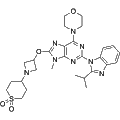
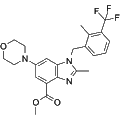
    PI3K-IN-54 is a potent pan-PI3K inhibitor that targets the p110α, p110β, and p110δ isoforms with IC50 values of 0.22 nM, 1.4 nM, and 0.38 nM, respectively. This compound is valuable for investigating the role of PI3K signaling in various cancers. Its ability to inhibit multiple isoforms makes PI3K-IN-54 a useful tool for studying cancer progression and therapy resistance.

    1 mg
    $45.00
    5 mg
    $115.00
    All 6 sizes
  • GNE-293
    Cat. No.
    A79897

    GNE-293

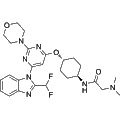
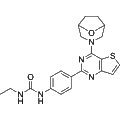
    GNE-293 is a selective inhibitor of phosphoinositide 3-kinase delta (PI3Kδ), demonstrating an IC50 of 4.38 nM. This compound exhibits favorable pharmacokinetic properties, making it suitable for in vitro and in vivo studies. GNE-293 is particularly relevant for research into asthma, rheumatoid arthritis, and various inflammatory disorders.

    25 mg
    $1,275.00
    50 mg
    $1,625.00
    All 3 sizes
  • AS2541019
    Cat. No.
    A79898

    AS2541019

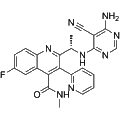
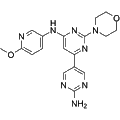
    AS2541019 is a selective inhibitor of the PI3Kδ (p110δ) isoform, effectively targeting the phosphoinositide 3-kinase pathway. This compound demonstrates notable inhibitory effects on B cell activation and proliferation, making it useful for evaluating immune responses. Additionally, AS2541019 has been shown to suppress antibody production in xenograft models, contributing to its potential applications in immunological research.

    25 mg
    $1,275.00
    50 mg
    $1,625.00
    All 3 sizes
  • PI3K-IN-11
    Cat. No.
    A79899

    PI3K-IN-11

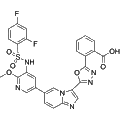
    PI3K-IN-11 is a selective inhibitor of phosphoinositide 3-kinases (PI3K), targeting PI3Kα, PI3Kβ, PI3Kγ, and PI3Kδ with IC50 values of 6.4, 13, 8, and 11 nM, respectively, while showing significantly lower affinity for mTOR (IC50=2.9 μM). This compound demonstrates over 420-fold selectivity for PI3K in a comprehensive panel of 20 lipid and protein kinases. In PTEN-negative U87MG cells, PI3K-IN-11 effectively inhibits the phosphorylation of Akt and S6 kinase (S6K) at concentrations between 0.03 and 1 μg/mL. Additionally, it has shown potential in reducing tumor growth in U87MG mouse xenograft models at doses ranging from 2.5 to 10 mg/kg, making it a valuable tool for cancer research.

    1 mg
    $155.00
    5 mg
    $395.00
    All 3 sizes
  • AM-0687
    Cat. No.
    A79900

    AM-0687

    AM-0687 is a selective inhibitor of phosphoinositide 3-kinase delta (PI3Kδ), exhibiting an IC50 of 2.9 nM. This compound effectively reduces levels of IgG and IgM specific antibodies and inhibits the proliferation of human B cells induced by anti-IgM/CD40L with an IC50 of 0.8 nM. Additionally, AM-0687 decreases AKT phosphorylation with an IC50 of 0.7 nM, demonstrating its potential as an anti-inflammatory agent in various research applications.

    25 mg
    $1,275.00
    50 mg
    $1,625.00
    All 3 sizes
  • GSK2636771 methyl
    Cat. No.
    A79901

    GSK2636771 methyl

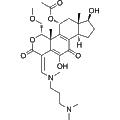
    GSK2636771 methyl is a selective inhibitor of PI3Kβ, a key lipid kinase involved in cellular signaling pathways regulating growth and survival. This compound is primarily utilized in cancer research, where it can be combined with other agents, such as VT-464, to explore potential therapeutic strategies. Its role in modulating PI3Kβ activity aids in the investigation of cancer metabolism and treatment resistance mechanisms.

    Out of stock

    All 3 sizes
  • mTOR inhibitor-25
    Cat. No.
    A79903

    mTOR inhibitor-25

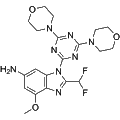
    mTOR inhibitor-25 is a selective inhibitor of the mechanistic target of rapamycin (mTOR), demonstrating significant anticancer activity. It exhibits strong inhibitory effects on mTOR while having a comparatively weaker impact on phosphoinositide 3-kinase (PI3K). This compound is valuable for research applications focused on various cancers, including leukemia, skin cancer, breast cancer, lung cancer, and colon cancer, and has shown excellent efficacy in cell proliferation assays.

    1 mg
    $120.00
    5 mg
    $285.00
    All 7 sizes
  • NIBR-17
    Cat. No.
    A79904

    NIBR-17

    NIBR-17 is a pan-class I PI3K inhibitor that targets phosphoinositide 3-kinases, key regulators in various signaling pathways. This compound demonstrates significant antitumor activity by effectively inhibiting cell proliferation and survival in cancer models. It is suitable for research applications focused on cancer biology and drug discovery targeting the PI3K/Akt signaling pathway.

    1 mg
    $30.00
    5 mg
    $90.00
    All 5 sizes
  • HL-2
    Cat. No.
    A81364

    HL-2

    HL-2 is a selective ligand for the phosphoinositide 3-kinase (PI3K) kinase, utilized in the synthesis of proteolysis-targeting chimeras (PROTACs). Its role in modulating PI3K activity makes it a valuable tool for studying signal transduction pathways and cancer biology. HL-2's application extends to drug development and the investigation of therapeutic strategies targeting PI3K-related diseases.

    Out of stock

    All 3 sizes
  • PF-06862309
    Cat. No.
    A98853

    PF-06862309

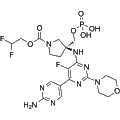
    PF-06862309 is a phosphate ester prodrug of PF-06843195, which serves as a highly selective inhibitor of PI3Kα. Upon exposure to alkaline phosphatase, PF-06862309 is hydrolyzed to release the active form, PF-06843195. This compound is particularly useful for studying breast cancer models characterized by estrogen receptor positivity, HER2 negativity, and PIK3CA mutations, providing insights into targeted therapeutic strategies in this context.

    25 mg
    $1,655.00
    50 mg
    $2,115.00
    All 3 sizes
  • Copanlisib-NH
    Cat. No.
    B21863

    Copanlisib-NH

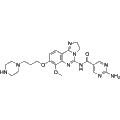
    Copanlisib-NH is a selective ligand for the PI3Kα/δ isoforms, making it a valuable tool in targeted protein degradation studies. This compound serves as a ligand in the development of PROTACs aimed at degrading PI3Kα/δ proteins, facilitating research on mechanisms of resistance and cellular pathways in oncology. Notably, Copanlisib-NH is applicable in breast cancer research, offering insights into therapeutic strategies that exploit the PI3K signaling pathway.

    Out of stock

    All 3 sizes

Items 401-411 of 411

Added to your cart

View Cart Checkout

    Loading...