BTK

Bruton's tyrosine kinase (BTK) inhibitors act on a cytoplasmic kinase that relays signals from the B cell receptor. In 1993 two groups linked defects in the BTK gene to X-linked agammaglobulinemia, in which mature B cells fail to develop. BTK belongs to the Tec kinase family and is also expressed in myeloid cells such as macrophages and mast cells. Ibrutinib, first described as PCI-32765, binds covalently to a cysteine in the BTK active site and blocks B cell activation. Spebrutinib, listed as AVL-292 and as spebrutinib besylate, is another covalent inhibitor, while CGI1746 and RN486 bind reversibly. Ibrutinib-biotin and the fluorescent analog PCI-33380 serve as probes for BTK active-site occupancy.

2 Items

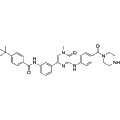
  • BTK ligand 1
    Cat. No.
    A34481

    BTK ligand 1

    BTK Ligand 1 is a selective ligand for Bruton’s tyrosine kinase (Btk) that facilitates targeted protein degradation via a PROTAC (proteolysis-targeting chimera) approach. By linking with an E3 ligase ligand through a PROTAC linker, this compound enables the targeted degradation of Btk. BTK Ligand 1 is valuable for researching chronic lymphocytic leukemia (CLL) and other B-cell malignancies, providing insights into the therapeutic potential of Btk inhibition in oncology.

    1 mg
    $50.00
    5 mg
    $115.00
    All 7 sizes
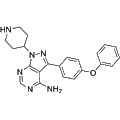
  • BTK ligand 9
    Cat. No.
    A34497

    BTK ligand 9

    BTK Ligand 9 is a selective ligand for Bruton's tyrosine kinase (BTK), a critical regulator in B cell receptor signaling. This compound facilitates the development of PROTACs, specifically PROTAC DD-03-171, which are utilized in targeted protein degradation studies. Research applications include investigating the role of BTK in various hematological malignancies and exploring therapeutic strategies for B cell-related diseases.

    Out of stock

    All 3 sizes

2 Items

Added to your cart

View Cart Checkout

    Loading...