- Cat. No.
- A18567
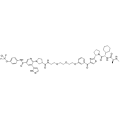
SNIPER(ABL)-062
SNIPER(ABL)-062, in which an ABL inhibitor is linked to a ligand of cIAP1 via a linker containing a variable polyethylene glycol (PEG) unit, shows a potent activity to degrade the BCR-ABL protein.
Search by product name, CAS, target or catalog number. Press Down Arrow to reach product suggestions, Tab to move between links, and Escape to close suggestions.
Bcr-Abl inhibitors target the constitutively active fusion tyrosine kinase encoded by the Philadelphia chromosome. The translocation joins the breakpoint cluster region (BCR) gene to the Abelson tyrosine kinase gene (ABL1) on chromosome 22. Expression of the P210 form of Bcr-Abl in mouse bone marrow cells induced a disease resembling chronic myelogenous leukemia (CML) in 1990. In 1996 imatinib (CGP 57148), listed here as the base and as imatinib mesylate, was reported to inhibit Abl and Bcr-Abl-positive cell growth. Dasatinib, described in 2004, also inhibits Src family kinases and blocks many imatinib-resistant Abl mutants. Nilotinib and bafetinib are further Abl inhibitors, and ponatinib also inhibits the T315I gatekeeper mutant.
SNIPER(ABL)-062, in which an ABL inhibitor is linked to a ligand of cIAP1 via a linker containing a variable polyethylene glycol (PEG) unit, shows a potent activity to degrade the BCR-ABL protein.
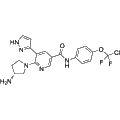
Asciminib-NH2 is a ligand targeting BCR-ABL, specifically involved in the modulation of oncogenic signaling pathways. This compound is crucial for the synthesis of proteolysis-targeting chimeras (PROTACs), including P19As, facilitating the targeted degradation of BCR-ABL fusion proteins. Its utility in research supports investigations into targeted cancer therapies and the mechanistic study of BCR-ABL related malignancies.
Out of stock
All 3 sizes