Src

Src inhibitors act on the Src family of non-receptor tyrosine kinases, which relay receptor and adhesion signals. Cellular Src (c-Src) is kept inactive when its Src homology 2 (SH2) domain binds a phosphorylated tyrosine in its C-terminal tail. Src family kinases regulate cell adhesion, migration, proliferation and survival, and they also transmit signals from immune receptors. Dasatinib, bosutinib and saracatinib inhibit both Src and the Abelson tyrosine kinase (Abl). PP2, a pyrazolopyrimidine compound, is a widely used Src family inhibitor in cell signaling studies. Tirbanibulin, first reported as KX2-391, is a further Src inhibitor in this category.

3 Items

  • ISO24
    Cat. No.
    A34956

    ISO24

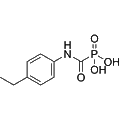
    ISO24 is a potent ligand targeting the Src SH2 domain, exhibiting an IC50 of 4.4 mM as determined by BIAcore assays. This compound provides valuable insights into Src signaling pathways, making it suitable for research applications in cancer biology and signal transduction studies. Its specificity for the Src SH2 domain enhances its utility in exploring protein-protein interactions and downstream signaling cascades.

    Out of stock

    All 3 sizes
  • LCK ligand-1
    Cat. No.
    A81326

    LCK ligand-1

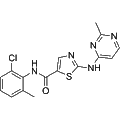
    LCK Ligand-1 is a ligand that specifically targets LCK, a crucial protein involved in T-cell activation and signaling. This compound functions as a building block for the synthesis of the PROTAC degrader SJ45566, facilitating targeted protein degradation in research applications. It is essential for studies focused on modulating LCK activity and exploring its role in various cellular processes.

    Out of stock

    All 3 sizes
  • (+)-Theta-cypermethrin
    Cat. No.
    B10869

    (+)-Theta-cypermethrin

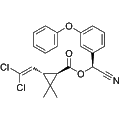
    (+)−Theta-cypermethrin is a stereoisomer of cypermethrin that functions as a selective binder to AKT1, SRC, STAT3, and epidermal growth factor receptor (EGFR). This compound is known to penetrate the blood-brain barrier, leading to alterations in the amplitude of delayed rectifier potassium channel currents and significant shifts in the activation and inactivation curves at elevated concentrations. Additionally, (+)-Theta-cypermethrin induces abnormal electrical activity in rat hippocampal neurons and is associated with chronic respiratory system damage and neurotoxicity. It serves as a valuable tool for research into signal transduction pathways and neuropharmacology.

    Out of stock

    All 3 sizes

3 Items

Added to your cart

View Cart Checkout

    Loading...