c-Ret

c-Ret inhibitors act on RET, a receptor tyrosine kinase that guides neuronal and kidney development. The ret gene, short for rearranged during transfection, was described in 1985 as a transforming gene activated by DNA rearrangement. In 1996 RET was shown to transduce signals from glial cell line-derived neurotrophic factor (GDNF). Activating point mutations and RET gene fusions are studied in thyroid and lung tumor models. Selpercatinib and RPI-1 are inhibitors with RET as their main target, while BT-13 is described as a small-molecule RET agonist. Multikinase inhibitors such as regorafenib also block RET together with vascular endothelial growth factor receptors (VEGFR) and Raf kinases.

1 Item

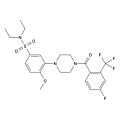
  • BT-13
    Cat. No.
    A18975

    BT-13

    BT-13 is a potent and selective glial cell line-derived neurotrophic factor (GDNF) receptor RET agonist independently of GFLs, promoting neurite growth from sensory neurons in vitro and attenuates experimental neuropathy in the Rat.

    1 mg
    $30.00
    2 mg
    $45.00
    All 8 sizes

1 Item

Added to your cart

View Cart Checkout

    Loading...