
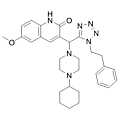
- Cat. No.
- A18624
GT 949
GT 949 is a selective excitatory amino acid transporter-2 (EAAT2) positive allosteric modulator with an EC50 of 0.26 nM.
In stock
View Details
Search by product name, CAS, target or catalog number. Press Down Arrow to reach product suggestions, Tab to move between links, and Escape to close suggestions.
Glutamate transporter inhibitors and modulators act on the excitatory amino acid transporters (EAATs). Five subtypes, EAAT1 to EAAT5, use ion gradients to move glutamate from the synaptic cleft into astrocytes and neurons. Glutamate transporter 1 (GLT-1), the rodent form of EAAT2, accounts for most glutamate uptake in the forebrain. Mice lacking GLT-1 developed lethal spontaneous seizures and greater brain injury, which links this transporter to protection from excitotoxicity. DL-TBOA, described in 1998, blocks several EAAT subtypes without being transported. UCPH 101 selectively inhibits EAAT1, and WAY-213613 inhibits uptake through GLT-1/EAAT2. LDN-212320 raises GLT-1 expression, while GPNA hydrochloride inhibits the related alanine-serine-cysteine transporter 2 (ASCT2).
GT 949 is a selective excitatory amino acid transporter-2 (EAAT2) positive allosteric modulator with an EC50 of 0.26 nM.
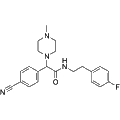
NA-014 is a selective positive allosteric modulator (PAM) of the excitatory amino acid transporter 2 (EAAT2), exhibiting an EC50 of 3 nM. This compound enhances the transport activity of EAAT2, which is crucial for regulating glutamate levels in the synaptic cleft. NA-014 is valuable for research into neurodegenerative diseases and synaptic dysfunction, providing insights into therapeutic strategies that target glutamate homeostasis.
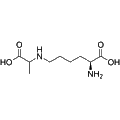
Nε-(Carboxyethyl)lysine is a known modulator of excitatory amino acid transporters (EAATs). As an advanced glycation end product (AGE), it facilitates protein cross-linking, leading to alterations in protein structure and function, ultimately resulting in protein denaturation. Nε-(Carboxyethyl)lysine interacts with RAGE receptors, influencing cell signaling pathways critical for inflammatory response, cell proliferation, and apoptosis. Additionally, it affects glutamate transporter activity, reducing glutamate uptake and S100B protein secretion, thereby impacting neurotransmission and demonstrating neurotoxic effects associated with diabetes.
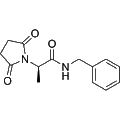
(R)-AS-1 is a selective positive allosteric modulator of the excitatory amino acid transporter 2 (EAAT2), exhibiting an EC50 of 11 nM. This compound enhances spontaneous locomotor activity in murine models at doses of 60 and 90 mg/kg. Additionally, (R)-AS-1 demonstrates significant anticonvulsant effects in various seizure models, with ED50 values of 66.3 mg/kg for maximal electroshock, 36.3 mg/kg for pentylenetetrazole, and 41.6 mg/kg for electrical stimuli. This agent is valuable for research in neurological disorders.
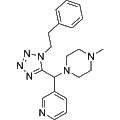
DA-023 is a selective positive allosteric modulator of the excitatory amino acid transporter 2 (EAAT2) with an EC50 value of 1 nM. This compound enhances EAAT2 activity, which is crucial for glutamate regulation in the central nervous system. DA-023 is particularly relevant for research into neurological diseases, offering potential insights into therapeutic strategies for conditions associated with glutamate dysregulation.