- Cat. No.
- A12349
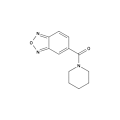
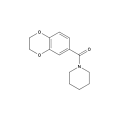
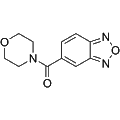
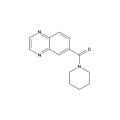
Ampalex (CX-516)
Synonyms: CX516
Ampalex is an ampakine and nootropic that acts as an AMPA receptor positive allosteric modulator
Search by product name, CAS, target or catalog number. Press Down Arrow to reach product suggestions, Tab to move between links, and Escape to close suggestions.
AMPA receptor antagonists and modulators act on glutamate-gated ion channels that carry fast excitatory transmission. The name comes from the selective agonist alpha-amino-3-hydroxy-5-methyl-4-isoxazolepropionic acid (AMPA). Each receptor is a tetramer of glutamate receptor subunits 1 to 4 (GluA1 to GluA4), first cloned in 1989. Alternative splicing gives flip and flop forms of each subunit, which differ in desensitization. NBQX and DNQX are competitive quinoxalinedione antagonists that also block kainate receptors. GYKI-52466 dihydrochloride is a noncompetitive antagonist of the 2,3-benzodiazepine class. Positive modulators include cyclothiazide, which reduces desensitization, aniracetam and the ampakine Ampalex.
Synonyms: CX516
Ampalex is an ampakine and nootropic that acts as an AMPA receptor positive allosteric modulator
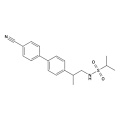
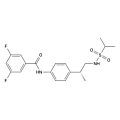
LY404187 is a selective, potent and centrally active positive allosteric modulator of AMPA receptors.
LY450108 is an alpha-amino-3-hydroxy-5-methyl-4-isoxazole-propionic acid (AMPA) receptor potentiator.
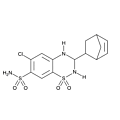
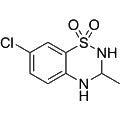
Cyclothiazide is a benzothiadiazide that acts as a potentiator of AMPA receptors, positively modulating its response to glutamic acid (EC50 = 3.8 M).
Synonyms: CX 691; Org 24448
Farampator has been investigated for its effect on AMPA receptors and researched for potential use in the treatment of schizophrenia and Alzheimer's Disease. It was found to improve short-term memory, but impaired episodic memory.
Synonyms: CX-1632
Tulrampator (CX-1632) is an orally bioavailable positive AMPAR (allosteric modulator of AMPA receptor). Antidepressant.
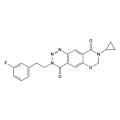
AMPA Receptor Modulator-1 is a potent, oral active and selective AMPAR regulatory protein TARP γ-8 negative modulator with a pIC50 of 9.7, more selective over GluA1/γ-2 (pIC50=5).
JNJ-61432059 is an oral active and selective negative modulator of AMPAR associated with trans-membrane AMPAR regulatory protein (TARP) γ-8, with a pIC50 of 9.7 for GluA1/γ-8.
Org-26576 is a AMPA receptor positive allosteric modulator.
PF-4778574 is a potent AMPA receptor positive allosteric modulator (PAM) that has been shown to enhance cognition in animal models.
Synonyms: LY451395
Mibampator (LY451395) is a potent and highly selective potentiator of the AMPA receptors.
PEPA is an allosteric modulator of AMPA receptors; binds to the GluA2o and GluA3o LBDs and can be utilized as an indicator of AMPA receptor heterogeneity.
CMPDA is a positive allosteric modulator of AMPA receptors with EC50s of 45.4 ± 4.2 nM/63.4 ± 5.6 nM for GluA2i/GluA2o receptor.
CX546 is a selective positive AMPAR modulator; the prototypical ampakine agent.
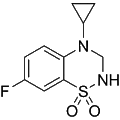
Synonyms: TAK-653; NBI-1065845
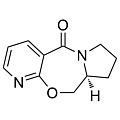
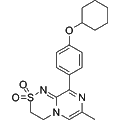
Osavampator (TAK-653) is a positive allosteric modulator of AMPA receptors that selectively binds in a glutamate-dependent manner. It enhances Ca²⁺ influx in hGluA1i CHO cells with an EC50 of 3.3 μM. Osavampator has been shown to improve learning and memory in various models and is under investigation for the treatment of depressive disorders.
Synonyms: Nooglutyl; ONK-10
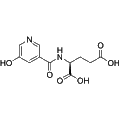
Nooglutil is a positive modulator of AMPA-type glutamate receptors (AMPARs), enhancing synaptic transmission and plasticity. Additionally, it regulates dopamine D2 receptor function, contributing to its anxiolytic effects. This compound is of significant interest for research into neurodegenerative disorders, including Alzheimer's disease, and offers potential insights into therapeutic strategies targeting glutamatergic and dopaminergic systems.
IDRA 21 is a positive allosteric modulator of the AMPA receptor, specifically enhancing signaling through GluR1/2 subtypes. This compound promotes excitatory neurotransmission, making it a valuable tool in the investigation of cognitive and memory disorders, including age-related decline. Its properties establish IDRA 21 as a promising candidate for research focusing on synaptic plasticity and cognitive enhancement.
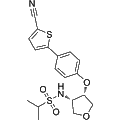
Synonyms: PF-04958242
Pesampator (PF-04958242) is a selective positive allosteric modulator of the AMPA receptor, enhancing glutamatergic neurotransmission. With an EC50 of 310 nM and a Ki of 170 nM, it potentiates AMPA receptor activity, making it a valuable tool for research in neuropharmacology and cognitive enhancement studies. It can be utilized to investigate the mechanisms underlying synaptic plasticity and the potential therapeutic effects on neurological disorders.
BPAM344 is a positive allosteric modulator (PAM) of kainate receptors (KAR), specifically targeting the GluK1b, GluK2a, and GluK3a subunits. This compound enhances receptor activation and signaling, playing an important role in neuropharmacology research. BPAM344 is valuable for studying synaptic transmission and neurodegenerative diseases, providing insights into the modulation of excitatory neurotransmission.
CX 717 is a positive allosteric modulator of the AMPA receptor, enhancing synaptic transmission and activity. It exhibits antidepressant-like effects, making it a valuable tool in the investigation of mood disorders. Additionally, CX 717 is relevant for research into adult attention deficit hyperactivity disorder (ADHD), providing insights into neurotransmission and behavioral modulation.
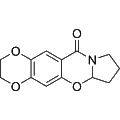
CX614 is a positive allosteric modulator of AMPA receptors that enhances excitatory postsynaptic potentials by inhibiting and prolonging the inactivation of glutamate responses. This compound can evoke excitatory postsynaptic currents in neuronal cultures, making it particularly useful in the investigation of neurophysiological processes. CX614 has potential applications in the study of psychiatric disorders, including depression.
JNJ-55511118 is a selective modulator of AMPA receptors, specifically targeting TARP γ-8, with an inhibition constant (Ki) of 26 nM. This compound demonstrates significant biological activity by reducing voluntary intake of sweetened alcohol in male murine models. In addition, it disrupts hippocampal neurotransmission, alters specific electroencephalogram frequency bands, induces transient hyperlocomotion, and impairs cognitive functions such as learning and memory, while also exhibiting anticonvulsant properties. JNJ-55511118 is valuable for research focused on alcohol use disorders and seizure mechanisms.
HBT1 is a selective AMPA receptor (AMPAR) potentiator that enhances receptor activity in the presence of AMPA by binding to its ligand-binding domain. Unlike traditional AMPA-R potentiators, HBT1 exhibits a limited agonistic effect, minimizing the risk of bell-shaped dose-response curves related to brain-derived neurotrophic factor (BDNF) production. This unique profile allows for broader research applications in neurological and psychiatric disorders, including depression and Alzheimer’s disease.
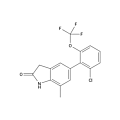
AMPA Receptor Modulator-8 selectively modulates AMPA receptors, exhibiting an IC50 of 0.02 nM for TARP-γ2. This compound plays a significant role in the investigation of neurological disorders such as epilepsy, Alzheimer's disease, and Parkinson's disease. Its precise action on AMPA receptor dynamics makes it a valuable tool for advancing research in neuropharmacology and therapeutic development.
S 18986 is a selective positive allosteric modulator of AMPA-type receptors, demonstrating significant brain penetration and oral bioavailability. This compound enhances cognitive function in rodent models, evidenced by its ability to activate the release of noradrenaline and acetylcholine in the rat hippocampus. S 18986 has shown efficacy in improving memory performance in object-recognition tests, making it a valuable tool for research into cognitive enhancement and neuropharmacology.