- Cat. No.
- A12284
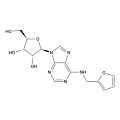
Kinetin riboside
Synonyms: N6-Furfuryladenosine
Kinetin riboside is an activator of the Parkinson's Disease-associated PTEN-induced Putative Kinase 1 (PINK1), and acts independently from mitochondrial depolarization.
Search by product name, CAS, target or catalog number. Press Down Arrow to reach product suggestions, Tab to move between links, and Escape to close suggestions.
Apoptosis related compounds affect cell survival indirectly, through metabolism, stress responses or signaling. Unlike the target categories of the Apoptosis section, this mixed set groups compounds by a reported link to cell death rather than by one mechanism. Sodium oxamate, a pyruvate analog, inhibits lactate dehydrogenase (LDH) and is used to study glycolytic metabolism. Zinc protoporphyrin inhibits heme oxygenase 1 (HO-1), an enzyme induced by oxidative stress. Sulforaphane, an isothiocyanate from cruciferous vegetables, activates nuclear factor erythroid 2-related factor 2 (Nrf2) and has been reported to inhibit histone deacetylases. CASIN inhibits the small GTPase cell division cycle 42 (Cdc42). Drugs such as flurbiprofen and metronidazole are also included, so the list is broad.
Synonyms: N6-Furfuryladenosine
Kinetin riboside is an activator of the Parkinson's Disease-associated PTEN-induced Putative Kinase 1 (PINK1), and acts independently from mitochondrial depolarization.
Synonyms: NSC144303
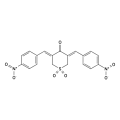
Ubiquitin Isopeptidase Inhibitor I, G5 (NSC 144303) is an apoptosome-independent caspase and apoptosis activator with IC50 values of 1.76 and 1.6 μM in E1A and E1A/C9DN cells, respectively.
Synonyms: 9-cis-Octadecenoic acid; 9Z-Octadecenoic acid
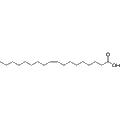
Oleic acid (9-cis-Octadecenoic acid) is an abundant monounsaturated fatty acid. Oleic acid is a Na+/K+ ATPase activator.
Synonyms: tert-Butylhydroquinone
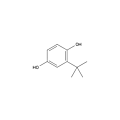
TBHQ (tert-Butylhydroquinone) is a widely used Nrf2 activator, protects against Doxorubicin (DOX)-induced cardiotoxicity through activation of Nrf2.
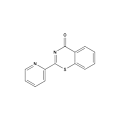
BTZO-1 is an activator of the glutathione S-transferase Ya subunit (GST Ya) gene ARE by interacting with MIF.
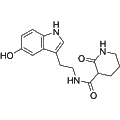
HIOC is a potent and selective activator of the TrkB (tropomyosin receptor kinase B) receptor, capable of crossing both the blood-brain and blood-retinal barriers. It activates the TrkB/ERK signaling pathway, reduces neuronal apoptosis, and has been shown to attenuate early brain injury following subarachnoid hemorrhage (SAH). Additionally, HIOC exhibits neuroprotective effects in animal models of light-induced retinal degeneration.