- Cat. No.
- A10657
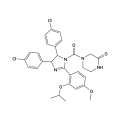
Nutlin-3
MDM2 antagonist nutlin-3 is a potent inducer of apoptosis.
Search by product name, CAS, target or catalog number. Press Down Arrow to reach product suggestions, Tab to move between links, and Escape to close suggestions.
MDM2 inhibitors disrupt the binding of mouse double minute 2 homolog (MDM2) to the tumor suppressor p53. In 1992 the MDM2 protein was shown to form a complex with p53 and inhibit p53-mediated transactivation. MDM2 is also an E3 ubiquitin ligase that promotes the rapid degradation of p53, as reported in 1997. Nutlins, reported in 2004, occupy the p53-binding pocket of MDM2 and activate the p53 pathway in cells and in vivo. Nutlin 3a is the active enantiomer of nutlin-3, and Nutlin 3b is a much weaker enantiomer used as a control. RG7112 and APG-115 are further MDM2 inhibitors, while MD-224 is a degrader that removes MDM2 protein. SJ 172550 targets the MDM2 relative MDM4 (also called MDMX).
MDM2 antagonist nutlin-3 is a potent inducer of apoptosis.
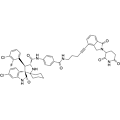
MD-224 is a first-in-class and highly potent small-molecule human murine double minute 2 (MDM2) degrader based on the proteolysistargeting chimera (PROTAC) concept. MD-224 has the potential to be a new class of anticancer agent.
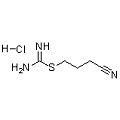
Synonyms: thioureidobutyronitrile
Kevetrin (thioureidobutyronitrile), is a water-soluble, small molecule and activator of the tumor suppressor protein p53, with potential antineoplastic activity.
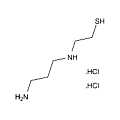
WR 1065, a dephosphorylated metabolite of amifostine (Ethyol), can protect against the immediate and delayed effects of radiation exposure.
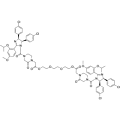
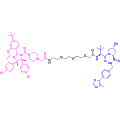
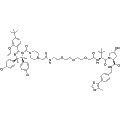
PROTAC MDM2 Degrader-4 is a MDM2 degrader based on PROTAC technology. PROTAC MDM2 Degrader-4 composes of a potent MDM2 inhibitor, linker, and the MDM2 ligand for E3 ubiquitin ligase.
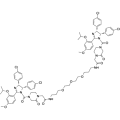
PROTAC MDM2 Degrader-3 is a MDM2 degrader based on PROTAC technology. PROTAC MDM2 Degrader-3 composes of a potent MDM2 inhibitor, linker, and the MDM2 ligand for E3 ubiquitin ligase.
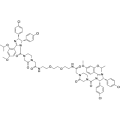
PROTAC MDM2 Degrader-2 is a MDM2 degrader based on PROTAC technology. PROTAC MDM2 Degrader-2 composes of a potent MDM2 inhibitor, linker, and the MDM2 ligand for E3 ubiquitin ligase.
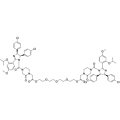
PROTAC MDM2 Degrader-1 is a MDM2 degrader based on PROTAC technology. PROTAC MDM2 Degrader-1 composes of a potent MDM2 inhibitor, linker, and the MDM2 ligand for E3 ubiquitin ligase.
MD-222 is a first-in-class PROTAC degrader targeting MDM2. This compound contains ligands for both Cereblon and MDM2, facilitating the rapid degradation of MDM2 protein and subsequent activation of wild-type p53 in cellular contexts. Due to its mechanism of action, MD-222 exhibits notable anticancer properties, making it a valuable tool for research in cancer biology and therapeutic development.
Synonyms: KT-253
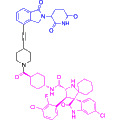
Seldegamadlin is a selective p53 stabilizer and an MDM2 PROTAC degrader with a DC50 of 0.4 nM. It effectively inhibits the proliferation of RS4;11 cancer cells, demonstrating an IC50 of 0.3 nM, and induces cell cycle arrest at the G2/M phase while promoting apoptosis. By upregulating p53 activity, Seldegamadlin overcomes the p53-MDM2 feedback loop, making it a valuable tool for research in hematologic and solid tumors, including acute myeloid leukemia (AML) and acute lymphoblastic leukemia (ALL).
YX-02-030 is a PROTAC MDM2 degrader that effectively inhibits the MDM2-p53 interaction with an IC50 value of 63 nM, as well as the VHL-HIF1α binding, with an IC50 of 1.35 μM. By binding to MDM2, it recruits the VHL E3 ubiquitin ligase, promoting MDM2 degradation. This compound is particularly relevant in researching therapeutic strategies against p53 mutant or deleted triple-negative breast cancer (TNBC) cells.
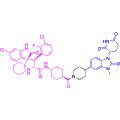
MD-265 is a potent MDM2 degrader utilizing the PROTAC (PROteolysis TArgeting Chimeras) technology. It effectively promotes the degradation of MDM2, resulting in the reactivation of the p53 tumor suppressor pathway in cancer cells with wild-type p53. Preclinical studies demonstrate that MD-265 induces complete tumor regression and enhances long-term survival in leukemia models, making it a valuable tool for cancer research and therapeutic development.
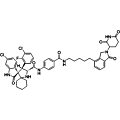
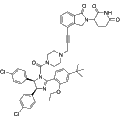
WB156 is a dual degrader targeting MDM2 and GSPT1, facilitating their degradation through the recruitment of Cereblon (CRBN) to the ubiquitin-proteasome pathway. This compound effectively induces ubiquitination, leading to a reduction in MDM2 and GSPT1 levels, which is valuable for investigating the role of these proteins in cancer biology. WB156 holds potential for research applications in various cancer types, including leukemia.
Out of stock
All 3 sizes
(4R,5S)-YX-02-030 is a stereoisomer of YX-02-030, functioning as a PROTAC (Proteolysis Targeting Chimera) designed to promote the degradation of MDM2. This compound exhibits potent biological activity in disrupting MDM2-mediated degradation of p53, thereby enhancing p53 activity and providing insights into cancer therapy. Its application is particularly relevant in studies of tumor suppression and cellular signaling pathways involving MDM2 and p53 interactions.