- Cat. No.
- A15436
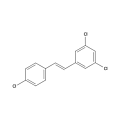
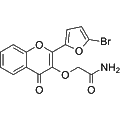
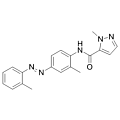
CH-223191
CH-223191 is a ligand-selective antagonist of the Ah (Dioxin) receptor.
Search by product name, CAS, target or catalog number. Press Down Arrow to reach product suggestions, Tab to move between links, and Escape to close suggestions.
Aryl hydrocarbon receptor (AhR) ligands act on a ligand-activated transcription factor of the bHLH-PAS family. Cloning of the receptor complementary DNA in 1992 showed that AhR combines a basic helix-loop-helix (bHLH) domain with a Per-Arnt-Sim (PAS) domain. The tryptophan metabolite kynurenine was later described as an endogenous agonist produced by tryptophan 2,3-dioxygenase. Antagonists of AhR were shown to support the expansion of human hematopoietic stem cells in culture, which made StemRegenin 1 a common tool in that work. CH-223191, ITE, tapinarof and L-Kynurenine complete a set that covers both receptor activation and blockade in reporter and gene expression assays.
CH-223191 is a ligand-selective antagonist of the Ah (Dioxin) receptor.
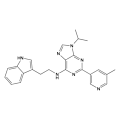
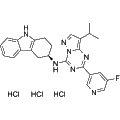
GNF351 is a full aryl hydrocarbon receptor (AHR) antagonist.
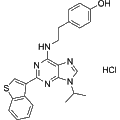
Synonyms: SR-1
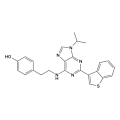
StemRegenin 1 (SR1) is a cell-permeable purine derivative that acts as an antagonist of aryl hydrocarbon receptor and promotes the self-renewal of hematopoietic stem cells (HSCs).
PDM2 is a selective, high-affinity aryl hydrocarbon receptor (AhR) antagonist with an Ki of 1.2±0.4 nM.
AHR antagonist 1 is an aryl hydrocarbon receptor (AHR) antagonist extracted from patent WO2017202816A1, example 23, has an IC50 of 39.9 nM in human cell line.
BAY 2416964 is a potent and orally active aryl hydrocarbon receptor (AHR) antagonist extracted from patent WO2018146010A1, example 192, has an IC50 of 341 nM. BAY 2416964 has the potential for solid tumors treatment.
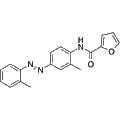
Synonyms: MNF
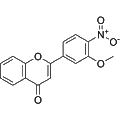
3'-Methoxy-4'-nitroflavone is a specific antagonist of the aryl hydrocarbon receptor (AhR). This compound inhibits the metabolism of the endogenous ligand FICZ by blocking CYP1, thereby increasing FICZ accumulation. It effectively reverses the anti-apoptotic effects of TCDD and attenuates the activation of Akt and Erk1/2 kinases, as well as TGFα expression induced by TCDD. 3'-Methoxy-4'-nitroflavone is valuable for research into breast tumor promotion, rheumatoid arthritis, multiple sclerosis, and inflammatory bowel disease.
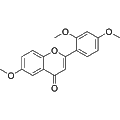
6,2',4'-Trimethoxyflavone is a potent antagonist of the aryl hydrocarbon receptor (AHR). This compound effectively represses AHR-mediated gene induction, making it a valuable tool for studying AHR-related signaling pathways. Its biological activity supports research in fields such as toxicology, cancer biology, and environmental health.
Synonyms: AHR antagonist 7
CAY10464 is a selective aryl hydrocarbon receptor (AhR) antagonist with a high affinity, exhibiting a Ki value of 1.4 nM. This compound effectively inhibits AhR signaling, making it valuable for research applications related to toxicology, environmental studies, and the modulation of immune responses. CAY10464 serves as a crucial tool for investigating the role of AhR in various biological processes and disease mechanisms.
CB7993113 is a potent antagonist of the aryl hydrocarbon receptor (AHR), exhibiting an IC50 value of 0.33 μM. This compound effectively binds to the AHR protein and prevents its nuclear translocation, thereby inhibiting the biological effects mediated by this receptor. CB7993113 demonstrates significant inhibitory activity, reducing polycyclic aromatic hydrocarbon (PAH)- and TCDD-induced reporter activity by 75% and 90%, respectively, making it a valuable tool for research into AHR-related signaling pathways and toxicological studies.
AHR Antagonist 2 is a potent aryl hydrocarbon receptor (AHR) antagonist, displaying IC50 values of 885 pM for human AHR and 2.03 nM for mouse AHR. This compound is valuable for investigations into cancer biology and the modulation of immune responses, making it an important tool for research in immunology and oncology.
AHR Antagonist 5 is a potent aryl hydrocarbon receptor (AHR) antagonist with an IC50 of less than 0.5 μM. This compound effectively inhibits tumor growth, particularly when used in conjunction with the checkpoint inhibitor anti-PD-1. It serves as a valuable tool for research in cancer biology and the development of combination therapies targeting the immune response.
CHD-5 is a potent antagonist of the aryl hydrocarbon receptor (AhR). This compound effectively inhibits AhR-mediated signaling pathways, which are involved in various biological processes including cellular proliferation and immune responses. CHD-5 is valuable for researchers investigating the role of AhR in cancer biology, immunology, and toxicology.
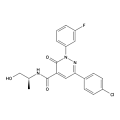
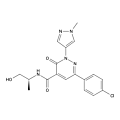
AHR Antagonist 4 is a potent aryl hydrocarbon receptor (AHR) antagonist with a 2-heteroaryl-3-oxo-2,3-dihydropyridazine-4-carboxamide structure, exhibiting an IC50 of 82.2 nM. This compound demonstrates significant anti-cancer properties, making it a valuable tool for research on cancer biology and therapeutic applications targeting AHR pathways. Its ability to modulate AHR signaling may offer insights into mechanisms driving tumor progression and potential treatment strategies.
Synonyms: SR1 hydrochloride
Stemregenin 1 hydrochloride is a purine derivative that acts as an antagonist of the aryl hydrocarbon receptor (AhR). It has been shown to inhibit AhR signaling in CD34+ cells with an IC50 value of 127 nM. This compound is utilized in stem cell research to enhance the pluripotency and expansion of hematopoietic stem cells (HSC), providing valuable insights into stem cell biology and regenerative medicine.
AHR Antagonist 6 is an aryl hydrocarbon receptor (AHR) antagonist that inhibits AHR signaling pathways. This compound has demonstrated key biological activity in modulating immune responses and is utilized in cancer research to investigate the role of AHR in tumor microenvironments. Researchers can employ AHR Antagonist 6 to explore therapeutic strategies targeting AHR-mediated pathways in various cancer models.