Glycosidase

Glycosidase inhibitors, enzymes and substrates are tools for studying how glycans are broken down. Glycosidases remove sugars from glycoproteins, glycolipids and polysaccharides and shape N-glycan processing in the endoplasmic reticulum and Golgi apparatus. Kifunensine, an alkaloid, was reported in 1990 to inhibit glycoprotein processing mannosidase I, so N-glycans stay in high-mannose form. Peptide-N-glycosidase F (PNGase F) releases intact N-linked glycans from glycoproteins, as described in 1985. OGT2115 inhibits heparanase, the endo-β-glucuronidase that cleaves heparan sulfate chains. M-31850 inhibits β-hexosaminidase, and PFB-FDGlu is a fluorogenic substrate for glucocerebrosidase (GCase). Enzymes that cleave glucose residues have their own neighboring category, Glucosidase.

10 Items

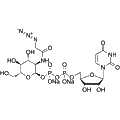
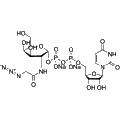
  • UDP-GalNAz disodium
    Cat. No.
    A75027

    UDP-GalNAz disodium

    Synonyms: UDP-N-azidoacetylgalactosamine disodium

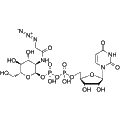
    UDP-GalNAz disodium is an analogue of UDP-GalNAc disodium, serving as a donor substrate for N-acetylgalactosaminyltransferases, which facilitate the transfer of GalNAc to various saccharide or peptide acceptors. This compound features an azide group, making it a valuable reagent for click chemistry applications. UDP-GalNAz disodium can participate in copper-catalyzed azide-alkyne cycloaddition (CuAAc) reactions with alkyne-bearing molecules, as well as strain-promoted alkyne-azide cycloaddition (SPAAC) reactions involving DBCO or BCN groups. It is useful in the study of glycosylation pathways and the synthesis of complex glycoproteins.

    5 mg
    $345.00
    10 mg
    $555.00
    All 2 sizes
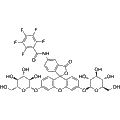
  • PFB-FDGlu
    Cat. No.
    A75034

    PFB-FDGlu

    PFB-FDGlu is a highly selective substrate for lysosomal Glucocerebrosidase (GCase), engineered to be metabolized into fluorescein upon GCase activity. This compound is cell permeable, facilitating its use in flow cytometry to measure GCase activity in living cells at the single-cell level. PFB-FDGlu serves as an essential tool for studying GCase function in various biological contexts and is particularly relevant in research related to lysosomal storage disorders.

    1 mg
    $120.00
    5 mg
    $305.00
    All 6 sizes
  • UDP-GlcNAz disodium
    Cat. No.
    A75035

    UDP-GlcNAz disodium

    UDP-GlcNAz disodium is a sugar donor analogue of UDP-GlcNAc disodium, serving as a substrate for various N-acetylgalactosaminyltransferases that facilitate the transfer of GlcNAc to saccharide or peptide acceptors. In addition to its enzymatic applications, UDP-GlcNAz disodium is a valuable click chemistry reagent featuring an azide group, capable of participating in copper-catalyzed azide-alkyne cycloaddition (CuAAc) reactions with alkyne-containing molecules. It also enables strain-promoted alkyne-azide cycloaddition (SPAAC) with DBCO or BCN-functionalized partners, making it useful for bioconjugation and labeling studies.

    5 mg
    $310.00
    10 mg
    $570.00
    All 5 sizes
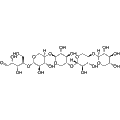
  • 1,4-b-D-Xylopentaose
    Cat. No.
    A75039

    1,4-b-D-Xylopentaose

    1,4-b-D-Xylopentaose is a linear pentasaccharide comprised of five β-D-xylose units linked by 1,4-glycosidic bonds. This compound functions as a specific substrate for the enzyme barley α-L-arabinofuranosidase, facilitating the study of enzyme activity and carbohydrate metabolism. It is widely utilized in research applications focused on plant cell wall degradation and glycoside hydrolases.

    2 mg
    $40.00
    5 mg
    $95.00
    All 5 sizes
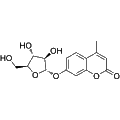
  • 4-Methylumbelliferyl α-L-arabinofuranoside
    Cat. No.
    A75052

    4-Methylumbelliferyl α-L-arabinofuranoside

    4-Methylumbelliferyl α-L-arabinofuranoside serves as a substrate for glycosidase enzymes, facilitating the cleavage of α-L-arabinofuranosidic bonds. Upon hydrolysis, it generates the fluorescent product 4-methylumbelliferone, allowing for sensitive detection and quantification. This compound is valuable in enzyme activity assays, particularly in studies involving carbohydrate metabolism and glycoside hydrolase activity.

    5 mg
    $75.00
    10 mg
    $120.00
    All 2 sizes
  • β-Glucocerebrosidase modulator 1
    Cat. No.
    A75066

    β-Glucocerebrosidase modulator 1

    β-Glucocerebrosidase modulator 1 is a potent allosteric modulator targeting β-Glucocerebrosidase, with an EC50 of 9.0 μM and a Kd of 0.050 μM. This compound enhances the enzymatic activity of β-Glucocerebrosidase, making it a valuable tool for studying Gaucher disease and related lipid metabolism disorders. Its modulation of enzymatic function assists in elucidating biological pathways and may aid in the development of therapeutic interventions.

    5 mg
    $1,090.00
    10 mg
    $1,680.00
    All 3 sizes
  • p-Nitrophenyl β-D-lactoside
    Cat. No.
    A75091

    p-Nitrophenyl β-D-lactoside

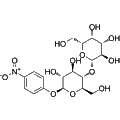
    p-Nitrophenyl β-D-lactoside acts as a substrate for β-lactosidase, facilitating the assessment of enzyme activity in various biological applications. This compound is also a substrate for cellobiohydrolase, making it valuable in studies involving carbohydrate metabolism. Its utility in glycobiology research underscores its importance for understanding glycan interactions and enzymatic functions.

    5 mg
    $40.00
    10 mg
    $65.00
    All 5 sizes
  • UDP-GlcNAz
    Cat. No.
    A75097

    UDP-GlcNAz

    UDP-GlcNAz serves as an analog of UDP-GlcNAc, functioning primarily as a sugar donor substrate for N-acetylgalactosaminyltransferases. These enzymes utilize UDP-GlcNAz to transfer N-acetylglucosamine to saccharide or peptide acceptors. Featuring an azide group, UDP-GlcNAz is also a valuable click chemistry reagent, enabling copper-catalyzed azide-alkyne cycloaddition (CuAAc) and strain-promoted alkyne-azide cycloaddition (SPAAC) reactions with alkyne-containing molecules. Its versatility makes it suitable for various applications in chemical biology and glycobiology research.

    Out of stock

    All 3 sizes
  • OMJ-4
    Cat. No.
    A75119

    OMJ-4

    OMJ-4 is a modulator of mutant alpha-mannosidase that enhances its catalytic function. This compound promotes structural changes in the enzyme, increasing both the compactness and flexibility of the active site, which facilitates substrate binding. By inducing greater substrate reactivity, OMJ-4 decreases the activation energy needed for the enzymatic reaction. This reagent is significant for research focused on alpha-mannosidosis and related metabolic disorders.

    Out of stock

    All 3 sizes
  • JZ-4109
    Cat. No.
    A75153

    JZ-4109

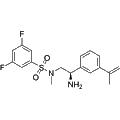
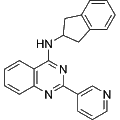
    JZ-4109 is a potent β-Glucocerebrosidase (GCase) modulator, exhibiting an IC50 of 8 nM against wild-type recombinant GCase. This compound binds to an allosteric site at the GCase dimer interface, promoting dimerization and stabilizing both wild-type and GCase N370S mutant variants. JZ-4109 enhances GCase protein abundance, making it a valuable tool for research into Parkinson's disease and related conditions.

    Out of stock

    All 3 sizes

10 Items

Added to your cart

View Cart Checkout

    Loading...