GnRH Receptor

Gonadotropin-releasing hormone (GnRH) receptor agonists and antagonists act on a pituitary G protein-coupled receptor. Pulses of hypothalamic GnRH stimulate release of luteinizing hormone (LH) and follicle-stimulating hormone (FSH) from gonadotrope cells. A 1978 study in monkeys showed that continuous GnRH delivery suppresses this release, whereas intermittent delivery restores it. Cloning of the mouse GnRH receptor in 1992 placed it in the seven-transmembrane receptor superfamily. Leuprolide acetate is a peptide agonist used to study receptor desensitization. Degarelix acetate, abarelix, ganirelix acetate and ozarelix are peptide antagonists, while elagolix sodium and NBI-42902 are non-peptide antagonists. The list also includes some unrelated ligands, such as SR 144528, an inverse agonist of cannabinoid receptor 2 (CB2).

1 Item

  • Kisspeptin 13
    Cat. No.
    A60747

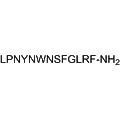
    Kisspeptin 13

    Kisspeptin 13 functions as an activator of the G protein-coupled receptor GPR54 and the gonadotropin-releasing hormone (GnRH) receptor. This peptide is known to inhibit glucose-induced insulin secretion with an IC50 of 1.2 nM and plays a role in activating the hypothalamic-pituitary-adrenal (HPA) axis, which can induce hyperthermia and influence motor behavior and anxiety in animal models. Additionally, Kisspeptin 13 has been implicated in enhancing memory, suggesting potential applications in Alzheimer's disease research. Its interactions with α2-adrenergic and 5-HT2 serotonin receptors further indicate its antidepressant-like properties.

    Out of stock

    All 3 sizes

1 Item

Added to your cart

View Cart Checkout

    Loading...