PARP

PARP inhibitors block poly(ADP-ribose) polymerases (PARPs), enzymes that mark DNA damage and recruit repair proteins. PARP1 and PARP2 bind DNA single-strand breaks and attach poly(ADP-ribose) chains to themselves and to nearby chromatin proteins. Cells lacking breast cancer susceptibility proteins 1 or 2 (BRCA1, BRCA2), and therefore defective in homologous recombination, are highly sensitive to PARP inhibition. This synthetic lethal relationship, reported in 2005, has shaped much of the research on DNA repair inhibitors. Olaparib, niraparib, veliparib and talazoparib target the catalytic domains of PARP1 and PARP2, and 3-aminobenzamide is an early benzamide inhibitor. XAV 939 instead inhibits tankyrases 1 and 2 (TNKS1, TNKS2), which stabilizes axin in Wnt signaling studies.

11 Items

  • SK-575
    Cat. No.
    A23938

    SK-575

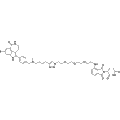
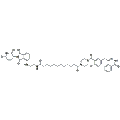
    SK-575 is a highly potent and selective PROTAC degrader of PARP1, with an IC₅₀ of 2.30 nM. It effectively inhibits the proliferation of cancer cells harboring BRCA1/2 mutations, making it a valuable agent for targeted cancer research.

    Out of stock

    All 4 sizes
  • iRucaparib-AP6
    Cat. No.
    A24704

    iRucaparib-AP6

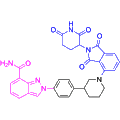
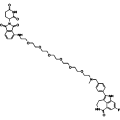
    iRucaparib-AP6 is a potent PROTAC compound that selectively targets PARP1 for degradation. This non-trapping degrader inhibits both the catalytic activity and scaffolding functions of PARP1, effectively disrupting its role in DNA repair pathways. iRucaparib-AP6 is useful in studying the biology of PARP1 and its implications in cancer research, particularly in understanding resistance mechanisms to PARP inhibitors.

    1 mg
    $430.00
    5 mg
    $1,310.00
    All 3 sizes
  • PROTAC PARP1 degrader
    Cat. No.
    A24832

    PROTAC PARP1 degrader

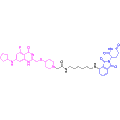
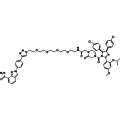
    PROTAC PARP1 Degrader functions as a targeted protein degradation agent that specifically targets PARP1 through the MDM2 E3 ligase. This compound effectively induces PARP1 cleavage and promotes apoptosis in cancer cells, making it valuable for research in cancer therapies. The structure includes the MDM2 ligand, the PARP1 ligand, and a PEG-based linker, facilitating efficient delivery and degradation of the target protein.

    1 mg
    $820.00
    5 mg
    $2,125.00
    All 3 sizes
  • PROTAC PARP1 degrader-2
    Cat. No.
    A28959

    PROTAC PARP1 degrader-2

    PROTAC PARP1 degrader-2 is a targeted protein degradation compound designed to specifically degrade PARP1. With a DC50 of less than 10 nM in MDA-MB-231 cells, it demonstrates potent efficacy in inducing degradation. Additionally, this compound inhibits cell viability in MDA-MB-436 cells with an IC50 of less than 100 nM, making it a valuable tool for research in cancer therapeutics and the mechanistic study of PARP1 function.

    Out of stock

    All 3 sizes
  • SK-575-NEG
    Cat. No.
    A28981

    SK-575-NEG

    SK-575-NEG is a PARP1 degrader designed as a methylated counterpart of SK-575, synthesized through the methylation of the amino group in piperidine-2,6-dione. It demonstrates a strong binding affinity to PARP1, with an IC50 of 2.64 nM. However, SK-575-NEG does not induce PARP1 degradation in MDA-MB-436 and Capan-1 cell lines at concentrations up to 1 μM. This compound is valuable for research focusing on the mechanistic understanding of PARP1 inhibition and degradation pathways.

    5 mg
    $735.00
    All 1 sizes
  • Vrucaparib-TP4
    Cat. No.
    A29005

    Vrucaparib-TP4

    Vrucaparib-TP4 is a PROTAC-type degrader that targets PARP1. It facilitates the ubiquitination and subsequent degradation of PARP1, making it a valuable tool in cancer research. This compound is particularly useful for investigating the role of PARP1 in tumor biology and evaluating therapeutic strategies that exploit the degradation pathway for potential anti-tumor effects.

    Out of stock

    All 3 sizes
  • iVeliparib-AP6
    Cat. No.
    A29049

    iVeliparib-AP6

    iVeliparib-AP6 is a proteolysis-targeting chimera (PROTAC) that functions as a potent inhibitor of PARP1 and PARP2. It demonstrates DC50 values for PARP1 and PARP2 degradation at 36 nM and 63 nM, respectively, with IC50 values of 69 nM and 21 nM. The compound contains a Veliparib-based PARP inhibitor warhead linked to a CRBN E3 ligase binder, utilizing Thalidomide to recruit CRBN E3 ubiquitin ligase, thereby facilitating effective degradation of PARP2. This innovative mechanism positions iVeliparib-AP6 as a valuable tool for studying PARP-related pathways and therapeutic strategies in cancer research.

    Out of stock

    All 3 sizes
  • iRucaparib-TP3
    Cat. No.
    A29070

    iRucaparib-TP3

    iRucaparib-TP3 is a selective degrader of PARP1, exhibiting a DC50 of 36 nM. This compound is instrumental in research focused on oncology, particularly in the context of BRCA-mutated cancers, as well as in the investigation of neurodegenerative diseases. Its ability to modulate PARP1 levels positions it as a valuable tool for understanding the mechanisms underlying these diseases.

    Out of stock

    All 3 sizes
  • PROTAC PARP1 degrader-1
    Cat. No.
    A29109

    PROTAC PARP1 degrader-1

    PROTAC PARP1 degrader-1 is a potent degrader targeting PARP1 through the PROTAC mechanism. This compound facilitates the activation of the cGAS/STING immune pathway, enhancing T cell-mediated cytotoxicity against tumor cells. Additionally, by inhibiting DNA damage repair, PROTAC PARP1 degrader-1 promotes the accumulation of cytosolic DNA fragments, making it a valuable tool for research in cancer immunotherapy and the study of DNA repair mechanisms.

    5 mg
    $280.00
    10 mg
    $460.00
    All 4 sizes
  • RBN012811
    Cat. No.
    A29123

    RBN012811

    RBN012811 is a selective PROTAC degrader that targets PARP14, facilitating its degradation through a ternary complex with cereblon by binding at the NAD+ site. With an IC50 of 10 nM, RBN012811 efficiently reduces endogenous PARP14 levels in various cell lines and primary human macrophages. This reduction is associated with decreased IL-10 production and IFN-β mRNA, alongside an increase in phosphorylated STAT1, thereby enhancing inflammatory signaling and inhibiting interferon-induced ADPr condensate formation. RBN012811 also influences viral replication dynamics, promoting HSV1 replication while diminishing VSV replication, making it valuable for research in cancer biology and viral infections.

    5 mg
    $965.00
    10 mg
    $1,640.00
    All 5 sizes
  • DP-C-4
    Cat. No.
    A84556

    DP-C-4

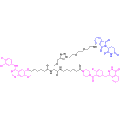
    DP-C-4 is a Cereblon-based dual-targeting PROTAC molecule designed for the concurrent degradation of epidermal growth factor receptor (EGFR) and poly (ADP-ribose) polymerase (PARP). This compound demonstrates significant biological activity by promoting the targeted destruction of these proteins, which can be crucial in cancer research and therapeutic applications. DP-C-4 may facilitate studies investigating the interplay between EGFR and PARP pathways, potentially leading to new insights in oncology and the development of innovative treatment strategies.

    5 mg
    $695.00
    10 mg
    $1,135.00
    All 2 sizes

11 Items

Added to your cart

View Cart Checkout

    Loading...