PARP

PARP inhibitors block poly(ADP-ribose) polymerases (PARPs), enzymes that mark DNA damage and recruit repair proteins. PARP1 and PARP2 bind DNA single-strand breaks and attach poly(ADP-ribose) chains to themselves and to nearby chromatin proteins. Cells lacking breast cancer susceptibility proteins 1 or 2 (BRCA1, BRCA2), and therefore defective in homologous recombination, are highly sensitive to PARP inhibition. This synthetic lethal relationship, reported in 2005, has shaped much of the research on DNA repair inhibitors. Olaparib, niraparib, veliparib and talazoparib target the catalytic domains of PARP1 and PARP2, and 3-aminobenzamide is an early benzamide inhibitor. XAV 939 instead inhibits tankyrases 1 and 2 (TNKS1, TNKS2), which stabilizes axin in Wnt signaling studies.

Items 226-236 of 236

  • PARP-1/2-IN-2
    Cat. No.
    A32806

    PARP-1/2-IN-2

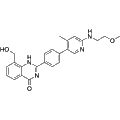
    PARP-1/2-IN-2 is a potent inhibitor of PARP1, PARP2, and CDK12, exhibiting IC50 values of 34 nM, 30 nM, and 285 nM, respectively. This compound disrupts DNA damage repair mechanisms, leading to induced cell cycle arrest and apoptosis. Notable for its efficacy in targeted therapy, PARP-1/2-IN-2 effectively inhibits the growth of triple-negative breast cancer (TNBC) cells and demonstrates significant antitumor activity in TNBC xenograft models. This makes it a valuable tool for research in cancer biology and therapeutic development.

    Out of stock

    All 3 sizes
  • DiPT-4
    Cat. No.
    A32919

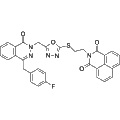
    DiPT-4

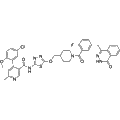
    DiPT-4 is a dual inhibitor of topoisomerase I (TOP1) and poly (ADP-ribose) polymerase 1 (PARP1). This compound induces substantial DNA double-strand breaks, leading to cell cycle arrest and apoptosis in various cancer cell lines. DiPT-4 is particularly valuable for research focused on overcoming mechanisms of cancer drug resistance.

    Out of stock

    All 3 sizes
  • Schisandronic acid
    Cat. No.
    A32995

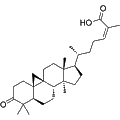
    Schisandronic acid

    Synonyms: Ganwuweizic acid

    Schisandronic acid is a potent PARP inhibitor derived from the triterpenoid compound found in Schisandra chinensis. This compound exhibits significant cytotoxicity against human breast cancer cells, particularly MCF-7, with an IC50 value of 8.06 μM. Schisandronic acid effectively induces apoptosis through the upregulation of active caspase-3 and cleavage of PARP, while also reducing reactive oxygen species generation, thereby demonstrating notable antioxidant properties. Its mechanisms of action make Schisandronic acid a valuable tool for cancer research and therapeutic investigations.

    Out of stock

    All 3 sizes
  • AZ1366
    Cat. No.
    A37130

    AZ1366

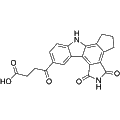
    AZ1366 is a potent orally active inhibitor of tankyrase, a key regulator of the Wnt signaling pathway. By stabilizing Axin2 and reducing NuMA levels, AZ1366 disrupts the tankyrase-NuMA interaction, leading to G2/M phase arrest and downregulation of β-catenin-dependent gene expression. This compound has demonstrated the ability to inhibit tumor growth in colorectal cancer xenograft models, as well as synergistically impair the proliferation of non-small cell lung cancer cells, enhancing tumor control and survival in orthotopic mouse models. AZ1366 is particularly valuable for research focused on colorectal cancer and non-small cell lung cancer.

    25 mg
    $1,275.00
    50 mg
    $1,625.00
    All 3 sizes
  • Polθ/PARP-IN-1
    Cat. No.
    A37759

    Polθ/PARP-IN-1

    Polθ/PARP-IN-1 is a potent dual inhibitor targeting DNA polymerase theta (Polθ) and poly (ADP-ribose) polymerase (PARP), exhibiting IC50 values of 45.6 nM and 5.4 nM, respectively. This compound demonstrates significant antiproliferative activity by inducing apoptosis and cell cycle arrest at the G2/M phase, leading to DNA damage. Polθ/PARP-IN-1 is applicable in cancer research and may contribute to therapeutic strategies targeting tumorigenesis.

    5 mg
    $295.00
    10 mg
    $485.00
    All 4 sizes
  • Palacaparib
    Cat. No.
    A39902

    Palacaparib

    Synonyms: AZD-9574

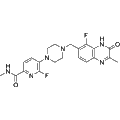
    Palacaparib is a potent inhibitor of PARP1, demonstrating over 8000-fold selectivity for PARP1 relative to PARP2, PARP3, PARP5a, and PARP6. It functions by selectively inhibiting PARP1 and trapping it at sites of single-strand breaks (SSBs), impeding DNA repair. This compound is investigated primarily for its anti-cancer properties, particularly in research related to HRD+ breast cancer and various advanced solid tumors.

    1 mg
    $95.00
    2 mg
    $140.00
    All 7 sizes
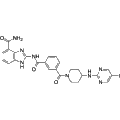
  • PARP-1-IN-32
    Cat. No.
    A56926

    PARP-1-IN-32

    PARP-1-IN-32 is a potent inhibitor of poly(ADP-ribose) polymerase-1 (PARP-1). This compound is utilized in cancer research to investigate the mechanisms of DNA repair and cellular response to genotoxic stress. Its ability to selectively inhibit PARP-1 makes it a valuable tool for studying the role of this enzyme in tumor biology and therapeutic resistance.

    Out of stock

    All 3 sizes
  • L-2286
    Cat. No.
    A79665

    L-2286

    L-2286 is a potent orally active inhibitor of PARP-1. This compound demonstrates significant biological activity by alleviating carotid artery remodeling, reducing oxidative stress and inflammation in spontaneously hypertensive rats, while also providing neuroprotective effects in the dorsal hippocampus. L-2286 is applicable in research focused on hypertension and its associated vascular and neurological complications.

    25 mg
    $1,275.00
    50 mg
    $1,625.00
    All 3 sizes
  • PARP7-IN-25
    Cat. No.
    B21981

    PARP7-IN-25

    PARP7-IN-25 is a potent PARP7 inhibitor, exhibiting an IC50 of 1.582 nM. This compound effectively inhibits the enzymatic activity of PARP7, leading to reduced proliferation in lung cancer cells. PARP7-IN-25 is valuable for research focused on PARP7-related cancer pathways and therapeutic strategies targeting this enzyme.

    Out of stock

    All 3 sizes
  • PARP1-IN-56
    Cat. No.
    B22007

    PARP1-IN-56

    PARP1-IN-56 is a potent inhibitor of poly(ADP-ribose) polymerase 1 (PARP1), a key enzyme involved in DNA repair mechanisms. This compound can be radiolabeled with isotopes such as 211At or 125I, facilitating its application as an α-emitting radiotherapeutic agent in oncological research. PARP1-IN-56 has significant potential for studying cancer therapy by targeting PARP1's role in tumor survival and proliferation.

    5 mg
    $445.00
    10 mg
    $720.00
    All 2 sizes
  • MC2050
    Cat. No.
    B22026

    MC2050

    MC2050 is a selective inhibitor of PARP-1, exhibiting an IC50 of 119 nM. This compound effectively reduces hyperactivation of PARP-1 prompted by oxidative stress and lowers the levels of poly(ADP-ribosyl)ation on histone H1. MC2050 demonstrates protective effects against oxidative stress-mediated cell death in neuroblastoma cells induced by hydrogen peroxide. It is particularly valuable for research in the areas of neuroblastoma and Burkitt lymphoma.

    25 mg
    $1,275.00
    50 mg
    $1,625.00
    All 3 sizes

Items 226-236 of 236

Added to your cart

View Cart Checkout

    Loading...