
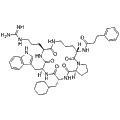
- Cat. No.
- A16946
PMX-205
PMX-205 is a cyclic hexapeptide that acts as a potent antagonist of C5a receptor (C5aR; IC50 = 31 nM).
Search by product name, CAS, target or catalog number. Press Down Arrow to reach product suggestions, Tab to move between links, and Escape to close suggestions.

The complement system is a sophisticated part of the immune system that enhances the ability of antibodies and phagocytic cells to clear microbes and damaged cells, promotes inflammation, and attacks the pathogen's cell membrane. This system is named for its capacity to "complement" the killing of pathogens by antibodies.
Comprising over 30 small proteins produced by the liver, the complement system circulates in the blood serum and within tissues throughout the body. These proteins are normally inactive but become sequentially activated in response to a pathogen. Activation can occur via three pathways: the classical pathway, which is triggered by antibodies bound to a pathogen; the lectin pathway, which is activated by mannose-binding lectin attaching to the pathogen surface; and the alternative pathway, which can be initiated directly by pathogen surfaces.
Each pathway leads to the cleavage of the protein C3, generating C3a and C3b fragments. C3b binds to the pathogen surface and can lead to direct opsonization—tagging the pathogen for destruction by phagocytes. C3a, along with other small fragments released during complement activation, acts as a chemoattractant to recruit immune cells to the site of infection and promote inflammation.
The final common step of the complement activation pathways is the assembly of the membrane attack complex (MAC). This complex forms a pore in the membrane of the target cell, leading to cell lysis and death. The MAC is particularly effective against gram-negative bacteria.
Regulation of the complement system is crucial, as overactivation can damage host cells. Regulators are present in blood plasma and on cell surfaces, ensuring the system is directed only at pathogens or damaged cells.
The complement system plays a crucial role not only in innate immunity but also as a bridge to adaptive immunity. It assists in clearing immune complexes and apoptotic cells, and in enhancing the humoral response and immune memory.
Understanding and manipulating the complement system has therapeutic potential for numerous diseases, including those that involve excessive or inappropriate activation of the complement pathways.
PMX-205 is a cyclic hexapeptide that acts as a potent antagonist of C5a receptor (C5aR; IC50 = 31 nM).
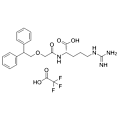
Synonyms: SB 290157
SB290157 trifluoroacetate is a potent and selective C3a receptor antagonist with an IC50 of 200 nM.
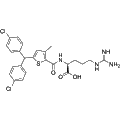
JR14a is a potent thiophene-based antagonist of the human complement C3a receptor (C3aR). It exhibits high selectivity for C3aR over the C5a receptor and effectively suppresses C3aR-mediated inflammatory responses. JR14a is a valuable tool for studying the role of C3aR in immune regulation and inflammation-related diseases.
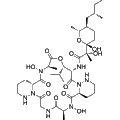
Synonyms: Antibiotic L 156602; PD 124966
L-156602 is a C5a receptor antagonist that inhibits inflammation and blocks the migration of monocytes and neutrophils to sites of infiltration in mouse inflammatory models. It also suppresses the efferent phase of delayed-type hypersensitivity (DTH).
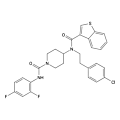
CP-447697 is a lipophilic C5a receptor antagonist with an IC₅₀ value of 31 nM. It is suitable for research related to inflammation and complement system modulation.
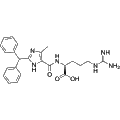
BR103 is a C3a receptor (C3aR)-specific small molecule ligand. It is useful for measuring ligand affinity to G protein-coupled receptors (GPCRs) through saturation and competitive binding assays.
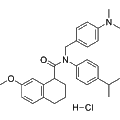
W-54011 is a potent, orally active, non-peptide antagonist of the C5a receptor. It inhibits the binding of \[¹²⁵I]-labeled C5a to human neutrophils with a Kᵢ of 2.2 nM. W-54011 also suppresses C5a-induced intracellular Ca²⁺ mobilization, chemotaxis, and reactive oxygen species (ROS) generation in human neutrophils, with IC₅₀ values of 3.1 nM, 2.7 nM, and 1.6 nM, respectively.
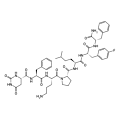
JPE-1375 is a complement C5a receptor 1 (C5aR1) antagonist that effectively inhibits polymorphonuclear leukocyte mobilization with an EC₅₀ of 6.9 µM and reduces TNF levels with an EC₅₀ of 4.5 µM in mice. It is suitable for research in autoimmune and inflammatory diseases.
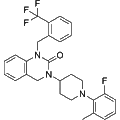
C5aR1 antagonist 1 is a selective antagonist of the complement component 5a receptor 1 (C5aR1) with notable oral bioavailability. It exhibits potent activity in both DISCO and migration assays, demonstrating IC50 values of 38 nM and 17 nM, respectively. This compound is suitable for investigating the roles of C5aR1 in acute and chronic inflammatory diseases, facilitating research into potential therapeutic interventions.
Out of stock
All 3 sizes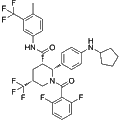
Synonyms: INF056
Izicopan (INF056) is a potent antagonist of the complement factor C5a receptor, effectively disrupting C5a-mediated signaling pathways. It demonstrates significant inhibition of C5a-induced calcium mobilization, with an IC50 in the range of 10-100 nM. This compound is valuable for research into inflammatory responses and immune modulation, making it a crucial tool for studies focused on autoimmune diseases and related therapeutic interventions.
Out of stock
All 3 sizes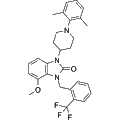
C5aR1 antagonist 2 is an orally active antagonist targeting the C5a receptor 1 (C5aR1). It effectively inhibits C5a-induced neutrophil recruitment, demonstrated by IC50 values of 21 nM in DISCO assays and 3 nM in migration assays. This compound is suitable for research into acute and chronic inflammatory diseases, providing a valuable tool for understanding the role of C5aR1 in inflammatory processes.
Out of stock
All 3 sizes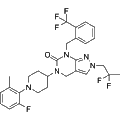
ACT-1014-6470 is a selective and reversible antagonist of the C5a receptor 1 (C5aR1). It exhibits strong inhibitory activity against C5aR1 activation, making it a valuable tool for investigating inflammatory processes. This compound is suitable for research applications related to various inflammatory diseases, providing insights into the role of C5aR1 in immune responses.
Out of stock
All 3 sizes