
-
-
- Cat. No.
- A13576
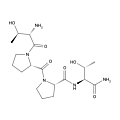
Rapastinel (GLYX-13)
Synonyms: GLYX 13
GLYX-13 is a selective weak partial agonist of the glycine site of the NMDA receptor which is under development by Naurex as adjunctive therapy for treatment-resistant depression.
In stock View Details -
- Cat. No.
- A14006
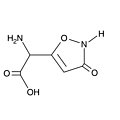
Ibotenic Acid
Synonyms: NSC 204850
Ibotenic acid is a neuroexcitatory amino acid originally isolated from Amanita species that functions as a NMDA and metabotropic glutamate receptor agonist.
In stock View Details -
- Cat. No.
- A15458
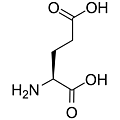
(S)-Glutamic acid
Synonyms: (+)-L-Glutamic acid
(S)-Glutamic acid acts as an excitatory transmitter and an agonist at all subtypes of glutamate receptors (metabotropic, kainate, NMDA, and AMPA).
In stock View Details -
- Cat. No.
- A16591
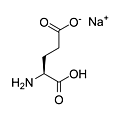
L-Glutamic acid monosodium salt
Synonyms: Monosodium glutamate
L-Glutamic acid monosodium salt acts as an excitatory transmitter and an agonist at all subtypes of glutamate receptors (metabotropic, kainate, NMDA, and AMPA). (S)-Glutamic acid shows a direct activating effect on the release of DA from dopaminergic terminals.
In stock View Details -
- Cat. No.
- A17978
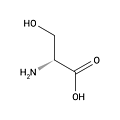
(R)-Serine
(R)-Serine, an endogenous amino acid involved in glia-synapse interactions that has unique neurotransmitter characteristics, is a potent co-agonist at the NMDA glutamate receptor.
In stock View Details -
- Cat. No.
- A20075
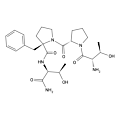
Apimostinel
Synonyms: NRX-1074; AGN-241660
Apimostinel (NRX-1074; AGN-241660) is an orally active NMDA receptor partial agonist.
In stock View Details -
- Cat. No.
- A20332
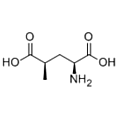
SYM 2081
SYM 2081 is a high-affinity ligand and potent, selective agonist of kainate receptors, inhibits [3H]-kainate binding with an IC50 of 35 nM, almost 3000- and 200-fold selectivity for kainate receptors over AMPA and NMDA receptors respectively.
In stock View Details -
- Cat. No.
- A20575
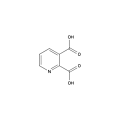
Quinolinic acid
Quinolinic acid is an endogenous N-methyl-D-aspartate (NMDA) receptor agonist synthesized from L-tryptophan via the kynurenine pathway and thereby has the potential of mediating N-methyl-D-aspartate neuronal damage and dysfunction.
In stock View Details -

- Cat. No.
- A20810
(-)-Aspartic acid
Synonyms: (R)-Aspartic acid; D-(-)-Aspartic acid
(-)-Aspartic acid is an endogenous NMDA receptor agonist.
In stock View Details -
- Cat. No.
- A61891
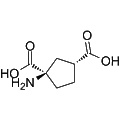
cis-ACPD
Cis-ACPD is a potent agonist of the NMDA receptor, exhibiting an IC50 of 3.3 µM. Additionally, it selectively activates group II metabotropic glutamate receptors, with EC50 values of 13 µM for mGluR2 and 50 µM for mGluR4. The compound is widely used in neuropharmacological research to study excitatory neurotransmission and the role of glutamate receptors in various neurological disorders.
Out of stock
All 3 sizes -
- Cat. No.
- A67069
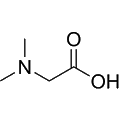
N,N-Dimethylglycine
Synonyms: Dimethylglycine; DMG; N-Methylsarcosine
N,N-Dimethylglycine is a natural N-methylated glycine that serves as a partial agonist at the N-methyl-D-aspartate receptor (NMDAR) glycine site. It functions as a methyl donor, enhancing immune response and exhibiting antioxidant properties to mitigate oxidative stress by scavenging free radicals. Additionally, N,N-Dimethylglycine has demonstrated antidepressant-like effects and surfactant activity, making it valuable for various research applications in neuropharmacology and immunology.
In stock View Details -
- Cat. No.
- A67089
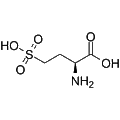
L-Homocysteic acid
Synonyms: L-HCA
L-Homocysteic acid is an endogenous excitatory amino acid functioning as a NMDA receptor agonist, with an effective concentration (EC50) of 14 μM. Its neurotoxic properties make it a valuable tool in the investigation of neurological disorders. L-Homocysteic acid enables researchers to explore the roles of excitatory neurotransmission and contribute to the understanding of related pathophysiological conditions.
In stock View Details -
- Cat. No.
- A67102
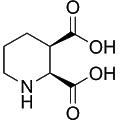
cis-Piperidine-2,3-dicarboxylic acid
Cis-Piperidine-2,3-dicarboxylic acid primarily targets NMDA receptors and acts as a partial agonist. This compound is known for its ability to block general excitatory synaptic transmission by interfering with NMDA, AMPA, and kainate ionotropic receptors. Cis-Piperidine-2,3-dicarboxylic acid is valuable for research applications related to neuropharmacology and the study of synaptic plasticity.
In stock View Details -
- Cat. No.
- A67104
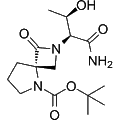
Zelquistinel
Synonyms: AGN-241751; GATE-251
Zelquistinel (AGN-241751) is a potent orally active partial agonist of the N-methyl-D-aspartate (NMDA) receptor. It has demonstrated significant biological activity relevant to the research of neuropsychiatric conditions, including depression and anxiety. Zelquistinel serves as a valuable tool for studying the pharmacological mechanisms underlying these disorders and evaluating potential therapeutic interventions.
In stock View Details -
- Cat. No.
- A67164
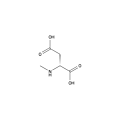
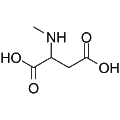
N-Methyl-DL-aspartic acid
N-Methyl-DL-aspartic acid is a glutamate analogue that functions as an NMDA receptor agonist. This compound is primarily utilized in research pertaining to neurological disorders, aiding in the study of synaptic transmission and excitotoxicity associated with various neurodegenerative conditions. Its ability to activate NMDA receptors makes it a valuable tool for investigating the physiological and pathological roles of glutamatergic signaling in the central nervous system.
In stock View Details -
- Cat. No.
- A67181
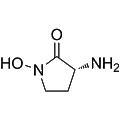
(R)-(+)-HA-966
Synonyms: (+)-HA-966
(R)-(+)-HA-966 functions as a partial agonist/antagonist at the glycine site of the N-methyl-D-aspartate (NMDA) receptor complex. This compound selectively inhibits the activation of the mesolimbic dopamine system induced by amphetamine, making it relevant for studying addiction and dopamine-related disorders. Its ability to traverse the blood-brain barrier suggests potential applications in addressing conditions such as neuropathic and acute pain.
In stock View Details -
- Cat. No.
- A67188
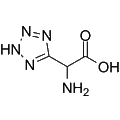
(RS)-(Tetrazol-5-yl)glycine
Synonyms: D,L-(tetrazol-5-yl)glycine; LY 285265
(RS)-(Tetrazol-5-yl)glycine is a potent and selective agonist of the N-methyl-D-aspartate (NMDA) receptor. It exhibits effective stimulation with EC50 values of 99 nM and 1.7 μM for the GluN1/GluN2D and GluN1/GluN2A subtypes, respectively. This compound is utilized in research involving seizure activity and neuronal activation, as evidenced by its ability to induce Fos expression in mice models.
In stock View Details -
- Cat. No.
- A67211
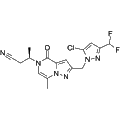
TP-050
TP-050 is a potent, orally active NMDAR agonist, selectively targeting the GluN2A and GluN2D subtypes with EC50 values of 0.51 μM and 9.6 μM, respectively. This compound effectively crosses the blood-brain barrier, facilitating its role in enhancing hippocampal long-term potentiation and promoting neuronal signal transmission. TP-050 offers valuable applications in neuroscience research, particularly in studies involving synaptic plasticity and cognitive function.
In stock View Details -
- Cat. No.
- A67219
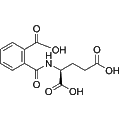
N-Phthaloylglutamic acid
N-Phthaloylglutamic acid functions as a partial agonist of the NMDA receptor, specifically targeting the glutamate binding site with an affinity characterized by a Ki of 13 μM. Its biological activity contributes to the modulation of excitatory neurotransmission and may serve as a valuable tool in neuropharmacological research. This reagent is useful for studies investigating NMDA receptor dynamics and related neurological processes.
In stock View Details -
- Cat. No.
- A67250
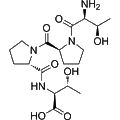
NT 13
Synonyms: TPPT
NT 13 (TPPT) is a tetrapeptide with the amino acid sequence L-threonyl-L-prolyl-L-prolyl-L-threonine amide, acting as a partial agonist of the N-methyl-D-aspartate receptor (NMDAR). This compound is utilized in research pertaining to depression, anxiety, and related neuropsychiatric conditions. Its ability to modulate glutamatergic signaling provides valuable insights into the underlying mechanisms of these disorders, making it a useful tool for pharmacological studies.
In stock View Details -
- Cat. No.
- A67270
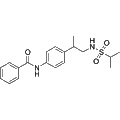
LY-395153
LY-395153 is an AMPA receptor enhancer, primarily targeting ionotropic glutamate receptors (iGluRs). It facilitates the binding to both natural and recombinant AMPA receptors, exhibiting variable binding influenced by AMPA receptor agonists. This compound serves as a valuable tool for elucidating regulatory sites of AMPA receptors, making it essential for research in neuropharmacology and understanding synaptic transmission dynamics.
In stock View Details -
- Cat. No.
- A67295
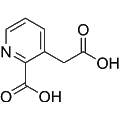
Homoquinolinic acid
Homoquinolinic acid is a selective agonist of the NMDAR2 receptor. It is known to enhance excitatory neurotransmission and has implications in studies related to neurodegenerative disorders and synaptic plasticity. This compound is valuable for investigating the role of NMDAR2 signaling in various neurological research applications.
In stock View Details -
- Cat. No.
- A67297
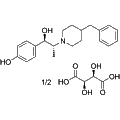
threo-Ifenprodil hemitartrate
threo-Ifenprodil hemitartrate is a sigma (σ) receptor agonist, exhibiting Kis of 59.1 nM and 2 nM for σ1 and σ2 receptors, respectively. This compound also acts as a NR2B subunit-selective NMDA receptor antagonist, with an IC50 of 0.22 μM, and demonstrates inhibition of the hERG potassium channel with an IC50 of 88 nM, indicating potential antiarrhythmic activity. threo-Ifenprodil hemitartrate serves as a valuable tool in neuropharmacology and cardiovascular research.
In stock View Details -
- Cat. No.
- A67308
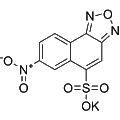
NSC339614 potassium
NSC339614 potassium acts as a selective enhancer of GluN1/GluN2C and GluN1/GluN2D NMDA receptors. This compound potentiates neuronal responses specifically through these receptor subtypes, while sparing other NMDA receptors and operating independently of L-glutamate or glycine binding. The mechanism is contingent on the unique structure of the agonist ligand binding domain, highlighting its potential as a valuable tool for investigating NMDA receptor subtype functions and developing new therapeutic strategies for neurological disorders.
In stock View Details