Biochemical Assay Reagents

Biochemical Assay Reagents collects small molecules used to prepare, run and calibrate biochemical and cell-based assays. Vitamins and cofactors such as niacin, riboflavin and biotin sit alongside sugars, sugar alcohols and amino acids such as L-arginine. Enzyme substrates and metal-ion chelators complete the range, including the calcium chelator 1,2-bis(2-aminophenoxy)ethane-N,N,N′,N′-tetraacetic acid (BAPTA). Three subcategories group related reagents, namely Carbohydrates & Glycobiology, Acyl-CoA & Cofactors for acyl-coenzyme A (acyl-CoA) compounds, and Chelators & Bifunctional Chelators. Most of these compounds act as substrates, cofactors, standards or buffer components rather than as inhibitors of a defined target.

25 Items

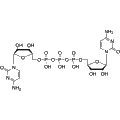
  • Dicytidine 5′-triphosphate
    Cat. No.
    A59601

    Dicytidine 5′-triphosphate

    Synonyms: Cp3C

    Dicytidine 5′-triphosphate (Cp3C) is a cytosine-containing dinucleoside polyphosphate that acts as a modulator of intracellular signaling pathways. This compound inhibits the intracellular accumulation of trans-resveratrol and trans-piceid, impacting cellular responses to these natural compounds. Additionally, Dicytidine 5′-triphosphate induces the expression of CCR2 and upregulates the expression of PAL1 and 4CL1, highlighting its potential role in studies related to inflammation and phenylpropanoid metabolism.

    Out of stock

    All 3 sizes
  • CDN-A
    Cat. No.
    A65631

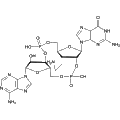
    CDN-A

    CDN-A is a cyclic di-nucleotide that serves as a potent stimulator of both innate and adaptive immune responses. It facilitates the synthesis of antibody-drug conjugates (ADCs) and plays a crucial role in immune regulation by activating interferon gene expression. In humans, cyclic di-nucleotides are produced endogenously in response to foreign DNA or by bacterial pathogens, making them vital for stimulating the innate immune system. Research applications include immunotherapy and the study of immune response mechanisms.

    Out of stock

    All 3 sizes
  • Gentisuric acid
    Cat. No.
    A70228

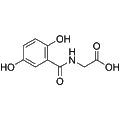
    Gentisuric acid

    Gentisuric acid, a metabolite of Aspirin, serves as a substrate for α-amidating monooxygenase (PAM). This compound exhibits protective properties against DNA damage induced by Mitomycin C, making it valuable for research in cellular stress responses and the study of DNA repair mechanisms. Gentisuric acid is essential for understanding the biochemical pathways influenced by Aspirin and its metabolites.

    50 mg
    $40.00
    100 mg
    $65.00
    All 3 sizes
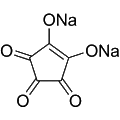
  • Croconic acid disodium
    Cat. No.
    A86471

    Croconic acid disodium

    Synonyms: Nacr

    Croconic acid disodium is a potent activator of lysine crotonylation (Kcr), promoting cell growth and proliferation through the upregulation of genes associated with Kcr modification. This compound is particularly relevant for enhancing the efficiency of somatic cell nuclear transfer (SCNT) and optimizing conditions in cell culture studies, making it a valuable reagent for researchers focused on cellular dynamics and development.

    50 mg
    $25.00
    All 1 sizes
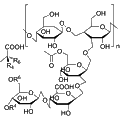
  • Xanthan gum
    Cat. No.
    A86502

    Xanthan gum

    Xanthan gum serves as a hydrogel modulator by enhancing the viscosity and stability of hydrogels through hydrogen bonding interactions with gelatin. This compound not only promotes cell growth but also facilitates a microenvironment that supports cell differentiation. Additionally, xanthan gum has been shown to induce pro-inflammatory responses by elevating levels of inflammatory cytokines such as TNF-α, IL-6, and IL-10. Its properties make xanthan gum a valuable reagent for research in inflammation and immunology.

    5 g
    $25.00
    500 g
    $220.00
    All 2 sizes
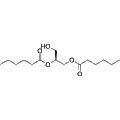
  • 1,2-Dihexanoyl-sn-glycerol
    Cat. No.
    A89020

    1,2-Dihexanoyl-sn-glycerol

    1,2-Dihexanoyl-sn-glycerol is a potent activator of protein kinase C (PKC), functioning through the generation of diacylglycerol (DAG) as a second messenger. This compound is utilized as a biochemical assay reagent to study PKC signaling pathways and their effects on various cellular processes. While its biological activity is not fully characterized, it is anticipated to exhibit similar properties to 1,2-dioctanoyl-sn-glycerol, supporting its application in research involving lipid signaling and cell regulation.

    50 mg
    $175.00
    All 1 sizes
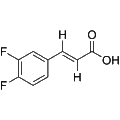
  • trans-3,4-Difluorocinnamic acid
    Cat. No.
    A89284

    trans-3,4-Difluorocinnamic acid

    Synonyms: (E)-3-(3,4-Difluorophenyl)acrylic acid

    trans-3,4-Difluorocinnamic acid is a biochemical reagent that functions as a modulator of signaling pathways by inhibiting specific enzymes involved in tumor growth. Its key biological activities include anti-inflammatory and anticancer effects, making it a valuable tool in cancer research and drug development. This compound can be utilized in various experimental settings to investigate the molecular mechanisms underlying disease processes and to evaluate potential therapeutic strategies.

    5 g
    $20.00
    All 1 sizes
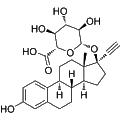
  • Ethynyl estradiol 17-β-D-glucuronide
    Cat. No.
    A90267

    Ethynyl estradiol 17-β-D-glucuronide

    Ethynyl estradiol 17-β-D-glucuronide is a glycosylated form of the estrogen receptor modulator, specifically targeting glycobiology applications. This compound plays a critical role in the study of glycan structures and their biological implications, facilitating research into carbohydrate chemistry, enzyme interactions, and protein-glycan recognition. Its utility extends to investigations in basic research, biomedicine, and biotechnology, aiding in the understanding of glycan-related processes in various biological systems.

    1 mg
    $490.00
    5 mg
    $2,215.00
    All 2 sizes
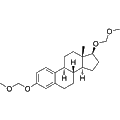
  • 3,17β-O-Bis(methoxymethyl)estradiol
    Cat. No.
    A91699

    3,17β-O-Bis(methoxymethyl)estradiol

    3,17β-O-Bis(methoxymethyl)estradiol is a biochemical assay reagent that functions as a selective estrogen receptor modulator. This compound exhibits significant biological activity by modulating estrogen receptor pathways, making it useful in various research applications, including hormone signaling studies and the investigation of estrogen-related diseases. Its unique structure and properties facilitate the study of estrogen receptor interactions and can aid in the development of therapeutic interventions.

    Out of stock

    All 3 sizes
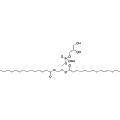
  • Dimyristoylphosphatidylglycerol sodium
    Cat. No.
    A91746

    Dimyristoylphosphatidylglycerol sodium

    Dimyristoylphosphatidylglycerol sodium is a biochemical assay reagent that primarily functions as a phospholipid modulator. It plays a critical role in membrane-related studies due to its ability to influence membrane fluidity and stability. This compound is often utilized in research applications such as vesicle formation, liposome preparation, and membrane protein interactions, making it an essential tool for researchers investigating lipid biochemistry and cellular processes.

    1 mg
    $60.00
    5 mg
    $140.00
    All 6 sizes
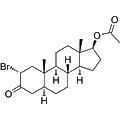
  • 17β-Acetoxy-2α-bromo-5α-androstan-3-one
    Cat. No.
    A92050

    17β-Acetoxy-2α-bromo-5α-androstan-3-one

    17β-Acetoxy-2α-bromo-5α-androstan-3-one is a biochemical assay reagent that functions as a steroid derivative. This compound exhibits significant biological activity as a selective androgen receptor modulator, making it useful for research focused on steroid hormone signaling and metabolic processes. It is valuable for studies investigating androgen-related disorders and the mechanistic pathways influenced by androgens in various biological systems.

    Out of stock

    All 3 sizes
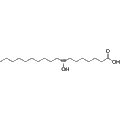
  • 8(R)-Hydroxyoctadecanoic acid
    Cat. No.
    A93170

    8(R)-Hydroxyoctadecanoic acid

    8(R)-Hydroxyoctadecanoic acid is an ester product known for its role in lipid metabolism. This compound exhibits biological activity as an activator of peroxisome proliferator-activated receptors (PPARs), which are involved in the regulation of fatty acid storage and glucose metabolism. It can be utilized in research applications focused on metabolic disorders, inflammation, and cardiovascular diseases, providing insights into the physiological roles of fatty acids in cellular processes.

    Out of stock

    All 3 sizes
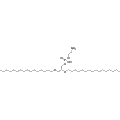
  • 2-Aminoethyl ((R)-2,3-bis(hexadecyloxy)propyl) hydrogen phosphate
    Cat. No.
    A93198

    2-Aminoethyl ((R)-2,3-bis(hexadecyloxy)propyl) hydrogen phosphate

    2-Aminoethyl ((R)-2,3-bis(hexadecyloxy)propyl) hydrogen phosphate functions as an ester product. This compound is utilized in biochemical research for its role in lipid-based systems and as a potential modulator of cellular membrane dynamics. Its application extends to studies on membrane biophysics and the design of novel drug delivery systems.

    Out of stock

    All 3 sizes
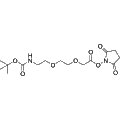
  • BocNH-PEG2-CH2COONHS
    Cat. No.
    A93290

    BocNH-PEG2-CH2COONHS

    BocNH-PEG2-CH2COONHS is a PEG-derived biochemical assay reagent that features a terminal carboxylic acid and a Boc-protected amino group. This hydrophilic PEG spacer enhances the solubility of compounds in aqueous solutions, facilitating diverse biochemical applications. The terminal carboxylic acid readily reacts with primary amine groups, particularly in conjunction with activators like EDC and HATU, to yield stable amide bonds. Deprotection of the Boc group under mild acidic conditions generates a free amine for subsequent reactions.

    Out of stock

    All 3 sizes
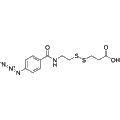
  • 3-((2-(4-Azidobenzamido)ethyl)disulfanyl)propanoic acid
    Cat. No.
    A93446

    3-((2-(4-Azidobenzamido)ethyl)disulfanyl)propanoic acid

    3-((2-(4-Azidobenzamido)ethyl)disulfanyl)propanoic acid is a versatile biochemical assay reagent featuring an aryl azide, a cleavable disulfide bond, and a carboxylic acid. The aryl azide can be activated with UV light (250 to 350 nm) facilitating biomolecule conjugation. Additionally, the carboxylic acid allows for amide bond formation with amines in the presence of an activator, while the disulfide bond can be cleaved using reducing agents, making this compound useful for various chemical biology applications and protein labeling studies.

    Out of stock

    All 3 sizes
  • 6-Hydroxyoctadecanoic acid
    Cat. No.
    A93454

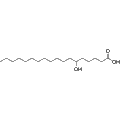
    6-Hydroxyoctadecanoic acid

    6-Hydroxyoctadecanoic acid is a fatty acid derivative characterized by its hydroxyl group at the sixth carbon position. This compound exhibits significant biological activity as a potential modulator of lipid metabolism and plays a role in cell signaling pathways. It is utilized in various research applications including studies on metabolic diseases, lipid biochemistry, and the development of novel therapeutic agents targeting metabolic disorders.

    Out of stock

    All 3 sizes
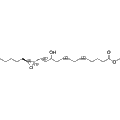
  • Methyl 14(S),15(S)-epoxy-11(R,S)-hydroxy-5(Z),8(Z),12(E)-eicosatrienoate
    Cat. No.
    A93483

    Methyl 14(S),15(S)-epoxy-11(R,S)-hydroxy-5(Z),8(Z),12(E)-eicosatrienoate

    Methyl 14(S),15(S)-epoxy-11(R,S)-hydroxy-5(Z),8(Z),12(E)-eicosatrienoate is a bioactive ester compound. It serves as a significant modulator of lipid metabolism and is utilized in research focused on lipid signaling pathways. This compound may be applicable in studies exploring the roles of fatty acid derivatives in cellular processes and their implications in various diseases.

    Out of stock

    All 3 sizes
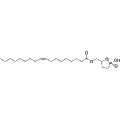
  • Oleoyl 3-carbacyclic phosphatidic acid
    Cat. No.
    A93646

    Oleoyl 3-carbacyclic phosphatidic acid

    Synonyms: 3-ccPA 18:1

    Oleoyl 3-carbacyclic phosphatidic acid is a biochemical reagent that serves as a modulator of lipid signaling pathways. This compound has been shown to enhance the activity of certain phospholipase enzymes, thereby influencing cellular processes such as proliferation and apoptosis. Its unique structure makes it a valuable tool for investigating lipid metabolism and the role of phosphatidic acid in various biological phenomena.

    0.5 mg
    $145.00
    1 mg
    $275.00
    All 4 sizes
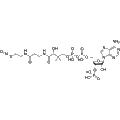
  • S-Nitroso-CoA
    Cat. No.
    A93712

    S-Nitroso-CoA

    Synonyms: S-Nitroso-coenzyme A; SNO-CoA; SNO-coenzyme A

    S-Nitroso-CoA is a nitrosothiol derivative of coenzyme A, where the thiol group has been substituted with a nitrososulfanediyl group. This compound plays a crucial role in nitric oxide signaling pathways and has implications in redox biology. Researchers utilize S-Nitroso-CoA to investigate its effects on cellular processes such as metabolism, signal transduction, and as a potential modulator in various disease models.

    Out of stock

    All 3 sizes
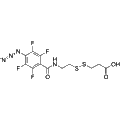
  • 4-Azide-TFP-amide-SS-propionic acid
    Cat. No.
    A93858

    4-Azide-TFP-amide-SS-propionic acid

    4-Azide-TFP-amide-SS-propionic acid is a biochemical assay reagent featuring an aryl azide, a cleavable disulfide bond, and a carboxylic acid. The aryl azide undergoes photo-activation with UV light (250 to 350 nm), facilitating conjugation with various biomolecules. The carboxylic acid is reactive towards amines in the presence of an activator, allowing for the formation of stable amide bonds. The associated disulfide bond can be selectively cleaved using reducing agents, making this compound valuable for applications in protein labeling and conjugation studies.

    Out of stock

    All 3 sizes
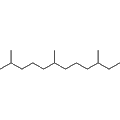
  • Farnesane
    Cat. No.
    A94132

    Farnesane

    Synonyms: 2,6,10-Trimethyldodecane; Hemisqualane

    Farnesane (2,6,10-Trimethyldodecane; Hemisqualane) is an isoprenoid derivative targeting biochemical pathways in insects. It serves as a modulator of juvenile hormone activity, making it valuable for studies in insect physiology and development. This compound is suitable for research applications aimed at understanding hormonal regulation and insect growth processes.

    5 mg
    $40.00
    10 mg
    $65.00
    All 4 sizes
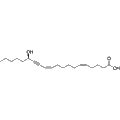
  • (5Z,11Z,15R)-15-Hydroxyeicosa-5,11-dien-13-ynoic acid
    Cat. No.
    A94207

    (5Z,11Z,15R)-15-Hydroxyeicosa-5,11-dien-13-ynoic acid

    (5Z,11Z,15R)-15-Hydroxyeicosa-5,11-dien-13-ynoic acid serves as a biochemical reagent with pivotal roles in research applications concerning inflammatory pathways and lipid signaling. This compound acts as a modulator of eicosanoid synthesis, influencing various biological processes associated with inflammation, pain, and cellular responses. It is utilized in studies aimed at understanding the intricate mechanics of lipid mediators and their impact on human health.

    0.25 mg
    $85.00
    0.5 mg
    $160.00
    All 4 sizes
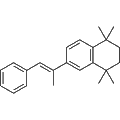
  • Temarotene
    Cat. No.
    A94611

    Temarotene

    Synonyms: Ro 15-0778

    Temarotene is a potent arotinoid that primarily functions as a selective retinoid receptor modulator. It exhibits significant biological activity by influencing gene expression pathways associated with cell differentiation and growth. This compound is utilized in biochemical assays to explore retinoid signaling mechanisms and their implications in various cellular processes, making it a valuable tool for researchers in developmental biology and cancer research.

    1 mg
    $560.00
    5 mg
    $1,475.00
    All 2 sizes
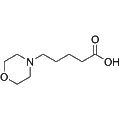
  • 5-(Morpholin-4-yl)pentanoic acid
    Cat. No.
    A94838

    5-(Morpholin-4-yl)pentanoic acid

    5-(Morpholin-4-yl)pentanoic acid is a biochemical assay reagent that serves as a versatile tool in life science research. This compound is utilized primarily in the evaluation of enzymatic activities and as a potential modulator in various biochemical pathways. Its unique structure allows for diverse applications in pharmacology and molecular biology studies.

    25 mg
    $50.00
    50 mg
    $70.00
    All 5 sizes
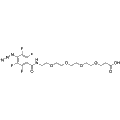
  • 4-Azide-TFP-amide-PEG4-acid
    Cat. No.
    A94952

    4-Azide-TFP-amide-PEG4-acid

    4-Azide-TFP-amide-PEG4-acid is a biochemical assay reagent designed for efficient conjugation reactions. Featuring an aryl azide that can be photo-activated under UV light (250 to 350 nm), it facilitates the covalent attachment to various biomolecules. The inclusion of a PEG spacer enhances aqueous solubility and minimizes steric hindrance during ligation, while the carboxylic acid moiety allows for amine reactions in the presence of an activator to generate stable amide bonds. This reagent is suitable for applications in bioconjugation chemistry and the development of novel biosensors.

    Out of stock

    All 3 sizes

25 Items

Added to your cart

View Cart Checkout

    Loading...