- Cat. No.
- A11425
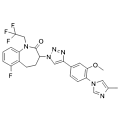
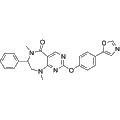
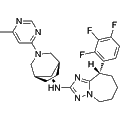
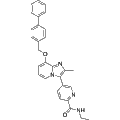
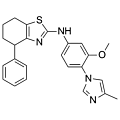
gamma-secretase modulator 1
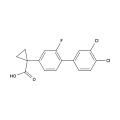
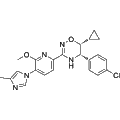
gamma-secretase modulator 1 is a gamma-secretase modulator, gamma-secretase modulator 1 is useful for Alzheimer's disease.
Search by product name, CAS, target or catalog number. Press Down Arrow to reach product suggestions, Tab to move between links, and Escape to close suggestions.
γ-Secretase inhibitors and modulators act on the intramembrane protease that cleaves amyloid precursor protein (APP). The enzyme is a multiprotein complex with presenilin as its catalytic subunit, and Notch receptors are among its substrates. In 1998, loss of presenilin-1 in neurons was shown to block the γ-secretase cleavage of APP that releases amyloid-β (Aβ). A year later, a presenilin-1-dependent protease was found to release the Notch intracellular domain. DAPT, LY-411575 and semagacestat inhibit both APP and Notch processing and are used in Aβ and Notch signaling studies. Avagacestat and RO4929097 are further inhibitors, and DAPT is also common in organoid and stem cell work. E 2012 is a γ-secretase modulator that shifts Aβ production.
gamma-secretase modulator 1 is a gamma-secretase modulator, gamma-secretase modulator 1 is useful for Alzheimer's disease.
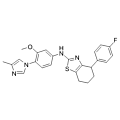
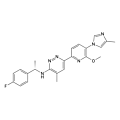
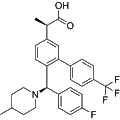
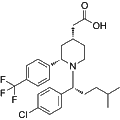
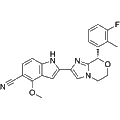
gamma-secretase modulator 2 is a potent and selective gamma-secretase modulator for treatment of Alzheimer's disease.
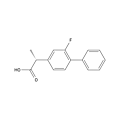
Synonyms: (R)-Flurbiprofen; MPC 7869; Tarenflurbil
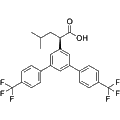
Flurizan is a nonsteroidal anti-inflammatory drug (NSAID) that inhibits γ-secretase activity.
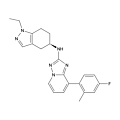
TC-E 5006 is a gamma-secretase modulator. Reduces Aβ42 levels in vitro (EC50 = 390 nM) and in vivo.
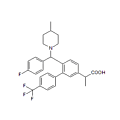
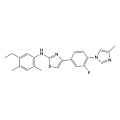
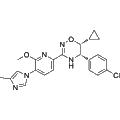
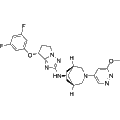
gamma-secretase modulator 3 is a gamma-secretase modulator.
Synonyms: CSP-1103
CHF5074 is a novel γ-secretase modulator, reduces Aβ42 and Aβ40 secretion, with an IC50 of 3.6 and 18.4 uM, respectively.
NGP-555 is a gamma-secretase modulator with a selective mechanism to reduce Abeta 42 while raising shorter Abeta forms such as Abeta 37 and 38.
BPN-15606 is a highly potent, orally active γ-secretase modulator (GSM), attenuates the production of Aβ42 and Aβ40 by SHSY5Y neuroblastoma cells with IC50 values of 7 nM and 17nM, respectively.
BI-1408 is a potent γ secretase modulator with an IC50 of 0.04 μM for Aβ42.
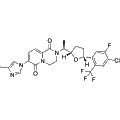
AZ1136 is a selective γ-secretase modulator (GSM) that effectively reduces the levels of amyloid-beta peptides Aβ42 and Aβ40, with IC50 values of 990 nM and 1400 nM, respectively. Furthermore, AZ1136 increases levels of Aβ39 and Aβ37 while showing no effect on Aβ38. This compound is valuable for research applications investigating the pathogenesis of Alzheimer's disease and the modulation of amyloid-beta metabolism.
Out of stock
All 3 sizes
BIIB042 is a selective γ-secretase modulator that effectively alters the processing of amyloid precursor protein, resulting in decreased levels of Aβ42 and increased levels of Aβ38. This compound demonstrates significant brain penetration and has shown efficacy in reducing brain Aβ42 levels in CF-1 mice and Fischer rats, while also lowering plasma Aβ42 levels in cynomolgus monkeys. Additionally, BIIB042 decreases Aβ42 levels and ameliorates Aβ plaque burden in Tg2576 mouse models. This reagent is valuable for research into Alzheimer’s disease.
Out of stock
All 3 sizes
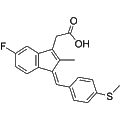
(E/Z)-Sulindac sulfide is a selective γ-secretase modulator that plays a crucial role in the modulation of amyloid-beta (Aβ) peptide production. This compound notably reduces the production of Aβ42, favoring the generation of shorter Aβ species, making it a valuable tool for research into Alzheimer's disease. Its ability to influence Aβ processing makes (E/Z)-Sulindac sulfide significant for studies focusing on Alzheimer's pathogenesis and potential therapeutic strategies.
PF-06648671 is an orally active γ-secretase modulator that effectively penetrates the blood-brain barrier. This compound demonstrates the ability to reduce levels of amyloid-beta peptides Aβ42 and Aβ40, while concurrently increasing Aβ37 and Aβ38 in vitro. PF-06648671 is valuable for research applications focused on Alzheimer’s disease and the modulation of amyloid processing pathways.
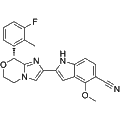
RO7185876 is a selective gamma-secretase modulator that plays a crucial role in the regulation of amyloid precursor protein processing. This compound is primarily investigated for its potential in Alzheimer's disease research, where it may help reduce the production of amyloid-beta peptides. Its unique mechanism of action positions RO7185876 as a valuable tool for studying the pathophysiology of Alzheimer's and exploring therapeutic options.
GSM-1 is a potent γ-secretase modulator that directly targets the transmembrane domain (TMD) 1 of presenilin 1 (PS1). By modulating γ-secretase activity, GSM-1 influences the processing of amyloid precursor protein (APP), making it valuable in Alzheimer's disease research. This compound can be utilized to investigate mechanisms of amyloid-beta peptide generation and potential therapeutic strategies for neurodegenerative disorders.
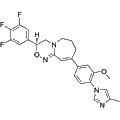
FRM-024 is a potent γ-secretase modulator designed for central nervous system applications. It selectively alters the activity of γ-secretase, a critical enzyme involved in the pathogenesis of familial Alzheimer’s disease. This compound has demonstrated the ability to influence amyloid precursor protein processing, making it a valuable tool for research focused on Alzheimer’s therapeutics and disease mechanisms.
(R)-JNJ-40418677 is the R-enantiomer of the compound JNJ-40418677, which functions primarily as a selective modulator of the mGlu2 receptor. This compound exhibits promising biological activity by potentially enhancing cognitive functions and mitigating anxiety-related behaviors. Research applications include studies on neuropharmacology and the investigation of therapeutic targets for neurological disorders.
(-)-FRM-024 is a potent γ-secretase modulator that effectively penetrates the central nervous system. This compound is instrumental in Alzheimer’s disease research, facilitating the study of amyloid precursor protein processing and its implications in neurodegeneration. Its ability to modulate γ-secretase activity makes it a valuable tool for exploring therapeutic interventions in Alzheimer's pathology.
γ-Secretase modulator 4 is a potent modulator of the γ-secretase enzyme, characterized by its ability to effectively reduce Aβ42 peptide levels with IC50 values of 0.014 μM in human samples and 0.017 μM in mouse samples. This compound has significant implications in Alzheimer's research, particularly in the study of amyloid-beta production and the related pathophysiology. Its mechanism of action makes it a valuable tool for investigations into therapeutic strategies targeting Alzheimer's disease.
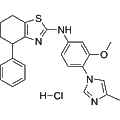
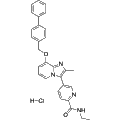
Gamma-Secretase Modulator 1 Hydrochloride acts as a modulator of gamma-secretase, a crucial enzyme implicated in the pathogenesis of Alzheimer's disease. This compound is designed to influence the processing of amyloid precursor protein (APP), ultimately affecting the production of amyloid-beta peptide. Its potential applications include studying the modulation of amyloid-beta levels and investigating therapeutic strategies for Alzheimer's disease and related neurodegenerative disorders.
Synonyms: RG6289
Nivegacetor is a potent γ-secretase modulator that plays a critical role in the modulation of amyloid precursor protein processing. By influencing the activity of γ-secretase, Nivegacetor is valuable for research into Alzheimer's disease and other neurodegenerative conditions. Its ability to alter the production of amyloid-beta peptides makes it a useful tool for exploring therapeutic pathways and understanding the molecular mechanisms underlying these diseases.
Aβ42-IN-1 is a potent γ-secretase modulator (GSM) designed to target the enzymatic cleavage of amyloid precursor protein, effectively lowering amyloid-beta 42 (Aβ42) levels. With an IC50 value of 0.091 μM, Aβ42-IN-1 demonstrates significant inhibition of Aβ42 production while avoiding CYP3A4 inhibition, indicating a favorable safety profile. Its sustained pharmacokinetic properties make it a valuable tool for research into Alzheimer's disease and related neuropathologies. This compound holds promise for exploring therapeutic strategies aimed at modulating γ-secretase activity in neurodegenerative disorders.
Aβ42-IN-1 free base is a potent γ-secretase modulator that exhibits high oral bioavailability and significant brain penetration. This compound effectively lowers Aβ42 levels with an IC50 of 0.091 μM, demonstrating substantial reduction of brain Aβ42 levels in murine models. Aβ42-IN-1 free base holds considerable potential for therapeutic applications in Alzheimer's disease research.
γ-Secretase modulator 10 is a selective modulator of the γ-secretase enzyme complex. It influences the cleavage of amyloid precursor protein (APP), thereby altering the production of amyloid β peptides associated with Alzheimer's disease pathogenesis. This compound is valuable for research applications focused on neurodegenerative diseases and therapeutic strategies aimed at modulating γ-secretase activity.
γ-Secretase modulator 14 is a selective modulator of the γ-secretase complex, influencing the cleavage of amyloid precursor protein (APP). This compound exhibits potential in Alzheimer's disease research by altering the production of amyloid-beta peptides. Its utility extends to investigating the mechanisms underlying neurodegenerative disorders and developing novel therapeutic strategies aimed at modulating γ-secretase activity.
Out of stock
All 3 sizes