
- Cat. No.
- A15324
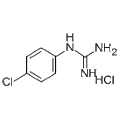
4-Chlorophenylguanidine hydrochloride
4-Chlorophenylguanidine hydrochloride is a potent and specific inhibitor of uPA (urokinase).
In stock
View Details
Search by product name, CAS, target or catalog number. Press Down Arrow to reach product suggestions, Tab to move between links, and Escape to close suggestions.
Urokinase inhibitors target urokinase-type plasminogen activator (uPA), a serine protease that generates plasmin. uPA is secreted as a single-chain proenzyme and binds a glycolipid-anchored receptor, the uPA receptor (uPAR). The receptor was cloned in 1990 and concentrates plasminogen activation at the cell surface. Plasmin degrades extracellular matrix proteins and activates latent growth factors, linking the system to cell migration and tumor invasion. uPAR also signals through integrins and other membrane partners, independent of proteolysis. Small-molecule uPA inhibitors include 4-Chlorophenylguanidine hydrochloride, BC 11 hydrobromide and ZK824190. GGACK Dihydrochloride is a peptide chloromethyl ketone that inactivates the protease irreversibly. Cenupatide differs from the others because it acts on uPAR rather than the enzyme.
4-Chlorophenylguanidine hydrochloride is a potent and specific inhibitor of uPA (urokinase).
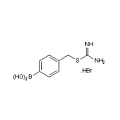
BC 11 hydrobromide, belective urokinase (uPA) inhibitor (IC50 = 8.2 μM). Inhibits clot lysis with no effect on clot formation and exhibits no activity at 8 other uPA related enzymes.
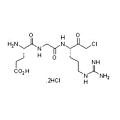
Synonyms: glutamyl-glycyl-argininechloromethylketone
GGACK Dihydrochloride is a potent and irreversible inhibitor of Urokinase (uPA (IC?????€
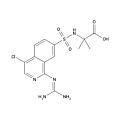
UK-371804 is a potent urokinase-type plasminogen activator (uPA) inhibitor.
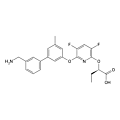
ZK824859 is an oral available and selective urokinase plasminogen activator (uPA) inhibitor with IC50s of 79 nM, 1580 nM and 1330 nM for human uPA, tPA, and plasmin, respectively.
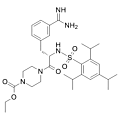
Synonyms: UKI-1C
UKI-1 is a novel synthetic inhibitor of the urokinase-type plasminogen activator system.
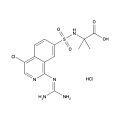
Synonyms: UK371804
UK-371804 is a potent and selective urokinase-type plasmogen activator (uPA) inhibitor with excellent enzyme potency (Ki=10 nM) and selectivity profile (4000-fold versus tPA and 2700-fold versus plasmin).
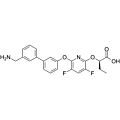
ZK824190 is an orally available and selective urokinase plasminogen activator (uPA) inhibitor as a potential treatment for multiple sclerosis. IC50s of 237, 1600 and 1850 nM for uPA, tPA, and Plasmin, respectively.
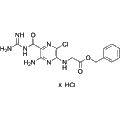
UCD38B hydrochloride is a competitive inhibitor of urokinase-type plasminogen activator (uPA) with an IC50 value of 7 μM. This compound exhibits cell permeability and specifically targets intracellular uPA, leading to its mistrafficking into perinuclear mitochondria. This mistrafficking results in a reduction of mitochondrial membrane potential and ultimately promotes the release of apoptotic inducible factor (AIF), thereby inducing apoptosis. UCD38B hydrochloride is useful in research applications focused on cancer biology and therapeutic strategies targeting apoptosis.
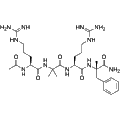
Cenupatide is a selective uPAR inhibitor that targets the urokinase-type plasminogen activator receptor. This compound exhibits significant anti-angiogenic and anti-inflammatory properties, making it valuable in research related to cancer biology and inflammatory diseases. It serves as a useful tool for studying the role of uPAR in various pathological conditions and therapeutic interventions.
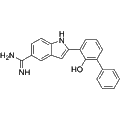
APC8696 is a reversible inhibitor of urokinase-type plasminogen activator (uPA), exhibiting a nanomolar inhibitory constant (Ki) of 8 nM. This compound is valuable for investigating uPA-mediated processes in various biological systems. It is particularly relevant in cancer research and studies addressing tissue remodeling and inflammation.
Out of stock
All 3 sizes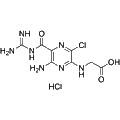
UCD74A hydrochloride is a 5-substituted amiloride analog that functions as a selective inhibitor of urokinase-type plasminogen activator (uPA), exhibiting an IC50 of 110 μM. This compound modulates plasminogen activation cascades associated with extracellular matrix remodeling, making it valuable in the study of tumor metastasis. UCD74A hydrochloride serves as a useful tool for researchers investigating the underlying mechanisms of cancer progression and tissue invasion.
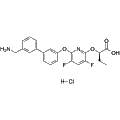
ZK824190 hydrochloride is a selective inhibitor of the urokinase plasminogen activator (uPA), demonstrating promising potential for the treatment of multiple sclerosis. With IC50 values of 237 nM for uPA, and higher IC50s of 1600 nM and 1850 nM for tissue plasminogen activator (tPA) and Plasmin, respectively, this compound can effectively modulate pathways associated with neuroinflammation. Its oral bioavailability also supports its applicability in in vivo studies aimed at elucidating the role of uPA in various disease models.
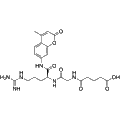
Glutaryl-Gly-Arg-AMC is a specific peptide substrate for urokinase plasminogen activator (uPA). This compound is utilized in biochemical assays to measure uPA activity, making it a valuable tool in research focused on cancer metastasis and tissue remodeling processes. Its fluorescent properties allow for sensitive detection and quantification of uPA activity in various biological samples.
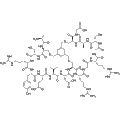
Bicyclic UK18 is a competitive inhibitor of human urokinase-type plasminogen activator (uPA), demonstrating a Ki value of 53 nM. This compound plays a significant role in modulating fibrinolytic activity, making it useful in research related to thrombolysis and cancer metastasis. Its selective inhibition of uPA allows for detailed investigations into tissue remodeling and inflammatory processes.
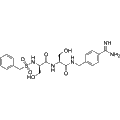
CJ-463 is a potent and selective inhibitor of urokinase plasminogen activator (uPA). It exhibits significant antitumor activity, making it a valuable tool for cancer research. This compound is primarily utilized to investigate the role of uPA in tumor progression and metastasis, and may facilitate the development of novel therapeutic strategies targeting uPA-related pathways.
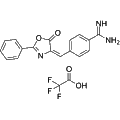
UK122 TFA is a potent and selective inhibitor of urokinase-type plasminogen activator (uPA), exhibiting an IC50 of 0.2 μM. This compound demonstrates negligible inhibition of tissue-type plasminogen activator (tPA), plasmin, thrombin, and trypsin, with IC50 values exceeding 100 μM. As a 4-oxazolidinone analogue, UK122 TFA acts as an anticancer agent, effectively inhibiting cancer cell migration and invasion, making it a valuable tool in cancer research.