Ligand for Target Protein for PROTAC

Ligands for target proteins in PROTAC design bind the protein that a degrader is meant to remove. A proteolysis-targeting chimera (PROTAC) joins such a ligand to an E3 ubiquitin ligase ligand through a linker, so that the ligase ubiquitinates the bound target. Most entries are known inhibitors or receptor ligands modified with an attachment point, such as an aldehyde, amine, carboxylic acid or alkyne group. Dasatinib carbaldehyde and Imatinib carbaldehyde are aldehyde-bearing analogs of two kinase inhibitors. BI-4464 binds protein tyrosine kinase 2 (PTK2), also called focal adhesion kinase (FAK), and SirReal1-O-propargyl carries a propargyl handle on a sirtuin 2 (SIRT2) ligand. Receptor ligands in the list include Estrone-N-O-C1-amido and AP1867-2-(carboxymethoxy), which binds FK506-binding proteins.

Items 151-156 of 156

  • SMARCA2 ligand-8
    Cat. No.
    A81368

    SMARCA2 ligand-8

    SMARCA2 ligand-8 acts as a selective ligand for the target protein SMARCA2, facilitating the synthesis of the PROTAC SMARCA2/4-degrader-35. This compound is instrumental in research applications focused on targeted protein degradation, offering insights into the modulation of gene regulation and chromatin remodeling. Its utility in developing innovative degraders highlights its significance in the study of cancer biology and potential therapeutic interventions.

    Out of stock

    All 3 sizes
  • AKT ligand-2
    Cat. No.
    A81369

    AKT ligand-2

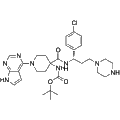
    AKT ligand-2 is a selective ligand targeting the AKT protein. It can be utilized in the synthesis of PROTACs, specifically by linking with VHL ligand (S,R,S)-AHPC, to create compounds like PROTAC MS21. This reagent is instrumental in cellular research focused on targeted protein degradation and the modulation of AKT signaling pathways.

    Out of stock

    All 3 sizes
  • TRIB2 ligand-1
    Cat. No.
    A81370

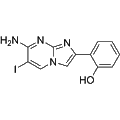
    TRIB2 ligand-1

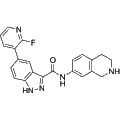
    TRIB2 ligand-1 is a specific ligand for the TRIB2 protein, facilitating the development of PROTACs designed for targeted protein degradation. This compound plays a crucial role in the synthesis of PROTAC TRIB2 degrader-1, which can be employed in research focused on protein regulation and degradation pathways. Its application in such studies supports investigations into various cellular mechanisms and potential therapeutic targets.

    Out of stock

    All 3 sizes
  • SMARCA2/4-ligand-2
    Cat. No.
    A81372

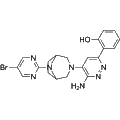
    SMARCA2/4-ligand-2

    SMARCA2/4-ligand-2 is a selective ligand designed for the targeted degradation of SMARCA2 and SMARCA4 proteins via the PROTAC (proteolysis-targeting chimeras) approach. This compound facilitates the ubiquitination and subsequent proteasomal degradation of these essential chromatin remodeling proteins, making it a valuable tool in studies focused on cancer biology and epigenetic regulation. Researchers can utilize SMARCA2/4-ligand-2 to investigate the role of SMARCA2/4 in various cellular processes and to explore therapeutic strategies for diseases linked to their dysregulation.

    Out of stock

    All 3 sizes
  • (S,R,S)-AHPC-PEG4-acid
    Cat. No.
    B18433

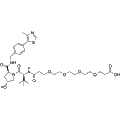
    (S,R,S)-AHPC-PEG4-acid

    (S,R,S)-AHPC-PEG4-acid is a synthetic PROTAC ligand designed to target E3 ligase through its PEG4 arm, facilitating the development of targeted protein degradation strategies. This compound plays a crucial role in enhancing PROTAC research applications, allowing for the selective degradation of proteins of interest. Its utility in drug discovery makes it a valuable tool for studying cellular processes and developing innovative therapeutic approaches.

    5 mg
    $65.00
    10 mg
    $100.00
    All 6 sizes
  • CCR9 ligand-Linker Conjugate 1
    Cat. No.
    B21884

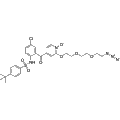
    CCR9 ligand-Linker Conjugate 1

    CCR9 ligand-Linker Conjugate 1 serves as a targeted protein ligand-linker conjugate, incorporating a CCR9 ligand along with a PROTAC linker designed to engage E3 ligases. This compound facilitates the development of PROTAC CCR9 Degrader 1, enabling the investigation of selective degradation pathways for CCR9-related proteins. It is a valuable tool for research applications focused on targeted protein degradation and therapeutic strategies in inflammatory diseases and cancer models.

    Out of stock

    All 3 sizes

Items 151-156 of 156

Added to your cart

View Cart Checkout

    Loading...