- Cat. No.
- A20137
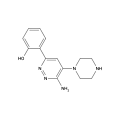
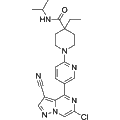
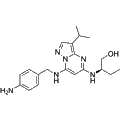
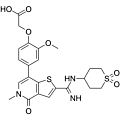
PROTAC BRD9-binding moiety 1
PROTAC BRD9-binding moiety 1 is a compound that binds to BRD9, and used for inhibiting BRD9 activity, based on PROTAC.
Search by product name, CAS, target or catalog number. Press Down Arrow to reach product suggestions, Tab to move between links, and Escape to close suggestions.
Ligands for target proteins in PROTAC design bind the protein that a degrader is meant to remove. A proteolysis-targeting chimera (PROTAC) joins such a ligand to an E3 ubiquitin ligase ligand through a linker, so that the ligase ubiquitinates the bound target. Most entries are known inhibitors or receptor ligands modified with an attachment point, such as an aldehyde, amine, carboxylic acid or alkyne group. Dasatinib carbaldehyde and Imatinib carbaldehyde are aldehyde-bearing analogs of two kinase inhibitors. BI-4464 binds protein tyrosine kinase 2 (PTK2), also called focal adhesion kinase (FAK), and SirReal1-O-propargyl carries a propargyl handle on a sirtuin 2 (SIRT2) ligand. Receptor ligands in the list include Estrone-N-O-C1-amido and AP1867-2-(carboxymethoxy), which binds FK506-binding proteins.
PROTAC BRD9-binding moiety 1 is a compound that binds to BRD9, and used for inhibiting BRD9 activity, based on PROTAC.
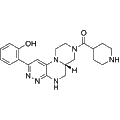
SMARCA-BD ligand 1 for Protac is a compound that binds to the BAF ATPase subunits SMARCA2, and used for degrading SMARCA2, based on PROTAC.
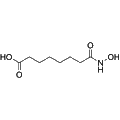
HDAC-IN-97 is a PROTAC compound that targets HDAC6 for degradation. It functions as a powerful HDAC6 degrader, exhibiting notable anticancer activity. This reagent is valuable for research applications involving the synthesis of PROTACs, specifically in studies aimed at elucidating the role of HDAC6 in cancer progression and therapeutic resistance.
Out of stock
All 3 sizes
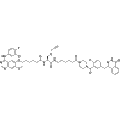
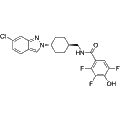
PROTAC PARP/EGFR ligand 1 is an active compound designed for the synthesis of dual degraders targeting PARP and EGFR through proteolysis-targeting chimera (PROTAC) technology. This reagent facilitates the selective degradation of both target proteins, enabling researchers to investigate their roles in cellular processes and to develop novel therapeutic strategies. Its application in drug discovery and development makes it a valuable tool for studying cancer biology and enhancing targeted therapies.
Out of stock
All 3 sizes
BTK/IKZF1/3 ligand 1 is a PROTAC ligand targeting Bruton's tyrosine kinase (BTK) and the Ikaros family zinc finger proteins (IKZF1/3). This compound can be conjugated with E3 ligase ligands and linkers to produce PROTAC BTK/IKZF1/3 Degrader-1, facilitating targeted protein degradation. It is valuable for cancer research, supporting investigations into therapeutic strategies aimed at modulating BTK and IKZF1/3 activity in malignant cells.
Out of stock
All 3 sizes
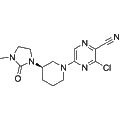
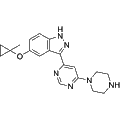
RET ligand-5 is a PROTAC target protein ligand aimed at facilitating the synthesis of PROTACs, such as PROTAC RET Degrader 1. This compound exhibits potent RET degradation capabilities, showcasing significant anti-tumor activity. Its application in research is critical for studies focused on targeted protein degradation and cancer therapeutics.
Out of stock
All 3 sizes
SMARCA2 ligand-12 is a PROTAC target protein ligand designed for targeted protein degradation applications. This compound facilitates the synthesis of PROTAC SMARCA2 degrader-25, enabling the selective modulation of SMARCA2 protein levels. Its utility in research allows for the exploration of protein function and potential therapeutic interventions in associated diseases.
Out of stock
All 3 sizes
LRRK2-IN-19 is a PROTAC target protein ligand designed for the synthesis of PROTAC JH-XII-03-02, a selective and potent LRRK2 degrader. This compound plays a crucial role in the modulation of LRRK2 activity, making it a valuable tool in Parkinson's disease research. Its ability to facilitate targeted protein degradation provides researchers with an innovative approach to investigating LRRK2-related pathways and potential therapeutic interventions.
Out of stock
All 3 sizes
TEAD Ligand 5 is a PROTAC ligand targeting TEAD proteins. It can be combined with an E3 ligase ligand and a linker to create PROTAC TEAD/IAP degrader-1, facilitating targeted protein degradation. This compound is instrumental in studies investigating TEAD-mediated signaling pathways and the development of novel therapeutic strategies.
Out of stock
All 3 sizes
(R)-PROTAC CDK9 ligand-1 is a potent degrader targeting cyclin-dependent kinase 9 (CDK9), a key regulator of transcription and cell cycle progression. This compound facilitates the synthesis of PROTACs (proteolysis-targeting chimeras), which exhibit antitumor activity by promoting the degradation of CDK9. Research applications include investigations into cancer biology and therapeutic strategies aimed at modulating CDK9 levels for improved treatment outcomes.
Out of stock
All 3 sizes
HSD17B13 degrader 2 is a PROTAC ligand specifically designed to target the HSD17B13 protein. This compound facilitates the selective degradation of HSD17B13, enabling researchers to study its biological functions and therapeutic potential. It serves as a key tool for the synthesis of additional PROTACs, including HSD17B13 degrader 1, thereby expanding the repertoire of strategies for targeted protein degradation in chemical biology.
Out of stock
All 3 sizes
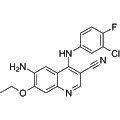
Synonyms: 6-Amino-4-[(3-chloro-4-fluorophenyl)amino]-7-ethoxyquinoline-3-carbonitrile
DH03 is a PROTAC target protein ligand that exhibits binding affinity for the SARS-CoV-2 main protease (MPro). This compound plays a crucial role in the development of PROTAC molecules, such as PROTAC SARS-CoV-2 Degrader-1. Its ability to facilitate targeted protein degradation makes DH03 a valuable tool in antiviral drug research and therapeutic development aimed at combating SARS-CoV-2.
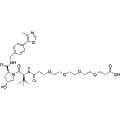
(S,R,S)-AHPC-PEG4-acid is a synthetic PROTAC ligand designed to target E3 ligase through its PEG4 arm, facilitating the development of targeted protein degradation strategies. This compound plays a crucial role in enhancing PROTAC research applications, allowing for the selective degradation of proteins of interest. Its utility in drug discovery makes it a valuable tool for studying cellular processes and developing innovative therapeutic approaches.