Organoid Culture

Organoid culture compounds steer stem cell signaling in three-dimensional tissue cultures. Organoids grow from adult or pluripotent stem cells in an extracellular matrix and reproduce part of the structure of the source tissue. In 2009 single intestinal stem cells expressing leucine-rich repeat-containing G protein-coupled receptor 5 (LGR5) were shown to build crypt-villus structures in vitro. Human colon organoid media were extended in 2011 with A 83-01, an activin receptor-like kinase 5 (ALK5) inhibitor, and with the p38 mitogen-activated protein kinase (MAPK) inhibitor SB 202190. The Rho-associated kinase (ROCK) inhibitor Y-27632 improves survival of dissociated stem cells. Laduviglusib inhibits glycogen synthase kinase 3 (GSK-3) and so activates Wnt signaling.

Items 51-62 of 62

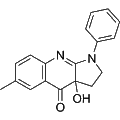
  • Blebbistatin
    Cat. No.
    A24602

    Blebbistatin

    Synonyms: (±)-Blebbistatin

    Blebbistatin is a selective non-muscle myosin II (NMII) inhibitor, promotes directional migration of corneal endothelial cells (CECs) and accelerates wound healing, and better preserves cell junctional integrity and barrier function. Blebbistatin blocks cell migration.

    1 mg
    $25.00
    2 mg
    $35.00
    All 7 sizes
  • 9-cis-Retinal
    Cat. No.
    A24862

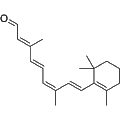
    9-cis-Retinal

    9-cis-Retinal is a natural retinoid that serves as a crucial signaling molecule in visual processes. It is produced from dietary 9-cis-β-carotene through enzymatic cleavage. This compound exhibits high-affinity binding to cellular retinol-binding proteins CRBP-I and CRBP-II, with dissociation constants of 8 nM and 5 nM, respectively. 9-cis-Retinal plays a significant role in promoting differentiation and maturation of rod photoreceptors in retinal organoid models, making it valuable for research in vision science and photoreceptor development.

    1 mg
    $70.00
    5 mg
    $360.00
    All 2 sizes
  • EC23
    Cat. No.
    A24876

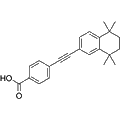
    EC23

    Synonyms: AGN 190205; BASF-46928

    EC23 is a retinoid analogue that acts as a retinoic acid receptor (RAR) agonist. This compound prompts neuronal differentiation, making it a valuable tool for studying neurodevelopmental processes and related disorders. Its stability enhances its suitability for various biological assays and research applications in the field of neurobiology.

    5 mg
    $50.00
    10 mg
    $80.00
    All 7 sizes
  • Ipatasertib tosylate
    Cat. No.
    A25706

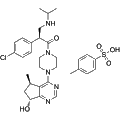
    Ipatasertib tosylate

    Synonyms: GDC-0068 tosylate; RG7440 tosylate

    Ipatasertib tosylate is a potent and selective ATP-competitive inhibitor of pan-Akt, exhibiting IC50 values of 5, 18, and 8 nM for Akt1, Akt2, and Akt3, respectively. By inhibiting Akt, Ipatasertib tosylate activates FoxO3a and NF-κB, resulting in p53-independent activation of PUMA and subsequent apoptosis in cancer cells. This compound demonstrates significant anti-tumor activity in xenograft mouse models, making it a valuable tool for cancer research and therapeutic development.

    Out of stock

    All 3 sizes
  • MK-2206 free base
    Cat. No.
    A25765

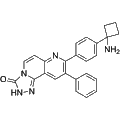
    MK-2206 free base

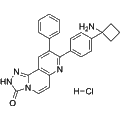
    MK-2206 free base is a highly potent and selective allosteric inhibitor of the Akt signaling pathway, exhibiting IC50 values of 8 nM, 12 nM, and 65 nM for Akt1, Akt2, and Akt3, respectively. This compound demonstrates significant anticancer properties, particularly against breast cancer cell lines, as well as those harboring PIK3CA mutations and PTEN loss. MK-2206 free base is valuable for research applications focused on cancer biology and therapeutic development targeting the Akt pathway.

    Out of stock

    All 3 sizes
  • MK-2206
    Cat. No.
    A25970

    MK-2206

    MK-2206 is a highly potent and selective allosteric inhibitor of the Akt signaling pathway, exhibiting IC50 values of 8, 12, and 65 nM for Akt1, Akt2, and Akt3, respectively. This compound demonstrates significant anticancer activity, particularly in breast cancer cell lines and those harboring PIK3CA mutations or loss of PTEN function. MK-2206 is valuable for research investigating Akt's role in cancer progression and therapeutic resistance.

    5 mg
    $565.00
    10 mg
    $925.00
    All 5 sizes
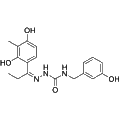
  • (S)-Trichostatin A
    Cat. No.
    A26483

    (S)-Trichostatin A

    Synonyms: (S)-TSA

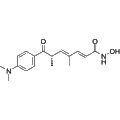
    (S)-Trichostatin A is a selective inhibitor of HDAC6, demonstrating IC50 values of 9.88 nM and 11.1 nM for Zebrafish and Human HDAC6, respectively. It exhibits weak inhibition of other human HDACs, making it a valuable tool for studying HDAC6's role in cellular processes. This compound is useful in research applications related to cancer, neurodegenerative diseases, and epigenetic regulation.

    5 mg
    $240.00
    10 mg
    $395.00
    All 5 sizes
  • SB 202190 hydrochloride
    Cat. No.
    A30132

    SB 202190 hydrochloride

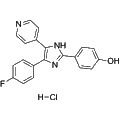
    SB 202190 hydrochloride is a selective inhibitor of the p38 MAP kinase with IC50 values of 50 nM and 100 nM for p38α and p38β, respectively. By binding to the ATP pocket of active recombinant human p38 kinase with a Kd of 38 nM, it demonstrates significant anti-cancer activity. Furthermore, SB 202190 hydrochloride has been shown to induce autophagy, making it a valuable tool for research in cancer biology and signaling pathways related to stress response.

    2 mg
    $30.00
    5 mg
    $50.00
    All 7 sizes
  • Laduviglusib dihydrochloride
    Cat. No.
    A37094

    Laduviglusib dihydrochloride

    Synonyms: CHIR-99021 dihydrochloride; CT99021 dihydrochloride

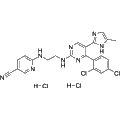
    Laduviglusib dihydrochloride is a selective inhibitor of glycogen synthase kinase-3 (GSK-3), an enzyme involved in numerous cellular processes including glycogen synthesis, cell differentiation, and apoptosis. By inhibiting GSK-3, Laduviglusib dihydrochloride promotes cell survival and has been extensively studied in the context of neurodegenerative diseases, diabetes, and cancer research. This compound serves as a valuable tool for elucidating the role of GSK-3 in various signaling pathways and therapeutic applications.

    Out of stock

    All 3 sizes
  • GA-017
    Cat. No.
    A44022

    GA-017

    GA-017 is a selective inhibitor of LATS1 and LATS2, exhibiting IC50 values of 4.10 nM and 3.92 nM, respectively. This compound enhances cell proliferation through the activation and nuclear translocation of YAP/TAZ, facilitating cell growth, particularly in three-dimensional culture conditions. Additionally, GA-017 promotes the ex vivo formation of mouse intestinal organoids, making it a valuable tool for research in cell biology and tissue regeneration.

    1 mg
    $80.00
    5 mg
    $195.00
    All 6 sizes
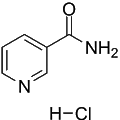
  • Nicotinamide hydrochloride
    Cat. No.
    A50979

    Nicotinamide hydrochloride

    Synonyms: Niacinamide (hydrochloride); Nicotinic acid amide (hydrochloride)

    Nicotinamide hydrochloride is an inhibitor of SIRT1 and SIRT2, targeting the sirtuin family of proteins critical for cellular regulation. This reagent has been shown to enhance cellular levels of NAD+ and ATP while increasing reactive oxygen species (ROS) levels. Research applications include investigation into tumor growth inhibition and potential improvements in survival, as well as exploring its anti-hepatitis B virus (HBV) activity.

    25 mg
    $1,275.00
    50 mg
    $1,625.00
    All 3 sizes
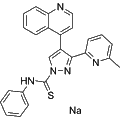
  • A 83-01 sodium
    Cat. No.
    A84792

    A 83-01 sodium

    A 83-01 sodium is a selective inhibitor of the transforming growth factor-beta (TGF-β) type I receptors ALK4, ALK5, and ALK7. With IC50 values of 12 nM, 45 nM, and 7.5 nM, it effectively blocks transcriptional activity induced by these kinases. This compound is valuable for research applications focused on TGF-β signaling pathways and regulation of cellular processes such as proliferation, differentiation, and epithelial-mesenchymal transition.

    1 mg
    $30.00
    5 mg
    $55.00
    All 8 sizes

Items 51-62 of 62

Added to your cart

View Cart Checkout

    Loading...